The Roads That Rebelled
If you've ever wondered why Americans drive on the right side of the road while the British drive on the left, the answer isn't about practicality or safety—it's about revolution. The choice to drive right wasn't inevitable, obvious, or even universal in early America. It was a political statement that eventually became so embedded in American culture that we forgot it was ever a choice at all.
In colonial America, there was no standard rule about which side of the road to use. Some regions followed British left-hand customs, others developed their own patterns based on local conditions, and many roads were so narrow or lightly traveled that it barely mattered. The question of traffic direction only became urgent as the young nation began building a transportation network worthy of its continental ambitions.
The Politics of Traffic Flow
After the Revolutionary War, Americans faced a choice that went far beyond mere traffic management: should the new nation continue following British customs, or deliberately chart its own course? For a generation that had just fought a war to escape British rule, the answer was often obvious.
The shift toward right-hand traffic gained momentum through a combination of practical and symbolic factors. Many American wagon drivers used teams of horses or oxen that were controlled from the left side of the wagon, making right-hand traffic more natural for passing safely. But the political symbolism was just as important—driving on the right became a way of asserting American independence from British customs.
Pennsylvania became the first state to legally mandate right-hand traffic in 1792, followed by New York in 1804. These weren't just traffic laws; they were declarations of American identity.
The Conestoga Influence
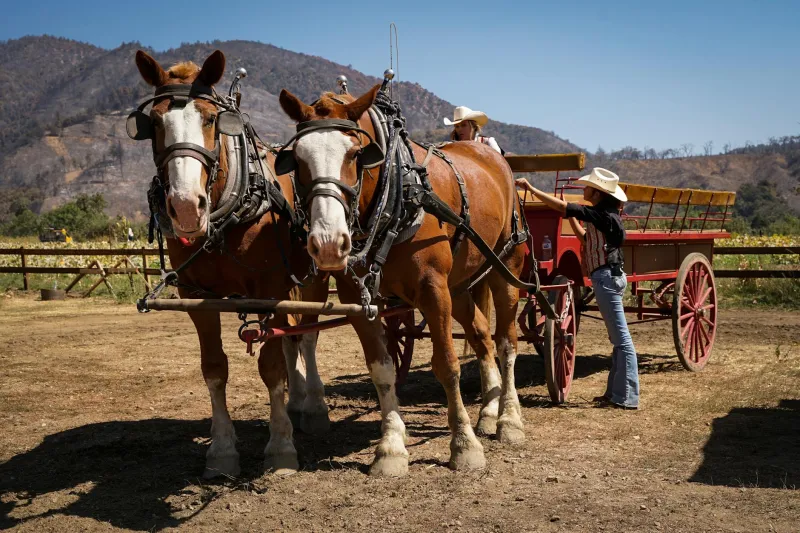
The massive freight wagons that carried goods across early America played a crucial role in establishing right-hand traffic patterns. Conestoga wagons, the eighteen-wheelers of their era, were typically driven from the left rear horse rather than from a driver's seat. This positioning made it much safer and easier for drivers to pass oncoming traffic by keeping to the right.
As these heavy freight wagons carved deep ruts in America's primitive roads, they literally created the infrastructure that favored right-hand traffic. Lighter vehicles naturally followed the established wheel ruts, and gradually the entire transportation network oriented itself around the patterns set by commercial freight.
The influence was so strong that "keeping to the right" became associated with American commerce and westward expansion—core elements of the national identity.
State by State, Mile by Mile
The adoption of right-hand traffic wasn't immediate or uniform. Different states, and even different regions within states, maintained their own customs well into the 19th century. Rural areas, especially those with strong British cultural ties, sometimes continued left-hand patterns for decades after independence.
But as interstate commerce grew and the federal government began funding major road projects like the National Road, standardization became essential. You couldn't have a highway system where traffic direction changed at state borders. The momentum toward right-hand traffic became unstoppable as America built the infrastructure needed for westward expansion.
By 1850, right-hand traffic was standard throughout most of the United States, though some isolated communities maintained local exceptions for years afterward.
The Automotive Revolution Locks It In
When automobiles arrived in the 1890s, they found an American road system already committed to right-hand traffic. This wasn't just a matter of following existing patterns—it fundamentally shaped how cars were designed and manufactured.
American automakers placed steering wheels on the left side of cars to give drivers the best view of oncoming traffic when passing. This decision, made in the early 1900s, created a feedback loop that made right-hand traffic even more entrenched. Cars designed for right-hand traffic couldn't easily be used in left-hand traffic countries, and vice versa.
The choice became literally built into the DNA of American automotive manufacturing, influencing everything from assembly line design to export markets.
The Ripple Effects Continue
That Revolutionary War-era decision to reject British traffic customs continues to shape American life in ways most people never consider. The placement of driver controls, the design of highway interchanges, the layout of drive-through restaurants, even the positioning of car dealership lots—all of these trace back to the political choice made by early American states.
The decision also created lasting economic consequences. American car manufacturers found it more difficult to export to countries that drive on the left, while foreign automakers had to modify their designs for the American market. Even today, the global automotive industry is essentially divided between left-hand-drive and right-hand-drive manufacturing systems.
A Revolution's Lasting Legacy
What started as a post-colonial rejection of British customs became one of the most fundamental aspects of American transportation culture. Every time you get behind the wheel, you're participating in a tradition that began as an act of political rebellion.
The choice to drive on the right wasn't about engineering or safety—it was about independence. But once made, that choice created a cascade of consequences that shaped everything from car design to highway engineering to suburban development patterns. Sometimes the most important decisions are the ones that seem purely symbolic at the time.
The next time you're driving down an American highway, remember that you're not just following traffic laws—you're participating in a centuries-old assertion of American independence, one lane change at a time.