The Anxious Executive Who Drove America Into the Age of Road Trips
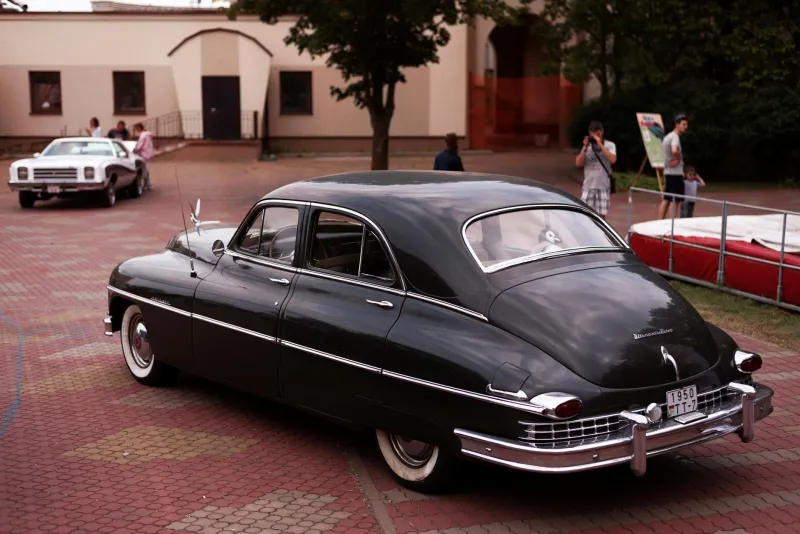
The Man Who Couldn't Sit Still
Henry Bourne Joy had every reason to stay put in his comfortable Detroit office. As president of the Packard Motor Car Company, he was already making a fortune selling luxury automobiles to America's wealthy elite. But in 1912, Joy was consumed by a nagging worry that kept him awake at night: what good were these beautiful machines if there was nowhere to drive them?
At the time, venturing beyond city limits in an automobile was considered somewhere between foolish and suicidal. America had plenty of roads—if you could call them that. Most were little more than wagon ruts that turned into impassable mud traps the moment it rained. The idea of driving for pleasure, much less driving across the entire continent, struck most people as the height of reckless stupidity.
But Joy wasn't most people. He was a nervous perfectionist who believed that America's future depended on connecting its cities with proper roads. So he did what any anxious executive would do: he decided to prove his point by attempting something that had never been done before.
The Journey That Changed Everything
In the summer of 1912, Joy climbed into a Packard touring car and set off from Detroit with one simple goal: reach San Francisco by automobile. There was no roadmap because there were no real roads. No GPS because there were barely any road signs. No AAA because the concept of roadside assistance didn't exist yet.
What followed was 62 days of pure misery that would accidentally birth the American road trip.
Joy's party—which included a mechanic, a photographer, and several other brave souls—spent more time pushing their car through mud than actually driving it. They got lost constantly, broke down repeatedly, and had to ask farmers for directions to the next town. In Nebraska, they spent an entire day traveling just 18 miles. In Nevada, they nearly died of thirst in the desert.
But something magical happened during those long, difficult weeks. Joy began to see America in a way that no one ever had before—not from a train window, but from ground level, at human speed, with the freedom to stop wherever curiosity struck. He met farmers who had never seen an automobile. He discovered small towns that weren't on any railroad line. He experienced the raw, unfiltered vastness of the American landscape.
From Disaster to Vision
Most people would have returned home, sold their car, and bought a train ticket for life. Instead, Joy became obsessed with a revolutionary idea: what if Americans could drive anywhere they wanted to go?
The moment he returned to Detroit, Joy began lobbying for the Lincoln Highway—the first coast-to-coast road designed specifically for automobiles. He spent his own money surveying routes, organizing local governments, and convincing skeptical politicians that Americans would actually want to drive long distances for fun.
The idea was so radical that Joy faced fierce opposition. Railroad companies saw it as a threat to their monopoly on long-distance travel. Many Americans thought the government had no business building roads for rich people's toys. Even other automobile manufacturers wondered if Joy had lost his mind.
The Birth of American Freedom
But Joy's timing was perfect. By 1913, Henry Ford's assembly line was making cars affordable for middle-class Americans, and people were hungry for new forms of entertainment and adventure. The Lincoln Highway opened in sections throughout the 1910s, and suddenly Americans discovered something they didn't know they were missing: the freedom to go anywhere, anytime, for any reason.
What started as one nervous executive's business concern became the foundation of American car culture. The Lincoln Highway spawned imitators—the Dixie Highway, the Jefferson Highway, the Yellowstone Trail. Each new road brought new possibilities for adventure.
The Accidental Tourism Revolution
Joy never intended to create the American road trip, but his miserable journey across unmarked wilderness established all the elements that would define it for the next century. The need for roadside lodging led to the first motor courts, which evolved into motels. The demand for navigation help created the travel guide industry. The desire to see America from behind the wheel became a defining characteristic of American culture.
By the 1920s, families were piling into their Model T Fords and heading west for vacation—something that would have been unthinkable when Joy first got lost in Nebraska. The road trip became a rite of passage, a symbol of independence, and ultimately a billion-dollar industry.
The Legacy of Getting Lost
Today, Americans take nearly 2.3 billion leisure trips by car every year, generating over $800 billion in spending. Every roadside diner, every scenic overlook, every "World's Largest Ball of Twine" can trace its existence back to Henry Joy's anxious decision to prove that Americans would drive long distances if you gave them decent roads.
The next time you load up the car for a weekend getaway or a cross-country adventure, remember that you're following in the tire tracks of a worried businessman who just wanted to sell more cars. His 62 days of getting hopelessly lost became America's most enduring form of finding yourself.