Lost Without a Map
In 1905, if you wanted to drive from Detroit to Chicago, you faced a problem that seems almost unimaginable today: there was no reliable way to figure out how to get there. Road signs barely existed, highway numbers were still decades away, and the federal government considered navigation a local problem. Into this information vacuum stepped an unlikely hero—not a cartographer or government agency, but insurance salesmen looking for new customers.
The American Automobile Association didn't start making maps to help drivers find their way. They made maps to sell insurance policies and memberships. But in solving their own business problem, they accidentally created the tool that would define American road trip culture for the next century.
The Great Navigation Crisis
Early automobiles arrived in a country that had never needed comprehensive road information. Horse-drawn traffic mostly followed established routes between known destinations, relying on local knowledge and word-of-mouth directions. The few maps that existed were designed for railroads or general geographic reference, not for drivers trying to navigate unfamiliar roads at 25 miles per hour.
This created a massive barrier to automobile adoption. Cars were useless for anything beyond local trips unless you could somehow figure out where you were going. Drivers who ventured beyond their home territory often got hopelessly lost, sometimes for days. The uncertainty made automobile travel seem impractical and dangerous.
Insurance companies noticed this problem because lost drivers were more likely to have accidents, file claims, and generally cost money. But they also saw an opportunity.
The AAA Solution
The American Automobile Association, founded in 1902, was essentially a business organization trying to promote automobile use and sell services to drivers. They realized that better navigation information would encourage more people to buy cars and drive longer distances—creating more potential customers for insurance, roadside assistance, and other automotive services.
Starting around 1905, AAA began producing detailed "strip maps" showing specific routes between major cities. These weren't comprehensive road atlases but rather turn-by-turn directions for particular journeys, often hand-drawn and based on information gathered by AAA scouts who actually drove the routes.
The maps were free to AAA members, creating a powerful incentive to join the organization. Want to drive to your cousin's wedding in another state? You'll need an AAA membership to get the map that makes the trip possible.
From Strips to Atlases
As automobile ownership exploded in the 1910s and 1920s, demand for navigation information grew beyond what strip maps could handle. AAA and other automobile clubs began producing more comprehensive regional maps, then state maps, and eventually full road atlases.
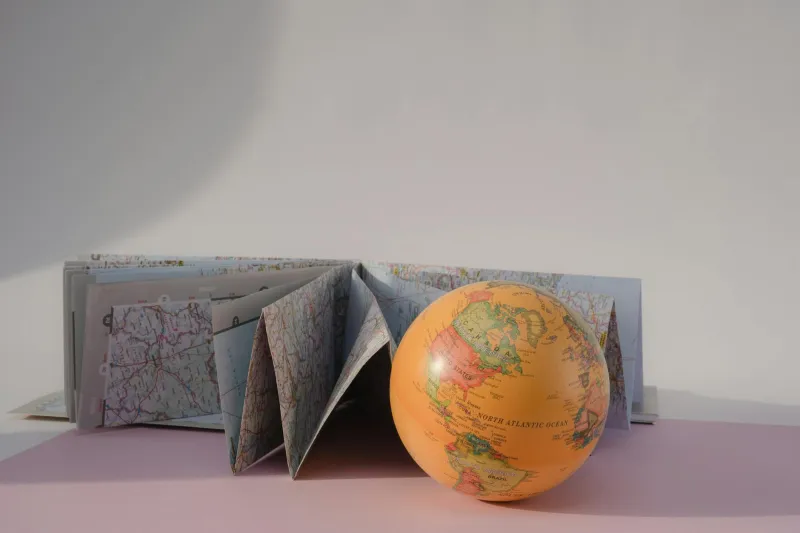
The breakthrough came with the development of standardized symbols, consistent scales, and the folding techniques that would make road maps a dashboard staple. These weren't government publications—they were commercial products created by organizations that made money from automobile travel.
By the 1920s, the familiar folded road map had become the standard format. Oil companies discovered that giving away free maps was an excellent way to attract customers to their gas stations, creating the golden age of promotional cartography that would last until the 1970s.
The Business of Getting Lost
What's remarkable about the road map's origin is how commercial interests created a public good almost by accident. Insurance companies and automobile clubs weren't trying to serve the public interest—they were trying to make money. But their business model required solving the navigation problem that was holding back automobile adoption.
The result was a comprehensive mapping system that rivaled anything produced by government agencies, all funded through private commerce. Gas stations gave away millions of detailed state maps every year, not out of civic duty but because they knew drivers would remember which brand helped them find their way.
This commercial foundation shaped how Americans thought about road travel. Navigation became associated with brands, destinations became marketing opportunities, and the open road became a commercial space filled with recognizable logos and familiar services.
The Golden Age of Paper Navigation
For nearly seventy years, from roughly 1910 to 1980, the folded paper road map was the primary navigation tool for American drivers. Glove compartments across the country contained collections of AAA TripTiks, Rand McNally atlases, and promotional maps from Texaco, Shell, and dozens of other oil companies.
These maps didn't just show roads—they shaped how Americans experienced geography. The familiar Mercator projections, the standardized color schemes, the emphasis on highways over local roads—all of these influenced how people thought about distance, destinations, and the relationship between places.
Road maps also created a unique form of literacy. Multiple generations of Americans learned to read complex cartographic information, calculate distances, and plan multi-day journeys using nothing but paper and pencil. This was a skill set that seemed permanent and essential until it suddenly wasn't.
The Digital Revolution
The road map's decline was swift and brutal. GPS navigation systems arrived in the 1990s, followed by smartphone mapping apps in the 2000s. Within a single generation, the paper road map went from essential to obsolete.
Gas stations stopped giving away free maps, AAA TripTiks became a nostalgic curiosity, and the folded road atlas disappeared from most glove compartments. The last major gas station chain to regularly stock free maps stopped the practice around 2010.
But the influence of those insurance salesmen and their commercial mapping ventures lives on in ways most people don't recognize. The interstate highway system, suburban development patterns, and even the way Americans think about regional identity were all shaped by decades of commercial cartography.
The Lasting Legacy
The next time you ask Siri for directions or tap a destination into Google Maps, remember that you're using the digital descendant of a marketing gimmick invented by insurance companies over a century ago. The road map didn't emerge from government planning or academic research—it came from businessmen trying to sell more policies and memberships.
That commercial origin helps explain both the road map's incredible success and its eventual obsolescence. When better technology made paper maps unnecessary, the business model that supported them disappeared almost overnight. But for seventy years, commercial interests created and maintained the navigation infrastructure that made American car culture possible.
The folded road map may be gone, but its legacy lives on every time you plan a road trip, choose a route, or think about the geography of American highways. Sometimes the most important innovations come from people just trying to solve their own business problems—and accidentally changing the world in the process.