When Car Bumpers Became America's Mobile Billboard: The Accidental Birth of Personal Expression
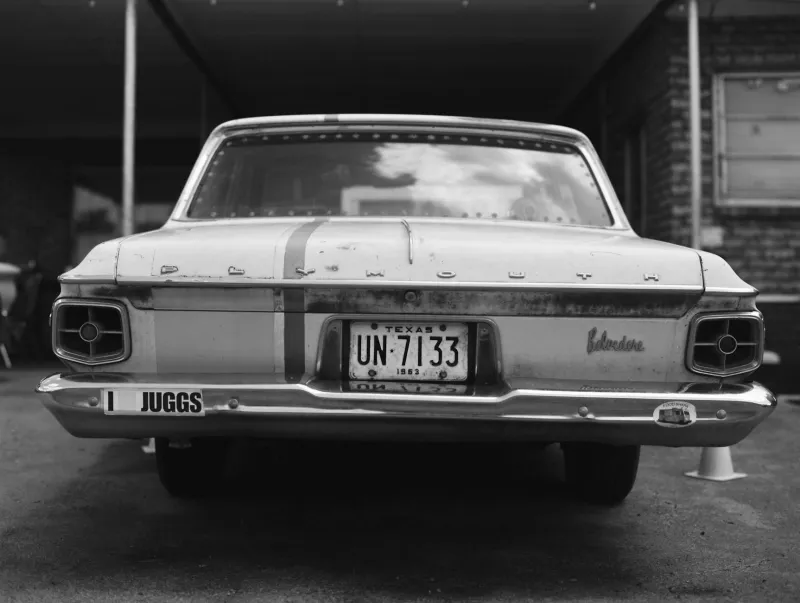
The Salesman's Lightbulb Moment
In 1946, Forest Gill had a problem. As a forest products salesman working out of Kansas City, he was competing with dozens of other lumber companies for the attention of contractors and builders across the Midwest. Traditional advertising—newspaper ads, radio spots, business cards—felt impersonal and easily forgotten. What he needed was something that would stick around, literally.
Gill's breakthrough came when he discovered a new adhesive technology that could bond paper to metal without damaging the surface when removed. Combined with advances in screen printing that made small-batch production economical, he saw an opportunity. Why not turn every customer's truck bumper into a traveling advertisement for his lumber yard?
The first bumper stickers weren't the colorful, slogan-heavy rectangles we know today. They were simple, professional-looking strips that read "Gill Lumber Company" in bold black letters on white paper. Gill gave them away free to anyone who bought lumber, and something magical happened: people started asking for extras.
From Lumber Yards to Campaign Trails
The real turning point came during the 1952 presidential election. Campaign managers for Dwight Eisenhower discovered Gill's invention and realized they'd found something revolutionary—a way to turn every supporter's car into a mobile campaign headquarters. The famous "I Like Ike" bumper stickers weren't just political messages; they were the first mass-produced attempt to transform personal vehicles into public statements.
The Democratic Party quickly followed suit, and suddenly American bumpers became battlegrounds for political expression. What Forest Gill had created as a simple marketing tool had evolved into something much more powerful: a democratized form of public speech that anyone with a car could participate in.
The success of political bumper stickers opened the floodgates. By the late 1950s, tourist destinations began producing their own versions. "I Survived the Corn Palace" and "My Parents Went to Niagara Falls and All I Got Was This Lousy Bumper Sticker" became part of American road trip culture. The family vacation photo wasn't complete without the car's rear bumper showing off the journey's highlights.
The Technology That Made It Possible
What many people don't realize is that the bumper sticker revolution required three separate technological advances to converge at exactly the right moment. The adhesive technology Gill used was originally developed for industrial applications during World War II. Screen printing had been around for centuries but only became cost-effective for small runs in the 1940s. And the rise of automobile ownership—by 1950, nearly 60% of American families owned a car—provided the perfect canvas.
The materials evolved too. Early bumper stickers used paper that would fade and peel within months. By the 1960s, vinyl became the standard, creating the weather-resistant, long-lasting stickers that could survive years of highway abuse. This durability transformed bumper stickers from temporary promotional items into semi-permanent personal statements.
The Psychology of the Rear Bumper
There's something uniquely American about the bumper sticker phenomenon. Unlike billboards or yard signs, bumper stickers travel. They carry messages across state lines, into parking lots, and down neighborhood streets. They're personal but public, allowing drivers to broadcast their beliefs, humor, and identity to strangers they'll never meet.
Sociologists have noted that bumper sticker placement follows unwritten rules. The rear bumper is prime real estate—that's where the most important messages go. Side bumpers and windows are for secondary statements. And there's an etiquette: too many stickers suggest someone who can't prioritize their beliefs, while carefully curated selections indicate thoughtful self-expression.
Digital Age, Analog Persistence
In an era when most personal expression has moved online, the bumper sticker's persistence is remarkable. Social media posts disappear into algorithmic feeds, but a bumper sticker commits its owner to displaying that message for months or years. There's a weight to that commitment that a Facebook post or tweet simply can't match.
Modern bumper stickers have adapted to contemporary culture while maintaining their essential character. QR codes now appear alongside traditional slogans. Environmental messages dominate where political statements once ruled. And the rise of personalized printing has made custom bumper stickers accessible to anyone with an internet connection and a credit card.
The Lasting Legacy of a Simple Idea
Forest Gill probably never imagined that his solution to a lumber marketing problem would become a cornerstone of American self-expression. From "Baby on Board" to "Coexist," from sports team loyalty to political resistance, the bumper sticker has provided a uniquely democratic platform for public speech.
In a world increasingly dominated by digital communication, there's something refreshingly analog about the bumper sticker. It's tangible, permanent, and impossible to scroll past. Whether declaring allegiance to a political candidate, announcing pride in a honor student, or simply making other drivers smile with a clever joke, the bumper sticker remains one of the most honest forms of American expression—a mobile confession of who we are and what we believe, traveling at highway speed.