When Horse Traffic Jams Sparked the World's First Traffic Signal (And It Blew Up)
Every day, millions of Americans pull up to intersections and obediently stop when a colored light turns red. We hand over control of our two-ton vehicles to a simple electrical signal without question. But this universal language of traffic control began with a spectacular failure that had nothing to do with automobiles.
The Original Traffic Problem Wasn't Cars
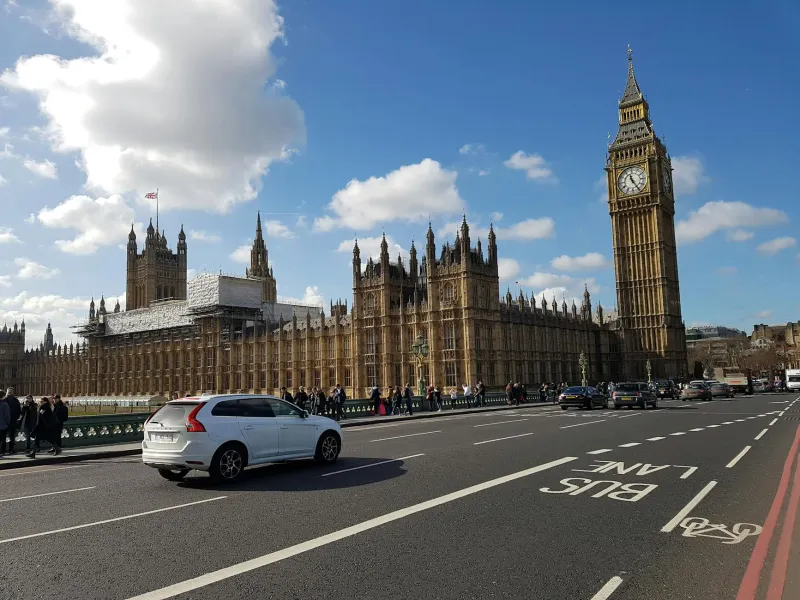
London in the 1860s had a traffic nightmare. Not from cars—those wouldn't become common for another forty years—but from horse-drawn carriages, omnibuses, and pedestrians creating chaos at busy intersections. The area around Parliament was particularly congested, with MPs dodging between carriages and omnibuses while trying to reach Westminster.
Railway engineer John Peake Knight had watched trains successfully use semaphore signals for decades. If colored arms and lights could prevent locomotive collisions, why not adapt the system for street traffic? His proposal was elegantly simple: install a 22-foot-tall gas-powered signal with semaphore arms and red and green gas lamps to control the intersection outside Parliament.
The World's First Traffic Light Lasted Three Weeks
On December 10, 1868, London activated the world's first traffic signal. During the day, the semaphore arms directed traffic—horizontal meant stop, angled meant proceed with caution. At night, red and green gas lamps took over the job.
For three weeks, it actually worked. Police officers manually operated the signal, and the intersection became noticeably more organized. Horse-drawn vehicles and pedestrians began following the light's commands, creating the first glimpse of modern traffic flow.
Then, on January 2, 1869, the gas line leaked and the signal exploded, seriously injuring the police officer operating it. London immediately abandoned the experiment, and the idea of traffic signals disappeared for nearly half a century.
An American Engineer Revived the Concept
The traffic signal might have remained a Victorian curiosity if not for Garrett Morgan, a Cleveland inventor who witnessed a horrific collision between a car and a horse-drawn carriage in 1914. The accident convinced him that intersections needed better control as automobiles became more common.
Morgan's solution was brilliantly simple: a T-shaped pole with three positions—Stop, Go, and an all-directional Stop that cleared intersections between light changes. Unlike London's gas-powered disaster, Morgan's design used electricity and could be operated remotely.
His first installation at the corner of Euclid Avenue and East 105th Street in Cleveland created something unprecedented: a systematic way for humans and machines to share road space. The success was immediate. Other cities began installing similar systems, and by 1920, Detroit and New York had adopted electric traffic signals.
How Three Colors Became Universal Law
The modern three-color system emerged almost by accident. Early traffic signals used various combinations—some had just red and green, others included yellow, white, or blue lights. The standardization came from an unlikely source: the railroad industry.
Railroads had already established red for danger and green for safety. When William Potts, a Detroit police officer, installed the world's first four-way three-color traffic light in 1920, he added yellow as a caution signal borrowed from railroad practice. The combination proved so intuitive that it spread nationwide within a decade.
By 1930, the Federal Highway Administration had standardized the red-yellow-green sequence, creating a universal language that transcended literacy, culture, and language barriers.
The Psychology of Stopping for a Light
What's remarkable isn't the technology—it's how completely we've internalized obedience to colored lights. A red traffic signal has no physical power to stop a car, yet millions of drivers halt their vehicles dozens of times daily based solely on a colored bulb's command.
This compliance represents one of humanity's most successful examples of technological conditioning. We've collectively agreed that red means stop with such completeness that running a red light feels like violating a natural law rather than ignoring an arbitrary signal.
Traffic psychologists note that this obedience developed because early traffic signals solved a genuine problem—intersection chaos—while providing clear, consistent rules that benefited everyone who followed them.
The Roads Not Taken
The traffic light's evolution could have gone very differently. In the 1920s, competing systems included:
- Semaphore arms: Some cities preferred mechanical arms over colored lights
- Audio signals: Bell and whistle systems for directing traffic
- Human direction: Many intersections relied on police officers with hand signals
- Roundabouts: European-style circular intersections that eliminated the need for signals entirely
American cities experimented with all these approaches, but the simplicity and reliability of electric three-color signals won out. The system succeeded because it required minimal maintenance, worked in all weather, and could be understood instantly by anyone.
From London's Explosion to Global Standard
Today's traffic signals bear little resemblance to John Peake Knight's gas-powered semaphore, yet they serve the same fundamental purpose: creating order from chaos at intersections. The journey from London's exploding experiment to modern smart traffic systems spans 150 years of gradual refinement.
Modern traffic signals use LED lights, computer timing, and sensor networks that would astound those Victorian engineers. But the core concept remains unchanged—colored lights that millions of people obey without question, creating a shared language that keeps traffic flowing safely through countless intersections every day.
The next time you stop at a red light, remember you're participating in a system that began with horses, survived an explosion, and evolved into one of the most universally accepted pieces of technology on Earth. That simple red-green rhythm connects you to a story that started with Victorian traffic jams and continues every time drivers around the world yield to the authority of a colored light.