From Horse Splash Guards to Digital Command Centers: Why Your Car's Control Panel is Called a Dashboard
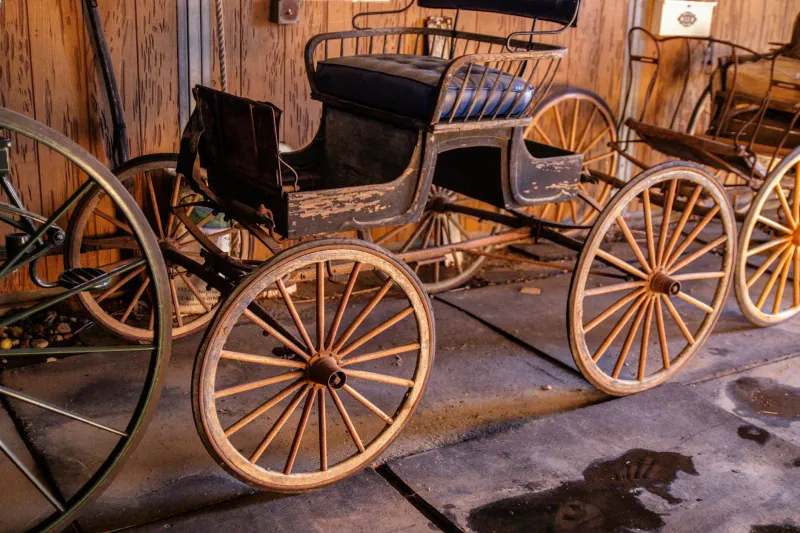
The Muddy Truth Behind Your Dashboard
Every time you adjust your air conditioning or glance at your speedometer, you're interacting with something called a "dashboard." But here's the thing that might surprise you: the name has absolutely nothing to do with cars, computers, or any kind of digital display. It comes from a much messier problem that plagued travelers for centuries—getting splattered with mud and debris kicked up by galloping horses.
In the 1840s, horse-drawn carriages faced a persistent and disgusting problem. When horses trotted or galloped down dirt roads, their hooves would "dash" chunks of mud, stones, and whatever else was on the ground directly backward toward the passengers. Carriage makers solved this by installing a simple wooden board at the front of the passenger compartment, positioned to block the worst of the flying debris. They called it a "dashboard"—literally, a board that stopped things from being dashed at you.
When Horseless Carriages Kept the Name
When the first automobiles appeared in the 1890s, early car manufacturers borrowed heavily from carriage design. Even though cars didn't have horses kicking up mud, they kept the dashboard concept and the name. Those first automotive dashboards were still just simple barriers, usually made of wood or metal, separating the engine compartment from the passenger area.
But unlike horse-drawn carriages, early cars had mechanical components that drivers needed to monitor. The engine was right there in front, often partially exposed, and drivers needed to keep an eye on things like oil pressure and engine temperature to avoid costly breakdowns or dangerous overheating.
The Slow March Toward Complexity
The transformation from splash guard to control center happened gradually over several decades. In the early 1900s, the first gauges started appearing on dashboards—simple mechanical devices that used cables and tubes to relay information from the engine. A speedometer here, an oil pressure gauge there, maybe a basic fuel indicator.
By the 1920s, as cars became more reliable and Americans started taking longer trips, dashboards began expanding. Manufacturers realized that drivers wanted more information about their vehicles without having to stop and manually check fluid levels or engine components. The dashboard became prime real estate for displaying this data.
The 1930s brought a major shift in thinking. Dashboard design became less about pure function and more about style and psychology. Car companies discovered that an impressive dashboard could make buyers feel like they were piloting something important and sophisticated—even if they were just driving to the grocery store.
The Psychology of Control
Here's where the story gets really interesting. During World War II, American car manufacturers were building aircraft instruments, and they learned something crucial about human psychology: people feel more confident and in control when they can see lots of information, even if they don't actively use most of it.
When car production resumed after the war, dashboards exploded with new features. Beyond basic gauges, manufacturers added clocks, radios, heaters, and eventually air conditioning controls. The dashboard transformed from a simple information display into what psychologists call a "command interface"—a surface that makes the user feel powerful and informed.
This psychological element explains why modern luxury cars often have dashboards that look like airplane cockpits, packed with screens, buttons, and displays that most drivers rarely use. It's not really about functionality—it's about making people feel like they're in control of something sophisticated and important.
The Digital Revolution
The 1980s brought computerization to dashboards, starting with simple digital displays for odometers and clocks. But the real revolution came in the 2000s with GPS navigation systems, which required larger screens and more complex interfaces.
Today's dashboards would be completely unrecognizable to those carriage makers from the 1840s. Modern cars feature multiple LCD screens, touch-sensitive controls, voice activation, and internet connectivity. Some luxury vehicles have dashboards that are essentially giant computers, capable of streaming movies, managing smart home devices, and even conducting video calls.
Why the Name Stuck Around
It's remarkable that we still use a term invented for horse-drawn carriages to describe the high-tech control centers in modern vehicles. The word "dashboard" has survived more than 180 years and a complete transformation in function, proving that sometimes the most persistent names are the ones that started with the simplest purposes.
Next time you're adjusting your GPS or checking your fuel gauge, remember that you're interacting with the evolutionary descendant of a wooden board designed to keep horse-kicked mud out of your face. It's a perfect example of how the most familiar things in our daily lives often have origins that are completely different from what we might expect.
The dashboard's journey from splash guard to digital command center shows how human ingenuity takes simple solutions and gradually transforms them into something far more complex and sophisticated—while somehow keeping the original name alive through centuries of change.