Before Gas Stations Existed, You Bought Fuel at the Pharmacy
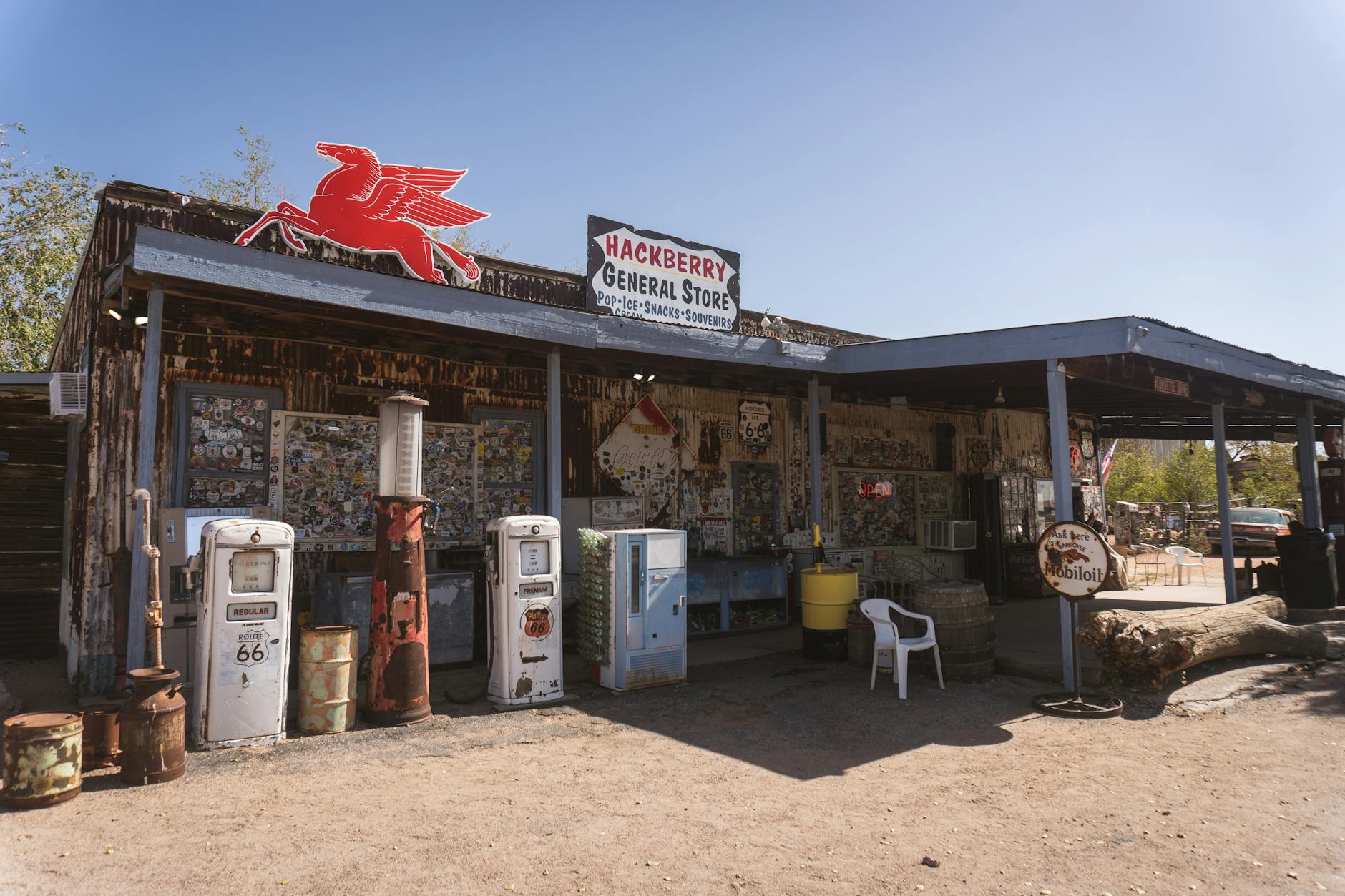
Before Gas Stations Existed, You Bought Fuel at the Pharmacy
Picture yourself on a road trip in 1905. You're behind the wheel of an early automobile, engine rattling, dust kicking up from an unpaved road, and the fuel gauge — if your car even has one — is creeping toward empty. You need gasoline.
So you pull into town and look for a drugstore.
This wasn't a quirky regional habit or a stopgap measure. For the first decade or so of American motoring, the pharmacy was legitimately one of your best options for buying fuel. Gasoline was sold in small tin cans, sometimes alongside kerosene, paint thinner, and other petroleum-based products, by whatever local merchant happened to stock it. There was no dedicated infrastructure. There were no pumps, no canopies, no loyalty rewards programs. Just a can of gas and a funnel, if you were lucky.
The gas station, now so fundamental to American life that most of us barely notice it, was an invention that cars demanded before anyone had actually thought to build it.
The Fuel Problem Nobody Planned For
When early automobiles started appearing on American roads in the late 1800s and early 1900s, the people selling them weren't thinking much about the refueling logistics. The cars were the novelty. The fuel was almost an afterthought — a secondary problem that buyers would figure out on their own.
And figure it out they did, in the most improvised ways possible. General stores, hardware shops, and pharmacies all became informal fuel depots. Standard Oil and a handful of other petroleum companies sold gasoline in bulk to these retailers, who then sold it by the can to drivers. The process was slow, messy, and not exactly safe, but it worked well enough when there weren't that many cars on the road.
The problem was that the number of cars on the road was about to explode.
The Model T Changed Everything
When Henry Ford introduced the Model T in 1908, he wasn't just selling a car. He was democratizing personal transportation in a way that nobody had quite managed before. The Model T was affordable, durable, and simple enough to maintain. By 1913, Ford's assembly line was producing cars at a pace that seemed almost impossible by the standards of the time.
Suddenly, America had cars everywhere. Not just wealthy hobbyists and urban professionals — farmers, small business owners, working families. The roads filled up, and the improvised pharmacy-and-general-store fuel distribution network buckled under the pressure.
The timing of what happened next is almost too neat. In 1913 — the same year Ford's Highland Park assembly line hit full stride — the Gulf Refining Company opened what is widely recognized as the first purpose-built gas station in the United States, on Baum Boulevard in Pittsburgh, Pennsylvania.
It had a single pump. It offered free air and water. Attendants came out to your car. It was, by modern standards, a minimal operation. But it was designed specifically and entirely around the act of refueling a motor vehicle, and that made it something genuinely new.
A New Kind of American Business
The Pittsburgh station was less a finished model than a proof of concept, and the concept spread fast. Within a few years, oil companies and independent operators were opening stations across the country. By the early 1920s, the roadside gas station had become a recognizable feature of American towns and highways — and by the 1930s, competing companies were designing elaborate station buildings to attract customers, turning a functional stop into an architectural statement.
The early stations also introduced something that would define American road culture for the rest of the century: the idea that you could travel long distances by car without planning too carefully, because fuel would be available when you needed it. The infrastructure was building itself around the car, responding to demand in real time.
That feedback loop — cars creating demand, infrastructure responding, infrastructure enabling more driving — is exactly how the gas station reshaped American geography. Towns along major routes grew around stations. Highways were built with fueling stops in mind. The road trip, as a cultural institution, only became possible because someone finally built a place to fill up.
The Station That Outlasted Its Own Era
Today, the gas station is in an interesting moment. Electric vehicles are slowly rewriting the refueling equation, and the long-term future of the pump-and-canopy model is genuinely uncertain. But for over a hundred years, the gas station has been one of the most consistently present features of American life — more common than post offices, more familiar than most chain restaurants.
All of it traces back to the fact that nobody planned for it. Cars arrived first. The infrastructure scrambled to catch up. And what started as a single pump on a Pittsburgh street corner eventually became the backbone of how an entire country moves.
The pharmacy still exists too, of course. These days it just sells other things.