A Spilled Milk Wagon Drew the Line That Made Highway Driving Safe
A Spilled Milk Wagon Drew the Line That Made Highway Driving Safe
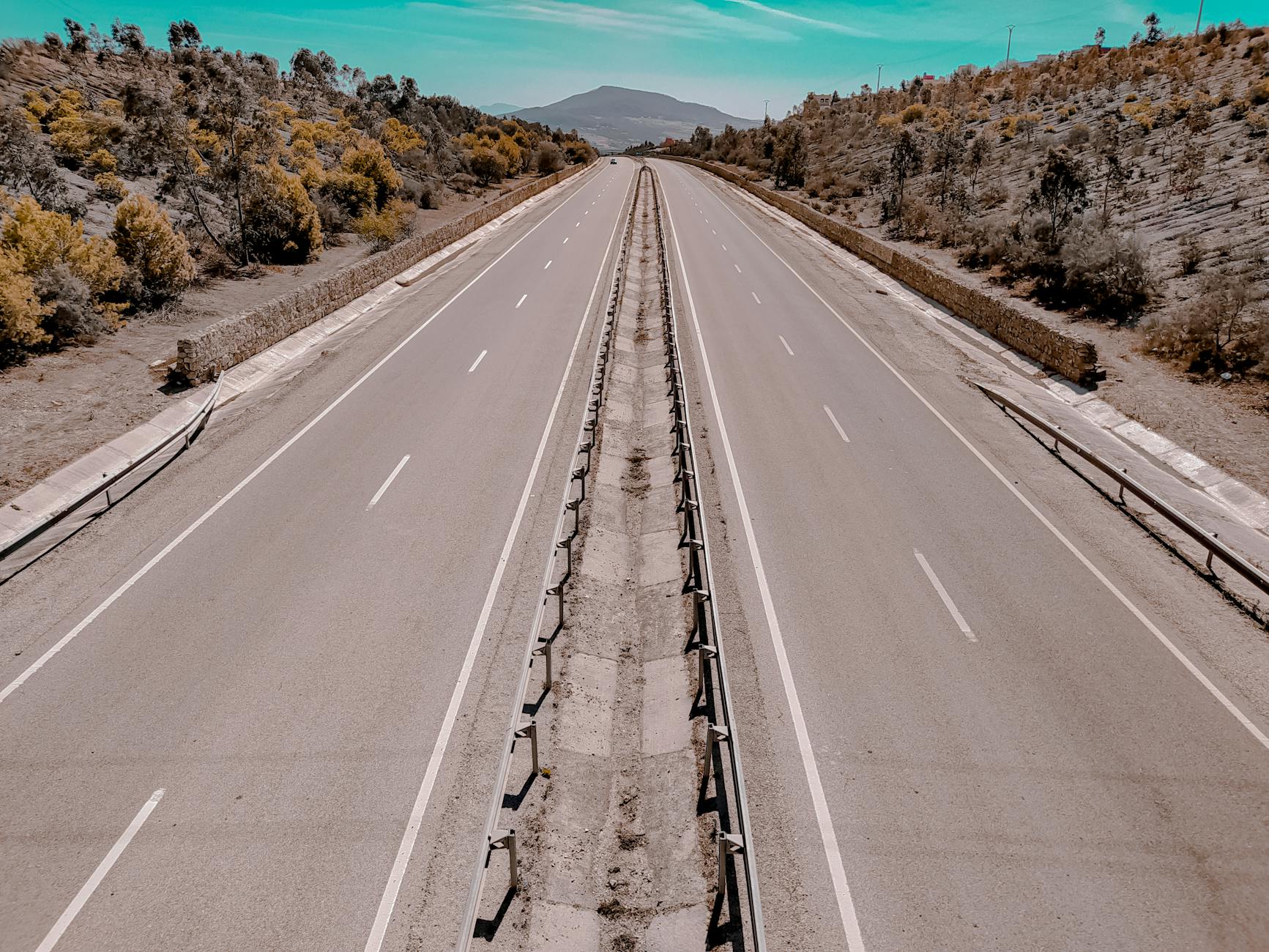
There's a piece of road infrastructure so familiar that most drivers never consciously register it. It's not a bridge or a guardrail or a traffic light. It's a stripe of paint — the centerline running down the middle of nearly every road in America, quietly telling you which side is yours and which side belongs to everyone else.
You've driven over it thousands of times without thinking about it. Which makes sense, because that's exactly what it's designed for. The centerline works best when you don't notice it.
But here's what's worth noticing: that stripe didn't come from a federal transportation agency or a safety commission or a team of highway engineers running studies. It came from a spilled milk wagon on a country road in Michigan, and the man who noticed it had a job title that had nothing to do with road safety.
Roads Before the Line
In the early 1900s, American roads were genuinely chaotic by modern standards. Paved roads were rare outside of cities, speed limits were loosely defined, and there was no visual system telling drivers where to position themselves on the road. You drove roughly in the middle, or roughly to one side, depending on habit and instinct and what the driver coming toward you seemed to be doing.
For horse-drawn traffic, this worked well enough. Horses moved slowly, drivers had time to react, and the consequences of a miscalculation were bad but survivable. Automobiles changed the math completely. Cars moved faster, required more stopping distance, and put drivers in a fundamentally different situation when two vehicles met head-on on a narrow road.
Somebody needed to draw a line. Nobody had gotten around to it yet.
The Accident That Started Everything
The story, as it has been passed down, goes like this: In 1911, Edward Hines — the Wayne County Road Commissioner in Michigan — was traveling along a rural road when he came across a milk wagon that had leaked a thin white stripe down the center of the road. Something about that accidental marking caught his attention.
Hines looked at the stripe and saw something useful. A clear visual boundary, running down the middle of the road, telling each direction of traffic exactly where it belonged. It was so obvious once you saw it that it's almost hard to believe nobody had done it deliberately yet.
Hines pushed for the idea, and in 1911 Michigan began painting centerlines on some of its roads — a genuinely novel intervention at the time. The credit for the first marked centerline in the United States is widely attributed to Michigan, with Hines as the driving force behind it.
The state that would later become synonymous with the American auto industry had just made one of the most important contributions to road safety in the country's history, and it started with someone else's spilled dairy delivery.
Spreading State by State
What's striking about the centerline's early history is how slowly a genuinely good idea moved. There was no national highway authority to mandate it, no federal standard to enforce it. Road decisions were made at the state and county level, which meant that the centerline had to prove itself market by market, road commissioner by road commissioner.
Oregon followed Michigan's lead in 1917, painting centerlines on some of its highways. Other states watched, experimented, and gradually adopted the practice through the 1910s and 1920s. The pace was uneven — some states were early adopters, others lagged by years.
The spread also coincided with the broader push to improve and standardize American roads, driven by the growing number of automobiles and the lobbying efforts of early motoring organizations. The Federal Aid Road Act of 1916 began directing federal money toward highway improvement, and the idea of road markings as a safety tool gained traction alongside better pavement and clearer signage.
It wasn't until the 1950s, with the push toward the Interstate Highway System, that road markings became truly standardized at a federal level. By then, the centerline had been a fixture on American roads for decades — but the rules governing its color, width, and application varied from state to state in ways that could genuinely confuse drivers crossing borders.
The Stripe That Restructured American Driving
It's easy to underestimate what the centerline actually did for American driving culture. The obvious answer is that it reduced head-on collisions, and it did. But the deeper effect was psychological.
The painted line gave drivers a reference point that made speed feel manageable. When you can see exactly where the boundary is — when there's a clear visual anchor telling you that you're in the right place — you can push your speed higher with more confidence. The centerline didn't just organize traffic. It made faster driving feel safe, which was part of what enabled the high-speed highway culture that defines American road travel today.
Without it, the Interstate Highway System — with its 65 and 70 mph speed limits — would be a very different and much more terrifying experience.
One Stripe, One Hundred Years
The painted centerline is the kind of invention that gets overlooked precisely because it worked so well. It solved its problem so completely that the problem itself became hard to imagine.
But somewhere in Michigan, more than a hundred years ago, a milk wagon made a mess on a country road, and a county official looked at the streak it left behind and thought: that's actually a pretty good idea.
Sometimes the most important innovations don't come from a lab or a boardroom. Sometimes they come from paying attention to an accident that everyone else just drove around.