The Man Who Hated Bad Roads
Every time you cruise down a smooth American highway, you're driving on the legacy of a Scottish engineer who couldn't stand muddy roads. John Loudon McAdam wasn't trying to revolutionize transportation when he started experimenting with road surfaces in the early 1800s—he was just tired of getting stuck in the mud.
Born in 1756, McAdam made his fortune as a young man in New York before returning to Scotland, where he became obsessed with what he saw as a fundamental problem: roads were terrible everywhere. The standard approach involved laying large stones as a foundation, then filling gaps with smaller rocks and dirt. When it rained, these roads turned into swamps. When they dried out, they became rutted nightmares that destroyed wagon wheels and horse legs alike.
McAdam had a radical idea: what if roads didn't need expensive stone foundations at all?
The Revolutionary Gravel Method
Starting around 1815, McAdam began promoting a technique so simple it seemed absurd. Instead of large foundation stones, he proposed building roads entirely from small, angular stones—nothing bigger than could fit in a man's mouth. These stones would be laid in thin layers, each one carefully compacted, creating a surface that water could drain through instead of pooling on top.
The key was precision. McAdam insisted that every stone be broken to exact specifications, that each layer be no more than a few inches thick, and that the road surface maintain a slight crown to encourage drainage. Local authorities thought he was crazy—surely a road made of nothing but gravel would fall apart under heavy traffic?
They were wrong. McAdam's roads not only held up better than traditional stone highways, they cost a fraction of the price to build and maintain. The technique worked so well that "macadamized" became a verb, and McAdam became the most famous road engineer in the world.
From Scotland to America
Word of McAdam's success crossed the Atlantic just as America was beginning to take road-building seriously. The young nation had inherited a patchwork of colonial paths that were barely suitable for horses, let alone the heavy wagons needed for westward expansion. State governments and private turnpike companies were desperate for cost-effective solutions.
The first macadamized roads in America appeared in the 1820s, and the technique spread rapidly. Unlike European roads, which often required expensive imported materials, American macadam could be built using local stone quarries. This made it perfect for a continent-sized country that needed thousands of miles of new roads but couldn't afford to build them like European kings.
By the 1840s, macadamized surfaces covered major routes from Boston to Baltimore. The National Road, America's first major federal highway project, adopted McAdam's principles for much of its route west from Maryland to Illinois.
The Foundation for Car Culture
When automobiles arrived in the 1890s, they found a country already equipped with relatively smooth, well-drained roads—at least on major routes. This wasn't an accident. The macadamized road network created between 1820 and 1880 provided the physical foundation that made early automotive travel possible.
Without McAdam's drainage-focused approach, American roads would have remained the muddy, rutted disasters that plagued most of the world well into the 20th century. Cars might have been invented, but they would have been useless for anything beyond short trips in perfect weather.
The Evolution to Modern Asphalt
McAdam's technique worked beautifully for horse-drawn traffic, but automobiles presented new challenges. Cars were faster and heavier than wagons, and their rubber tires created different kinds of wear patterns. By 1900, engineers began experimenting with binding agents to hold the gravel layers together more effectively.
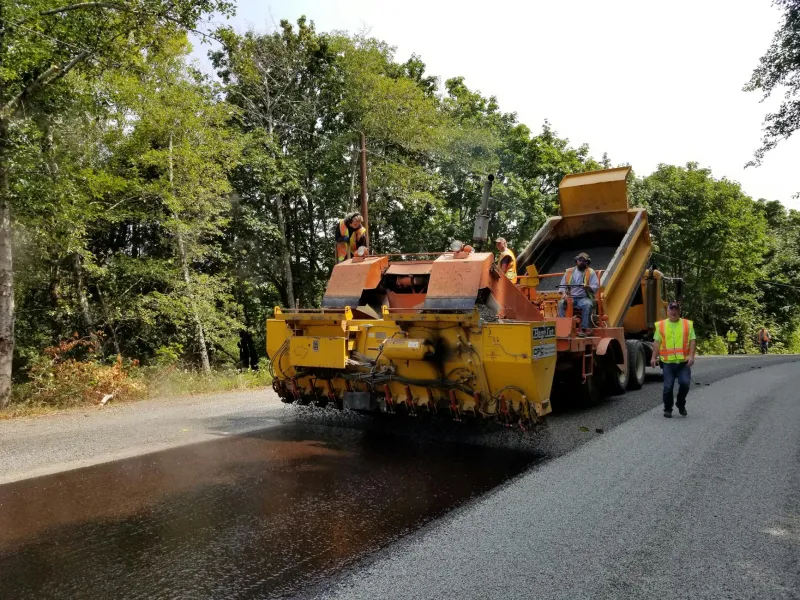
The solution was tar, and later asphalt—petroleum products that could be mixed with McAdam's carefully graded stone to create "tarmacadam" or "tarmac." This hybrid approach combined McAdam's drainage principles with the smooth, dust-free surface that cars demanded.
Modern asphalt highways still follow McAdam's basic blueprint: multiple layers of carefully sized aggregate, proper drainage, and a slight crown to shed water. The materials have evolved, but the fundamental engineering principles that McAdam developed in rural Scotland remain the foundation of every road you've ever driven.
The Lasting Impact
McAdam died in 1836, decades before the first automobile, but his influence on American car culture is impossible to overstate. The road network he helped create didn't just enable the automobile—it shaped how Americans thought about distance, mobility, and freedom itself.
The next time you're driving cross-country on smooth interstate asphalt, remember that you're following routes and principles laid down by a Scottish engineer who just wanted to fix the roads around his house. Sometimes the most revolutionary innovations come from people who are simply tired of dealing with everyday problems—and stubborn enough to solve them properly.