The Life-Saving Gift That America Refused to Accept for Decades
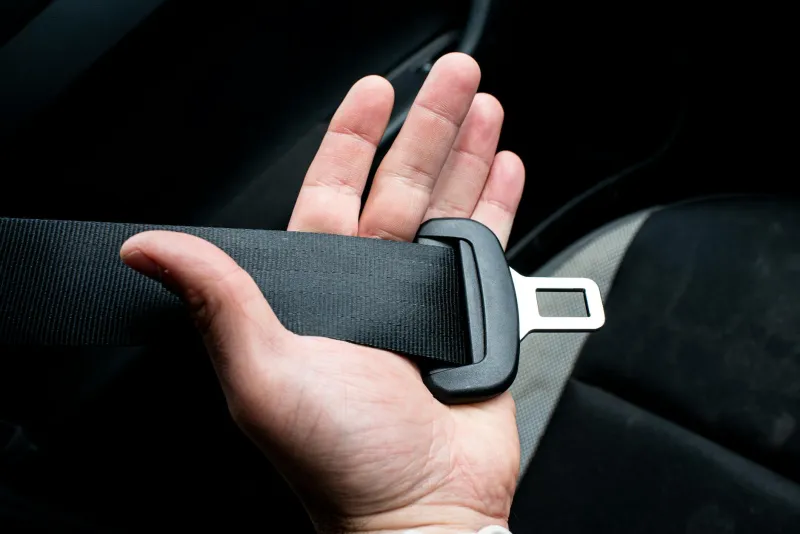
The Engineer Who Changed Everything
In 1958, a Swedish engineer named Nils Bohlin was working late in his Volvo office, sketching designs that would fundamentally change how we think about car safety. Bohlin wasn't new to safety engineering—he'd previously worked on ejector seats for fighter jets at Saab. But his latest challenge was different: creating a restraint system that ordinary people would actually use.
The timing wasn't coincidental. Volvo had recently hired Bohlin specifically to address their safety concerns after a series of high-profile accidents. What he created was elegantly simple: a single belt that crossed the chest and lap, anchored at three points. Unlike the existing lap-only belts that could cause internal injuries during crashes, Bohlin's design distributed crash forces across the stronger parts of the human body.
The Gift That Kept on Giving
Here's where the story takes an unexpected turn. In 1959, Volvo made a decision that would be unthinkable by today's corporate standards: they made Bohlin's three-point seatbelt patent available to every automaker in the world, completely free of charge.
Volvo's reasoning was straightforward—they believed the invention was too important for human safety to be locked behind proprietary walls. "It had more value as a free life-saving tool than something we could make money from," a Volvo executive later explained. The Swedish automaker calculated that widespread adoption would save more lives than any profit they might generate from licensing fees.
Other manufacturers quickly adopted the technology. By the early 1960s, most new cars came equipped with three-point seatbelts in the front seats. The engineering problem was solved, the technology was free, and cars were demonstrably safer.
There was just one problem: Americans absolutely refused to wear them.
The Great American Resistance
The pushback was immediate and fierce. Surveys in the 1960s showed that fewer than 15% of Americans regularly used their seatbelts. The reasons varied wildly, but they all pointed to a fundamental cultural clash between safety engineering and American attitudes toward personal freedom.
Many drivers complained that seatbelts were uncomfortable, restricting, or "unmanly." Others worried about being trapped in a burning or submerged vehicle—despite statistical evidence showing that seatbelts made survival in such scenarios more likely, not less. Some people even believed that being "thrown clear" of an accident was safer than being restrained.
The resistance went beyond individual choice. Auto magazines regularly published articles questioning seatbelt effectiveness. Some prominent figures, including NASCAR drivers, publicly dismissed them as unnecessary. Even insurance companies were slow to offer discounts for seatbelt use, despite clear actuarial evidence of their benefits.
When Persuasion Failed, Laws Stepped In
By the 1970s, it became clear that voluntary adoption wasn't working. Traffic fatalities were climbing alongside car ownership, and public health officials were growing frustrated. The solution came through legislation, but it wasn't quick or easy.
New York became the first state to require seatbelt use in 1984, but only after intense political battles. Opponents argued that mandatory seatbelt laws represented government overreach—the state had no business telling citizens how to protect themselves in their own vehicles.
The debate revealed deep cultural divisions about personal responsibility versus collective safety. Supporters pointed to reduced insurance costs and emergency room visits. Critics saw it as another example of the "nanny state" interfering with individual liberty.
The Slow March to Acceptance
State-by-state adoption was gradual and often contentious. Some states implemented "secondary enforcement" laws, meaning police could only cite drivers for seatbelt violations if they were pulled over for another offense. Others went with "primary enforcement," allowing stops solely for seatbelt violations.
Public awareness campaigns evolved from dry safety statistics to emotional appeals. The "Click It or Ticket" campaigns of the 1990s finally began moving the needle on public behavior. Usage rates slowly climbed from 15% in the 1960s to over 50% by the 1990s.
Interestingly, the generational divide was stark. Young drivers who learned to drive after seatbelt laws were enacted showed much higher compliance rates than older drivers who remembered the "freedom" of unrestrained driving.
The Victory That Took Decades
Today, seatbelt usage in the United States hovers around 90%, and it's estimated that Bohlin's invention has saved over one million lives worldwide. New Hampshire remains the only state without a mandatory seatbelt law for adults, maintaining its "Live Free or Die" philosophy even in automotive safety.
The three-point seatbelt story reveals something fascinating about how life-saving innovations actually spread through society. Technical excellence and corporate generosity weren't enough—it took decades of legal battles, public education, and cultural change to make Bohlin's gift truly effective.
Looking back, it's remarkable that such a simple, proven safety device faced such sustained resistance. But perhaps that resistance itself tells us something important about American culture: we've always been suspicious of being told what's good for us, even when the evidence is overwhelming.
Nils Bohlin passed away in 2002, having lived to see his invention become standard equipment in vehicles worldwide. His legacy isn't just the millions of lives saved, but also a reminder that sometimes the most important innovations face the most unexpected obstacles on their path to acceptance.