The Theater Guy Who Lit Up America's Roads — But Had to Wait Two Decades to See It Happen
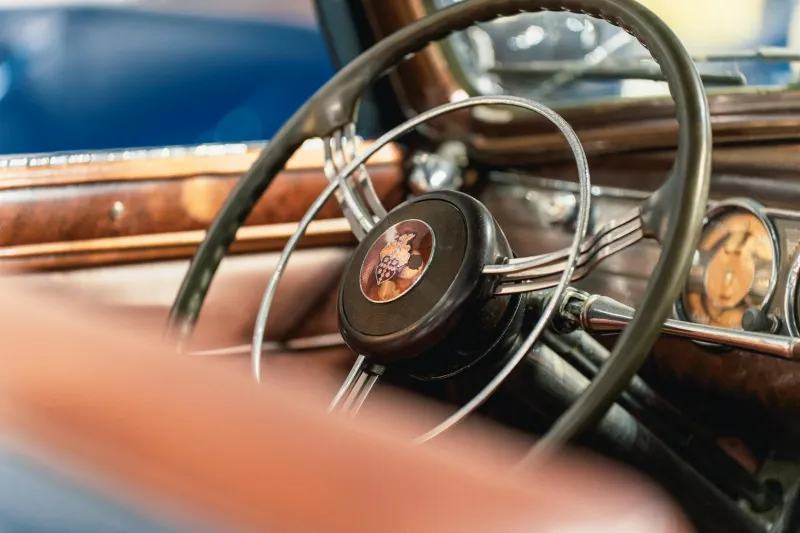
Every time you flip that little lever behind your steering wheel, you're using technology that took two decades to catch on — despite being brilliantly simple and potentially life-saving from day one.
The Hand-Waving Days of Early Driving
Before turn signals existed, driving was basically an elaborate game of charades. Early motorists stuck their arms out windows, waved frantically, and hoped other drivers could decode their intentions. Some cars featured mechanical semaphore arms that popped out from the sides — little metal flags that drivers could deploy with a lever. These contraptions worked about as well as you'd expect, frequently breaking, getting stuck, or simply being ignored by other drivers.
By the 1920s and 1930s, as roads became more crowded, the limitations of arm-waving became deadly obvious. Accidents multiplied as drivers struggled to communicate their next moves, especially at night or in bad weather when hand signals became practically invisible.
Enter the Broadway Innovator
The solution came from an unexpected source: Edgar A. Walz Jr., a man who spent his days making Broadway stages glow with theatrical lighting. In 1938, Walz looked at the automotive communication problem and saw something the car industry had missed — this wasn't really about mechanics, it was about visibility and timing.
Walz's patent described an "directional signal for automobiles" that used electric lights to flash in sequence, creating an unmistakable arrow pattern that would be visible day or night. His design featured a series of small bulbs that would illuminate in progression, pointing clearly in the direction the driver intended to turn. The system was elegant, foolproof, and dramatically safer than anything drivers had used before.
But here's where the story gets frustrating: virtually nobody cared.
The Great Automotive Shrug
Walz pitched his invention to major automakers throughout the late 1930s and early 1940s, expecting them to jump at the obvious safety improvement. Instead, he encountered a wall of indifference that would persist for nearly twenty years.
Detroit's reasoning was maddeningly practical: drivers had been using hand signals for decades, so why fix what wasn't broken? The added electrical complexity seemed unnecessary when a simple arm gesture worked fine. Besides, installing turn signals would add cost to every vehicle, and in an era when cars were still considered luxury items for many Americans, every penny counted.
The timing didn't help either. World War II consumed the industry's attention and resources, pushing civilian automotive innovations to the back burner. When the war ended, pent-up demand for basic transportation meant manufacturers focused on volume production rather than fancy new features.
The Slow Road to Acceptance
Gradually, a few forward-thinking manufacturers began offering turn signals as optional equipment. Buick introduced them on some 1940 models, but they remained expensive add-ons that most buyers skipped. Other companies experimented with different approaches — some used single blinking lights, others tried various arrow configurations.
The breakthrough came from an unexpected direction: commercial vehicles. Fleet operators, dealing with professional drivers who spent all day navigating traffic, quickly recognized the safety and efficiency benefits of clear turn signals. As trucking companies and taxi fleets adopted the technology, word spread about its practical value.
When Safety Finally Won
By the mid-1950s, turn signals had evolved into the familiar amber blinkers we know today. The sequential arrow design of Walz's original patent gave way to simpler single-bulb systems that were cheaper to manufacture and maintain. More importantly, growing awareness of traffic safety — spurred by rising accident rates on newly built interstate highways — finally created demand for better vehicle communication.
The real turning point came in 1965 when the federal government mandated turn signals on all new vehicles sold in the United States. What Edgar Walz had envisioned as obviously necessary in 1938 finally became law twenty-seven years later.
The Theater Connection That Made It Work
Walz's background in theatrical lighting proved crucial to his innovation. While automotive engineers thought mechanically about signaling, Walz understood the psychology of visual communication. His experience with stage lighting taught him how to create unmistakable visual cues that would grab attention even in chaotic environments — exactly what drivers needed on busy roads.
The sequential flashing pattern he patented mimicked the way theater lights could guide an audience's eye across a stage. This wasn't just about making a light blink; it was about creating a visual narrative that told other drivers exactly what to expect.
Why It Took So Long
The twenty-year delay between invention and adoption reveals something important about how safety innovations actually spread. Even obviously beneficial technologies face resistance when they challenge established practices, add costs, or require industry-wide coordination.
Walz's turn signal succeeded not because it was brilliant — though it was — but because changing circumstances finally made its benefits impossible to ignore. Rising traffic density, federal safety regulations, and growing public awareness of automotive dangers created the conditions where his 1938 innovation could finally find its market.
Today, as we debate the adoption of new automotive technologies like autonomous driving features, Walz's story offers a reminder that even the most sensible innovations often take decades to become standard. Sometimes the most obvious ideas are the hardest ones to sell.