The Flat Tire That Changed Everything: How One Breakdown Made Spare Tires Standard
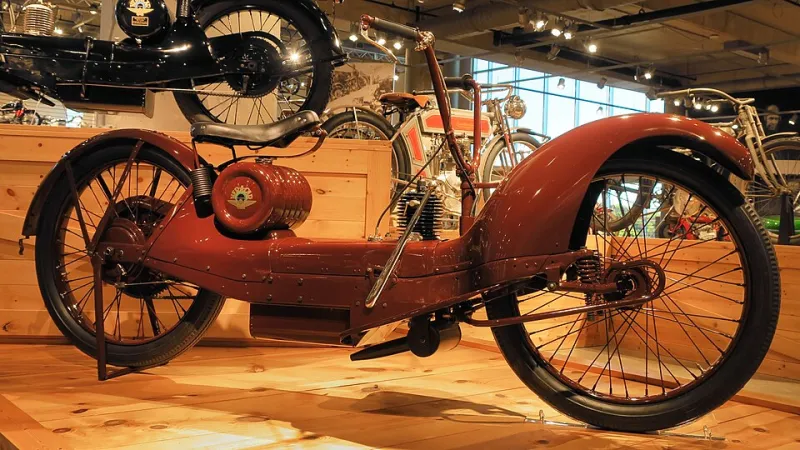
Photo: Nheyob, CC0, via Wikimedia Commons
You've probably never thought twice about the spare tire sitting in your trunk. It's just there — a quiet, dusty insurance policy tucked beneath a layer of cargo you forgot you were carrying. But that spare tire didn't always come standard. For the first two decades of automobile history, driving without a backup was perfectly normal. Getting a flat meant you were simply stuck.
So how did we get from stranded and helpless to factory-standard preparedness? The answer starts with a busted tire on a lonely road and a man who had the connections to turn his bad luck into everyone else's good fortune.
When Cars Were Still Figuring Themselves Out
In the early 1900s, cars were novelties as much as they were transportation. Roads were rough, rubber was unreliable, and breakdowns were practically a scheduled part of any long journey. Early tires were fragile things — thin, prone to punctures, and completely at the mercy of whatever a dirt road decided to throw at them.
Most drivers carried a repair kit: a pump, some rubber patches, and a healthy tolerance for frustration. If you were lucky, you'd get a flat near a town with someone who knew what to do. If you weren't lucky, you sat on the side of the road and waited for a passing horse cart to take pity on you.
The idea of carrying a fully inflated backup tire existed in theory, but it was expensive and bulky. Manufacturers didn't include them. Drivers didn't demand them. It was just the cost of doing business on America's primitive early roads.
The Breakdown That Started a Conversation
By the early 1920s, automobiles had become more reliable — but tires still hadn't caught up. Rubber technology was improving, but blowouts on unpaved roads remained common enough to be a genuine hazard.
The incident that shifted the conversation wasn't a single dramatic crash. It was something more mundane: a prominent businessman — the kind of man whose schedule mattered and whose complaints got listened to — found himself stranded on a remote stretch of road after a tire gave out. There was no repair kit. There was no town nearby. There was just a broken car and a very long walk.
The story spread the way stories did back then — through newspapers, industry circles, and the kind of dinner party conversations that shaped policy. The man wasn't just embarrassed. He was furious. And he made sure the right people heard about it.
From Personal Complaint to Industry Debate
What followed was less a lightning-bolt moment and more a slow-burning argument that the automotive industry had been quietly avoiding. If cars were going to be sold as reliable transportation — not just wealthy men's toys — then manufacturers had a responsibility to equip them for real-world failures.
The pushback was predictable. Adding a spare tire to every vehicle meant added cost, added weight, and a redesign of how cars were built. Where would it go? Who would pay for it? Was it really the manufacturer's problem if a driver got a flat on a bad road?
But the logic was hard to argue with. Trains carried emergency equipment. Ships had lifeboats. Why should a car be the only form of transportation sold without any contingency for its most common failure mode?
Automotive trade associations began debating minimum equipment standards. Consumer advocates — still a relatively new concept — pushed back against the idea that buyers should simply accept the risk. Insurance companies, quietly running the numbers on roadside accident claims, started leaning toward standardization too.
The Federal Nudge That Made It Official
Through the 1920s and into the 1930s, spare tire inclusion crept from optional upgrade to expected feature. Manufacturers began advertising their vehicles' spare tire mounts as selling points. The external-mounted spare — bolted to the back of the car or tucked into a fender well — became a design signature of the era, as much a part of the car's aesthetic as its headlamps.
Federal guidance eventually formalized what the market had already started to accept. As highway infrastructure expanded and Americans began driving longer distances between towns, the case for mandatory minimum safety equipment became impossible to ignore. Spare tires weren't just a convenience — they were, regulators argued, a public safety issue. A stranded car on a fast road was a hazard to everyone, not just the driver.
By the post-World War II era, the spare tire wasn't a premium feature or an optional add-on. It was simply part of what a car was.
The Hidden Lesson in Your Trunk
What makes this story worth telling isn't just the tire. It's the pattern. A single, high-profile inconvenience — experienced by someone with the platform to complain loudly — triggered an industry-wide conversation that eventually produced a universal standard.
It's the same story behind seatbelts, airbags, and backup cameras. Safety features rarely emerge from pure altruism. They emerge from failures that became impossible to ignore, pushed by people who had both the experience and the influence to demand change.
Your spare tire is a quiet monument to that process. Somewhere between a frustrated businessman's long walk and a federal guideline nobody reads, it ended up in your trunk — and it's been there ever since.
Next time you check your trunk and see that dusty wheel sitting there, remember: it wasn't always standard. Someone's really bad day made sure it would be.