She Invented It in 1903. By the Time Anyone Cared, Her Patent Was Gone.
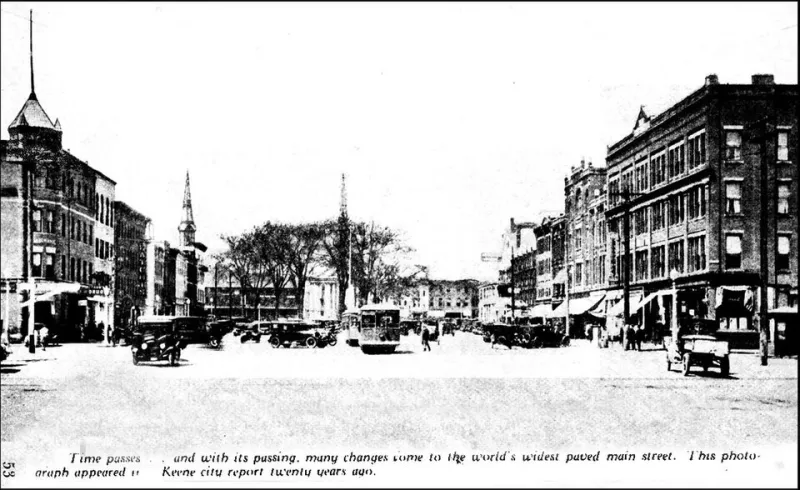
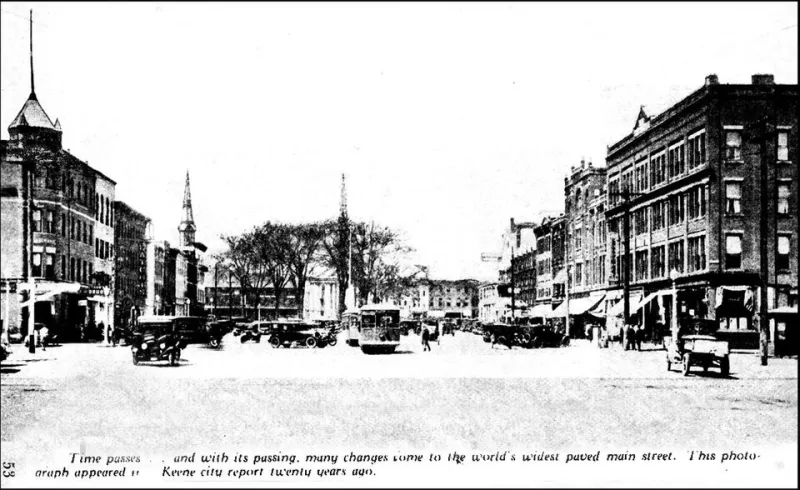
Photo: Keene Public Library and the Historical Society of Cheshire County from USA, No restrictions, via Wikimedia Commons
Every time it rains, you use something a woman from Alabama invented over a century ago. You've probably never heard her name. The car industry made sure of that.
The windshield wiper has been standard on every automobile sold in America since the 1910s. It is, by any reasonable measure, one of the most important safety features ever added to a vehicle — arguably more critical than the horn, the headlight, or the bumper. And it was invented not by an engineer, not by a Detroit executive, not by anyone connected to the automobile industry at all. It was invented by a real estate developer and rancher from Birmingham, Alabama, named Mary Anderson, during a single streetcar ride through New York City in the winter of 1903.
What happened next is a story about patents, timing, and the particular way that early American industry had of absorbing a woman's idea while quietly erasing her name.
A Streetcar, a Snowstorm, and an Obvious Problem
Anderson was visiting New York when she boarded a streetcar on a wet, sleety day and noticed something that bothered her immediately. The driver kept stopping the car, stepping out into the cold, and manually wiping the windscreen with his hand so he could see the road. Every few minutes. Over and over.
To Anderson, this was absurd. There had to be a mechanical solution — some kind of arm with a rubber blade that a driver could operate from inside the vehicle without ever stopping. She sketched the concept on the ride home.
Back in Birmingham, she worked with a local designer to build a working model: a rubber squeegee blade mounted on a pivoting arm, controlled by a hand lever inside the vehicle, with a counterweight system to keep the blade pressed firmly against the glass. In November 1903, the U.S. Patent Office granted her Patent No. 743,801 for a "window cleaning device for electric cars and other vehicles."
She was 37 years old. The Ford Model T wouldn't exist for another five years.
The Industry Shrugged
With her patent in hand, Anderson did what any inventor would do: she tried to sell it. She approached a Canadian manufacturing firm, pitching the device as a practical addition to automobiles and streetcars alike. Their response, preserved in correspondence, was polite and dismissive. They told her the device had no commercial value and that any attachments to the windshield would be a distraction to drivers.
No other manufacturer expressed interest either. Anderson's patent sat unused.
This wasn't entirely unusual. The early automobile industry in America was chaotic, underfunded, and deeply skeptical of outside ideas. Hundreds of legitimate innovations were ignored in those years because manufacturers were too focused on the basic engineering problems of making cars run at all. Windshield wipers were a luxury problem when half the cars on the road were still breaking down every few miles.
But timing was the real killer. Anderson's patent was granted for a seventeen-year term. By the time the automobile market exploded in the early 1910s — when Henry Ford's assembly line made cars affordable for ordinary Americans and windshields became standard equipment — Anderson's patent had expired. It entered the public domain in 1920.
The moment her legal protection disappeared, everyone suddenly discovered the windshield wiper.
The Patent Free-for-All
What followed was one of the messier episodes in early automotive history. With no valid Anderson patent to license or challenge, manufacturers began filing their own wiper patents by the dozen. Competing designs flooded the market — some with hand levers, some with foot pedals, some with vacuum-powered mechanisms. Each company claimed originality. Lawsuits piled up.
In 1917, Charlotte Bridgwood — an inventor and theater owner — patented an automatic, motor-driven wiper system, an improvement on Anderson's manual concept. Her daughter, the actress Florence Lawrence, helped promote it. Bridgwood's automatic design was arguably closer to the modern wiper, but she too struggled to commercialize it and eventually sold the patent under unfavorable terms.
By the mid-1920s, windshield wipers were standard equipment on most American vehicles. Virtually every manufacturer and automotive journalist of the era described them as a recent industry innovation. Mary Anderson's name appeared nowhere in the conversation.
It wasn't until automotive historians began digging through patent records decades later that the original 1903 filing resurfaced. The Antique Automobile Club of America recognized Anderson for her invention in 2011. She had died in 1953, never having received a cent from the device that would eventually appear on every car, truck, bus, and train in the world.
Why Her Story Keeps Mattering
The Anderson case isn't just a footnote in patent history. It's a window into how the early American auto industry actually worked — and who it worked for.
The period between 1900 and 1920 was genuinely wild in terms of invention. Thousands of patents were filed, fought over, abandoned, and stolen. Independent inventors, many of them women and people outside the industry mainstream, contributed ideas that manufacturers absorbed without credit or compensation. The legal system was slow, expensive, and heavily weighted toward established companies with lawyers on retainer.
Anderson had the right idea at exactly the wrong moment. A few years later, and she might have negotiated a licensing deal worth a fortune. A few years earlier, and there wouldn't have been enough cars on the road to matter.
Instead, every rainy commute in America runs on an idea she sketched on a streetcar, on a winter afternoon, more than 120 years ago.