Red Means Stop, But Who Decided? The Forgotten Grief Behind the Automated Traffic Light
Stand at any busy intersection in America and watch the signal cycle through. Red. Green. Yellow. It happens so automatically, so reliably, that it barely registers as a technology at all. It's just the way intersections work — the way they've always worked.
Except they haven't. The automated traffic signal is barely a century old. And the story of how it came to exist involves a grief-stricken inventor, a gas lighting company's clever side project, and the specific chaos of early American cities that nobody had designed for cars.
Before the Lights Came On
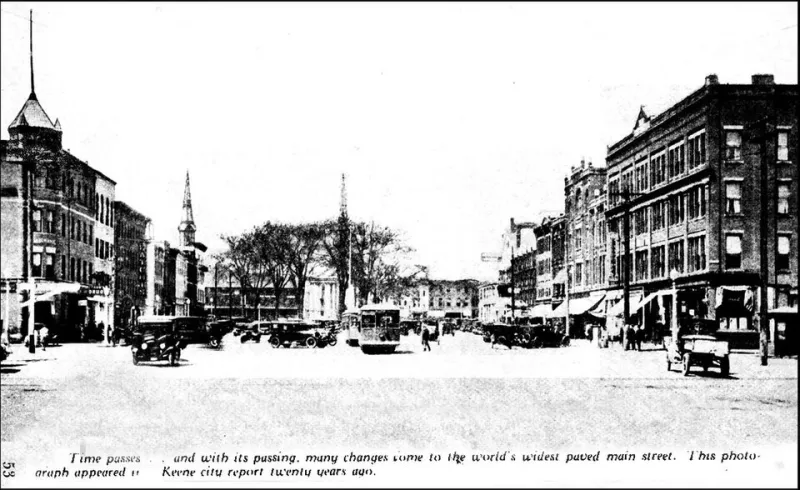
In the early 1900s, American cities were a genuine mess of competing traffic. Horses, streetcars, pedestrians, bicycles, and the growing flood of automobiles all shared the same streets with no meaningful system for managing who went when. Intersections were negotiated by instinct, aggression, and occasional police officers standing in the middle of the road waving their arms.
Those officers — traffic cops — were the original traffic signals. Cities like New York and Chicago stationed them at busy corners during peak hours, but it was exhausting, expensive, and wildly inconsistent. One officer's interpretation of right-of-way wasn't necessarily another's. Accidents were common. Frustration was universal.
The first attempts at mechanical signals borrowed directly from the railroad industry, which had been managing train routing with colored lights and semaphore arms for decades. Early traffic signals were essentially scaled-down railroad signals: manually operated, positioned at major intersections, and still requiring a human operator nearby to change them. They were better than nothing, but only marginally.
The Inventor Nobody Remembers
Here's where the backstory gets complicated — and contested.
The name most commonly attached to the automatic traffic signal is Garrett Morgan, the Black inventor from Cleveland who patented a T-shaped signal design in 1923. Morgan's invention was genuinely important: it introduced a third position — a neutral or caution phase — between stop and go, which is the direct ancestor of today's yellow light. He sold his patent to General Electric, and his design influenced the spread of standardized signals across American cities.
But the deeper origin story, the one that's less frequently told, involves a woman named Alice Hamilton Lee — a figure whose name has largely disappeared from popular histories of the traffic signal. Lee, according to accounts documented in several early-20th-century municipal planning records, lost a child to a streetcar collision at an uncontrolled intersection in the mid-1910s. The accident occurred at a crossing where traffic from multiple directions converged with no clear right-of-way system.
Grief, for some people, becomes obsession. For Lee, it became engineering.
She spent years lobbying city transportation boards and working with electrical engineers to develop a signal that could operate automatically — no human operator required — and that used a timed cycle to impose order on intersections rather than relying on human judgment. Her specific contributions were largely absorbed into the broader municipal engineering conversation of the era, credited to committees and city agencies rather than to her directly. It was a common fate for women inventors in that period, and it's one reason her name doesn't appear in most standard histories of the traffic light.
What she left behind wasn't a single patent. It was a framework: the idea that intersections needed a timed, automatic, standardized system rather than ad hoc human management. That framework became the architecture every subsequent inventor worked within.
The Race to Standardize
Through the 1910s and early 1920s, traffic signal designs proliferated. William Potts, a Detroit police officer, developed a four-way signal using railroad light technology around 1920. John Peake Knight had experimented with gas-powered signals in London years earlier. Lester Wire, a Salt Lake City police officer, built a two-color electric signal around 1912 that he never bothered to patent.
Everybody had an idea. Nobody agreed on colors, timing, or placement height. Some cities used red and green only. Some added white. Some used semaphore arms alongside lights. Drivers traveling between cities encountered different systems at every stop, which created its own category of dangerous confusion.
The standardization breakthrough came in stages. The American Association of State Highway Officials and the National Conference on Street and Highway Safety spent much of the 1920s hammering out a uniform system. By 1935, the Manual on Uniform Traffic Control Devices established consistent color meanings, signal placement standards, and timing protocols across the country. Red on top, green on bottom — chosen partly because red's higher position made it visible to colorblind drivers who couldn't distinguish hues but could read position.
The yellow caution light, Morgan's key contribution, was written into the standard as the essential buffer between stop and go — the interval that made the whole system safer by acknowledging that cars don't stop instantly.
What a Grieving Mother Built
The traffic signal we interact with today is the product of dozens of inventors, engineers, bureaucrats, and city planners. No single person deserves sole credit for it. But the impulse that drove its development — the recognition that uncontrolled intersections were killing people and that the solution had to be automatic, consistent, and universal — has a human origin.
Somewhere behind the clean engineering history is a woman who stood at an intersection after losing her child and decided that what happened there should never happen again. The signal that hangs above your commute every morning is, in some measure, the result of that decision.
Red means stop. It's been standardized, federalized, and engineered into infrastructure so thoroughly that it feels like a law of physics. But it started, like most things that matter, with someone who was angry enough and heartbroken enough to refuse to accept the world as it was.