How One Angry Mom's Letter to City Hall Gave Birth to the Carpool Lane
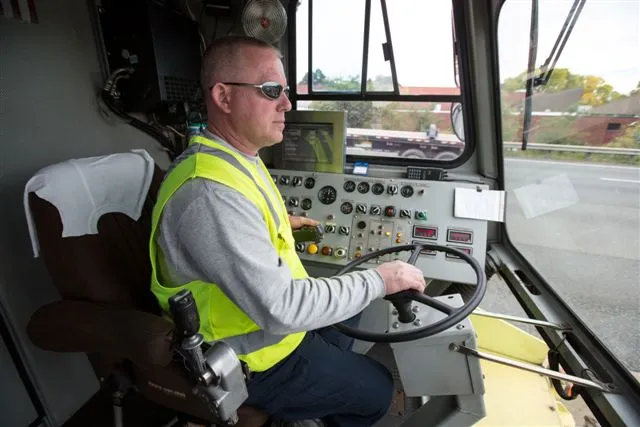
Photo: MassDOT, Public domain, via Wikimedia Commons
There's a diamond-shaped sign you've probably driven past thousands of times without giving it much thought. White letters on black: HOV 2+. High-Occupancy Vehicle lane. If you've got a passenger, you can slide into that left lane and cruise past a mile of gridlock. If you're alone, you stay put and wait.
It's one of the most familiar features of the American highway system. It's also the kind of infrastructure that feels like it was designed by engineers in a government building, rolled out through some federal transportation mandate, and handed down fully formed.
It wasn't. It started, more or less, with a very frustrated woman and a very bad school drop-off.
The Morning Nobody Could Move
Picture a typical American suburb in 1962. Ranch houses, young families, new schools built fast to keep up with the baby boom. And every weekday morning, the same slow-motion disaster: hundreds of parents driving their kids to school at exactly the same time, converging on the same two-lane roads, creating gridlock that could back up for half a mile before the first bell rang.
In communities outside Los Angeles — which was already becoming the cautionary tale of car-dependent sprawl — this wasn't just annoying. It was becoming a safety issue. Kids crossing roads blocked by idling cars. Parents running late to work. Emergency vehicles unable to get through residential streets during peak drop-off hours.
A woman named Dorothy Pearsall, a mother of three living in a suburb east of Los Angeles, had been watching this deteriorate for two school years before she sat down and did something about it. She wrote a letter to her city council. Then she wrote another one. Then she organized several of her neighbors to write their own.
Her core argument was simple and, in retrospect, obvious: most of those cars had one person in them. If even half the families on her street coordinated their school runs, the traffic would be cut dramatically. But nobody had a reason to coordinate, and nothing in the road system encouraged them to.
She wanted the city to do something — anything — to make sharing rides more attractive than going it alone.
A Letter That Went Further Than Expected
City councils in early 1960s California were not typically in the habit of taking traffic engineering cues from constituent letters. But Pearsall's correspondence landed at a particular moment. Los Angeles was already in open war with its own freeway congestion, and transportation planners at the state and federal level were beginning to accept that building more lanes wasn't going to solve anything. The math didn't work. Every new lane generated new demand.
Her letters eventually reached a mid-level transportation planner in the California Department of Public Works named Gerald Foss, who had been quietly developing a theory that the problem wasn't road capacity — it was vehicle occupancy. The roads weren't full of cars. They were full of drivers. One person per 3,000 pounds of steel, repeated thousands of times, was the actual problem.
Foss had been trying to make this argument internally for over a year with limited traction. Pearsall's letters, and the small but vocal community organizing around them, gave him something more valuable than a white paper: constituent demand.
From Complaint to Concept
What emerged from the combination of grassroots pressure and Foss's internal advocacy wasn't a fully formed HOV lane — not yet. The first concrete step was more modest: a pilot program in several suburban school zones that designated certain drop-off periods as carpool-priority, with informal lane arrangements and signage encouraging multi-passenger vehicles to use a specific approach route.
It was clunky. Enforcement was nearly impossible. But it worked well enough to generate data, and that data was striking. During carpool-priority periods, throughput — the number of people moving through a given stretch of road per hour — increased significantly even as the number of vehicles dropped.
This was the insight that changed everything. The metric that mattered wasn't cars per lane. It was people per lane. And if you could design a lane that physically rewarded higher occupancy, you could move more people with less road.
By the late 1960s, this thinking had climbed the ladder into federal transportation policy discussions. The 1970 Earth Day movement and the 1973 oil crisis supercharged it — suddenly, carpooling wasn't just a congestion solution, it was a patriotic energy conservation strategy. The Federal Highway Administration began formally studying exclusive lanes for high-occupancy vehicles.
The first true HOV lane in the United States opened on the Shirley Highway in Northern Virginia in 1969, initially for buses and later expanded to carpools. Within a decade, the concept had spread to California, Texas, Washington, and beyond.
What the Diamond Sign Actually Represents
Today, there are more than 5,000 miles of HOV lanes operating across the United States. In major metros like Los Angeles, Atlanta, Seattle, and Houston, they form a critical artery of the commuting infrastructure. Some have evolved into express toll lanes that allow solo drivers to pay for access, a compromise that generates funding while preserving the core occupancy incentive.
None of that was on Dorothy Pearsall's mind when she sat down to write her city council letter in 1962. She wanted the school drop-off to be less of a nightmare. She wanted someone in charge to notice that a street full of single-occupant vehicles was a street being used badly.
She was right, and eventually the right people listened. The carpool lane isn't a federal invention or an engineering breakthrough. It's the result of a suburban mother's refusal to accept that the morning commute had to be that bad — and a transportation planner who recognized that her frustration was actually a data point.
Next time you slide into that diamond lane with a passenger, you're benefiting from both of them.