The Balloon in the Glove Box: How a Professor's Weird Chemistry Kit Became the Breathalyzer
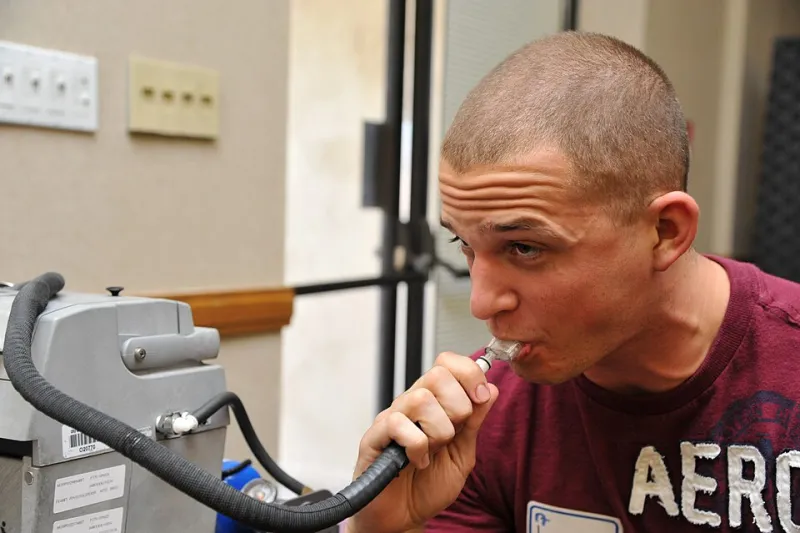
Photo: U.S. Air Force photo by Senior Airman Sandra Welch, Public domain, via Wikimedia Commons
The Balloon in the Glove Box: How a Professor's Weird Chemistry Kit Became the Breathalyzer
Picture a traffic stop in 1930s America. A police officer pulls over a driver who's weaving between lanes. The officer leans into the window, takes a whiff, and makes a judgment call. Drunk or not drunk. Lock him up or let him go. The entire enforcement of impaired driving law came down to one person's nose and gut feeling — and in court, that gut feeling was surprisingly easy to argue away.
The idea that chemistry could replace intuition at the roadside sounded, to most people in law enforcement at the time, like science fiction. Then a biochemistry professor in Bloomington, Indiana built a device that proved otherwise — and accidentally rewrote the rules of traffic policing.
The Problem With Smelling Drunk
By the 1930s, drunk driving was already recognized as a serious public safety problem. Alcohol-related crashes were killing thousands of Americans every year, and laws against impaired driving existed in most states. The problem was enforcement. How do you prove, in a court of law, that someone was drunk?
Blood tests could detect alcohol, but they required a doctor, a needle, and a laboratory. They were invasive, slow, and logistically impossible at the roadside. Urine tests existed but had their own complications. The gap between suspecting a driver was impaired and actually proving it in court was wide enough to drive a Buick through — and defense attorneys did exactly that, regularly.
Rolla Harger understood this problem because he'd been thinking about the chemistry of alcohol metabolism for years. As a professor of biochemistry and toxicology at Indiana University, he knew that when the body processes alcohol, it expels a measurable proportion of it through the lungs. Your breath, in other words, was a chemical record of what you'd been drinking. The question was whether you could read that record on the side of a road.
 Photo: Indiana University, via www.joeyblsphotography.com
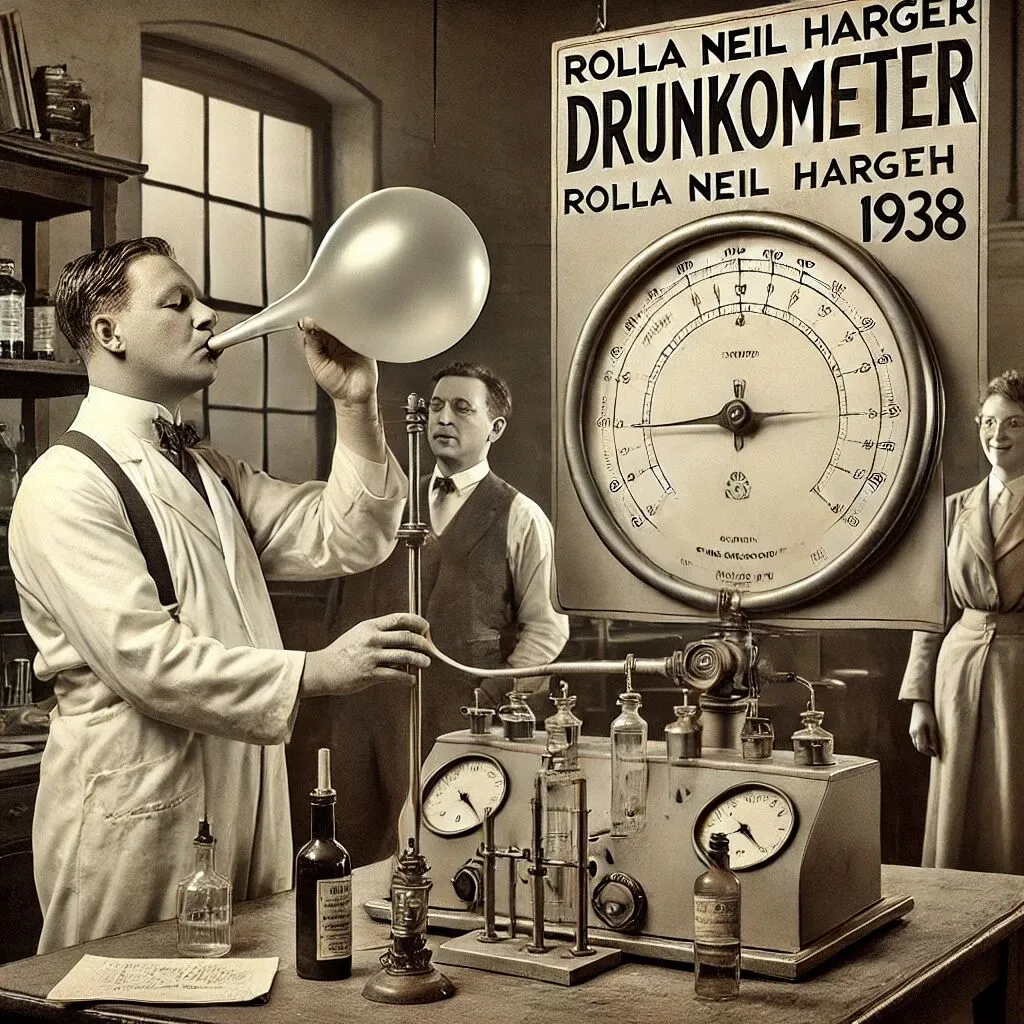 Photo: Rolla Harger, via imageserver.startpagina.nl
The Drunkometer Gets Built
Harger's answer, which he patented in 1936 and demonstrated publicly in 1938, was a device he called the Drunkometer. It was not, by any modern standard, a sleek piece of technology. It involved a balloon, which the subject blew into, a series of tubes, and a glass container filled with a purple chemical solution — potassium permanganate, which reacted with alcohol and changed color. The more alcohol in the breath, the more the color shifted. You measured the color change, ran it through a conversion chart, and got a blood alcohol estimate.
The apparatus looked like something assembled in a high school chemistry class. It was bulky, fragile, and required a degree of care to operate correctly. Police officers were not, as a professional group, especially enthusiastic about carrying chemistry equipment in their patrol cars.
But Harger was patient and persistent. He spent years demonstrating the device to police departments, prosecutors, and judges across Indiana and beyond, explaining the science in terms that non-chemists could follow and making the case that this purple-crystal contraption was more reliable than any officer's nose. Slowly, skeptically, law enforcement began to listen.
The Courts Take Chemistry Seriously
The real breakthrough wasn't technical — it was legal. For the Drunkometer to matter, courts had to accept its results as evidence. That meant establishing scientific credibility in a legal context, which required not just good chemistry but good courtroom advocacy.
Harger testified in case after case, explaining how the device worked, why the chemistry was sound, and why the results were reliable. He faced cross-examinations designed to discredit the science and challenge the methodology. He answered them methodically, and over time, the legal system came around. By the early 1940s, Indiana courts were accepting Drunkometer results as evidence of impairment.
Other states followed. The idea that roadside chemistry could establish legal guilt — that a machine could testify, in effect, against a driver — was a genuine conceptual shift in how American law approached traffic enforcement. Before the Drunkometer, drunk driving cases rested almost entirely on officer testimony. After it, they could rest on data.
From Purple Crystals to Digital Readouts
Harger's design was improved upon fairly quickly. In 1954, a researcher named Robert Borkenstein — who had worked with Harger and gone on to become captain of the Indiana State Police laboratory — developed the Breathalyzer, a more practical and reliable device that used a different chemical reaction and was easier for police officers to operate in the field. The name stuck, eventually becoming generic shorthand for any breath-alcohol testing device.
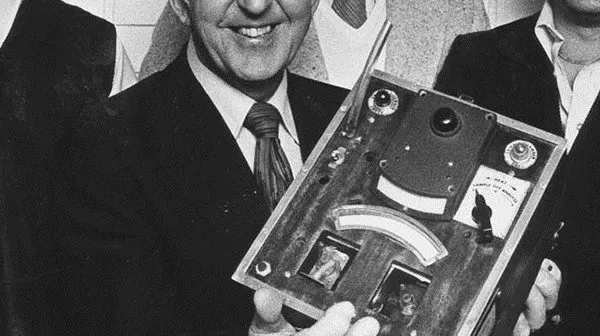 Photo: Robert Borkenstein, via www.oexplorador.com.br
Borkenstein's version used a photoelectric cell to measure color change rather than visual comparison, removing human judgment from the reading. It was more accurate, more consistent, and far more courtroom-friendly. By the 1960s, Breathalyzer results were being accepted as evidence in courts across the country. By the 1970s, most states had established legal blood alcohol limits — the famous 0.10 percent standard that later tightened to 0.08 — that were defined specifically in terms of what a breath test could measure.
The modern devices used today — digital, handheld, capable of printing a result in seconds — are technologically unrecognizable compared to Harger's balloon-and-purple-crystals setup. But the underlying principle is unchanged: alcohol leaves a chemical trace in breath, that trace can be measured, and that measurement can be used as legal evidence.
The Judgment Call That Chemistry Replaced
What Harger actually invented, more than a device, was a new standard of proof. Before the Drunkometer, impaired driving enforcement was inherently subjective — one person's assessment of another person's condition. After it, there was a number. A number that could be written down, reproduced, challenged on scientific grounds, and defended in court.
That shift from judgment to measurement is one of the quieter revolutions in American legal history. It didn't happen overnight, and it wasn't universally welcomed. But the next time you see a police officer at a roadside stop holding a small plastic device up to a driver's lips, you're watching the direct descendant of a biochemistry professor's balloon experiment — and the moment American law decided that chemistry was a more reliable witness than a human nose.