How a Small-Town Inventor's Stolen Idea Put a Click in Every American Car
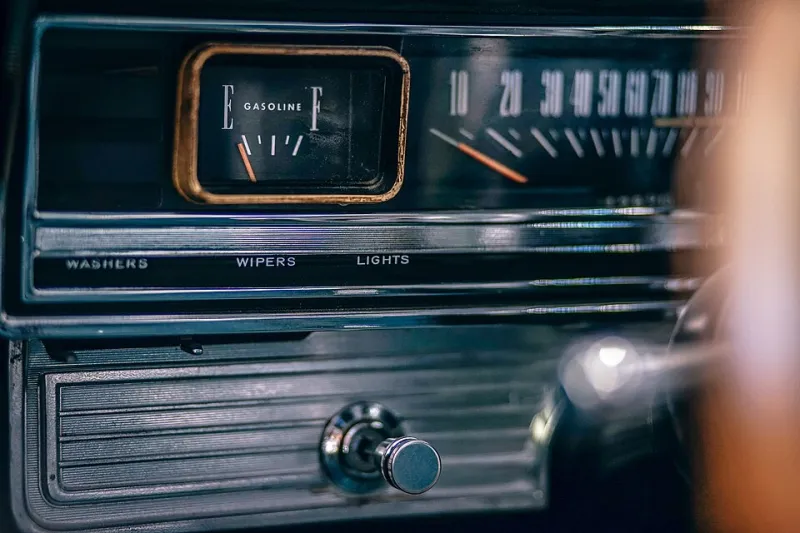
Photo: Igor Ovsyannykov igorovsyannykov, CC0, via Wikimedia Commons
How a Small-Town Inventor's Stolen Idea Put a Click in Every American Car
Every time you flick on your turn signal, you're participating in one of the most universal rituals of American driving. The lever moves, the light blinks, the dashboard ticks its familiar rhythm. It's so ordinary that most drivers give it zero thought — which is exactly the kind of invisibility that tends to hide a genuinely strange backstory.
The turn signal's path from hand gesture to federally mandated safety device runs straight through a patent fight that Detroit would rather you forgot, a transatlantic borrowing dispute that never got properly resolved, and one engineer whose name almost nobody knows despite the fact that his idea is installed in essentially every passenger vehicle on American roads.
Before the Click, There Was the Wave
For the first few decades of automobile travel in the United States, drivers communicated directional intent the same way cyclists still do today — with their arms. A left arm extended straight out meant a left turn. A left arm bent upward at the elbow indicated a right turn. A left arm angled downward signaled a stop.
This system worked tolerably well when traffic was sparse and speeds were low. As roads got busier and cars got faster, it became increasingly inadequate. Nighttime driving made hand signals nearly invisible. Rain made drivers reluctant to open windows. And the whole arrangement required a level of coordination and attention that not every driver reliably delivered.
The need for a mechanical signaling device was obvious. The question was who would build one worth using.
The Engineer Nobody Remembers
In the mid-1930s, an inventor named Joseph Bell worked out a self-canceling turn signal mechanism — a device that would automatically return the signal lever to the neutral position after a turn was completed, using the motion of the steering column to trigger the reset. This was the key innovation. Earlier signal attempts had required the driver to manually cancel the signal after turning, which most people promptly forgot to do. Bell's self-canceling design solved the most annoying practical problem with the concept.
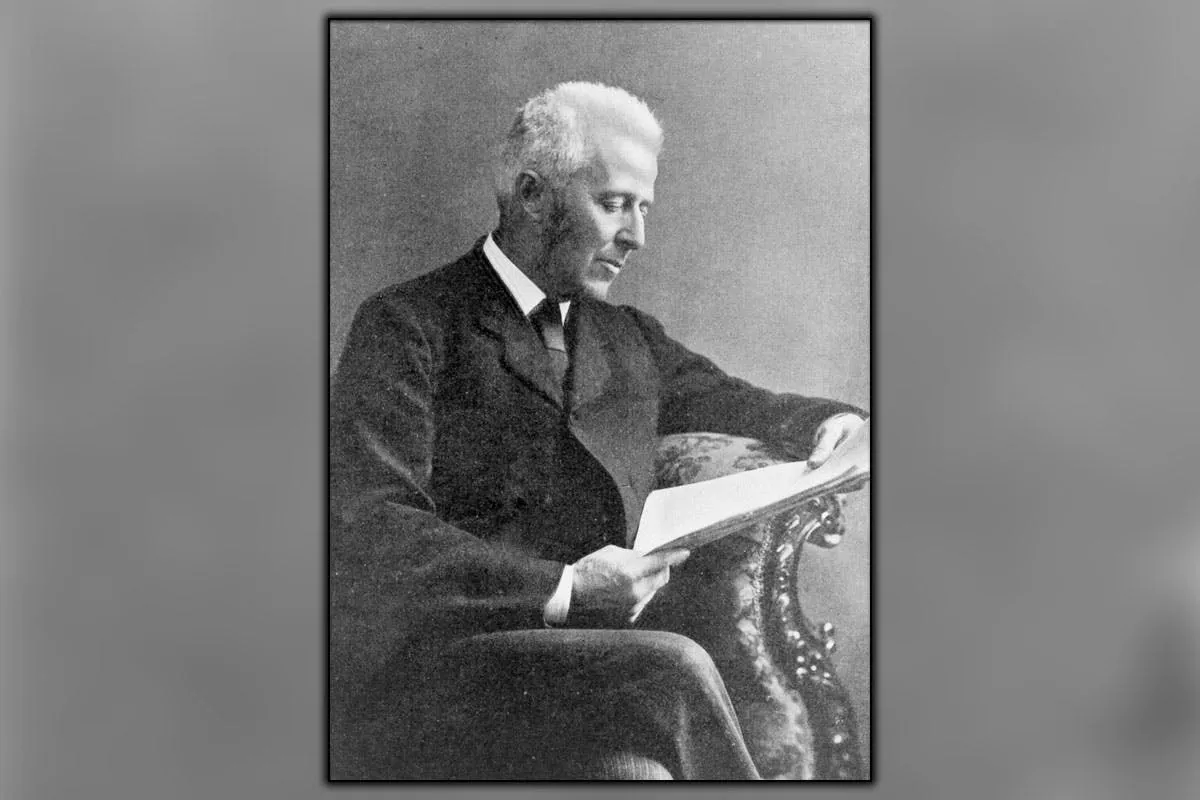 Photo: Joseph Bell, via images-bonnier.imgix.net
Bell filed for a patent and began shopping his design to American automakers. The response from Detroit was underwhelming. The major manufacturers were slow to see turn signals as a priority, and Bell struggled to get traction.
Meanwhile, across the Atlantic, European automakers — particularly in Germany — had been developing their own directional signaling systems. Some of those designs overlapped significantly with Bell's patent claims. When those European concepts began filtering into American automotive development circles, the intellectual property picture got complicated quickly.
Detroit's Quiet Solution
The way Detroit handled the resulting patent tangle was characteristically pragmatic and characteristically opaque. Rather than fight a prolonged legal battle over who owned which specific elements of the turn signal design, the major American manufacturers negotiated licensing arrangements that absorbed the competing patents into the production pipeline. The terms of those arrangements were rarely publicized. Engineers whose designs got incorporated into production vehicles often received modest flat payments rather than ongoing royalties.
By the early 1940s, several American car manufacturers were offering turn signals as optional equipment. Buick introduced an automatic self-canceling signal in 1939 — a development that drew heavily on the prior work of independent inventors without always making the lineage clear in its marketing materials.
The public story Detroit told was one of in-house engineering innovation. The messier reality, involving outside inventors and unresolved European patent claims, got quietly filed away.
The Law Steps In
What ultimately put turn signals in every American car wasn't consumer demand or Detroit's enthusiasm — it was government mandate. Individual states began requiring turn signals on new vehicles through the 1950s, and federal standards eventually standardized the requirement nationwide. By the mid-1960s, a functional turn signal was a legal requirement on every new passenger vehicle sold in the United States.
This regulatory push did something interesting to the history of the device. Once turn signals became mandatory infrastructure rather than optional features, the question of who invented them faded from public conversation. The signal was just part of the car, the way a steering wheel or a brake pedal was part of the car. Its origins stopped mattering to most people.
Which, from Detroit's perspective, was probably a convenient outcome.
What the Click Actually Represents
There's a broader pattern embedded in this story that shows up repeatedly in American automotive history. Detroit was extraordinarily good at identifying useful ideas — from independent inventors, from European competitors, from academic researchers — absorbing them into production vehicles, and marketing the results as homegrown American engineering. Sometimes the original inventors were compensated fairly. Often they weren't. Almost always, their names disappeared from the public narrative.
The turn signal is a fairly clean example of this dynamic because the core innovation — the self-canceling mechanism — is so specific and so clearly traceable. Bell's basic concept, that a turn signal should know when a turn is finished and reset itself automatically, is still the fundamental operating principle of every turn signal in every car on every American road right now.
Hundreds of thousands of accidents have been prevented by that one insight. Millions of drivers have benefited from it every single day for the better part of a century.
And almost none of them have ever heard the name of the man who figured it out first.