The Doctor Who Turned Personal Tragedy Into America's First Seatbelt Law
The Phone Call That Changed Everything
Dr. Robert Sanders was used to delivering bad news. As an emergency room physician in upstate New York, he'd seen every kind of traffic accident imaginable. But the call he received on a cold February morning in 1973 was different — this time, it was about his own teenage daughter.
The drunk driver who hit her car walked away without a scratch. His daughter didn't.
"She was thrown from the vehicle," Sanders would later tell legislators. "If she'd been wearing a seatbelt, she'd probably be alive today." What followed was a decade-long crusade that would make New York the first state in America to pass a mandatory seatbelt law — but not without a fight that nearly killed the entire effort multiple times.
When Safety Belts Were Just Suggestions
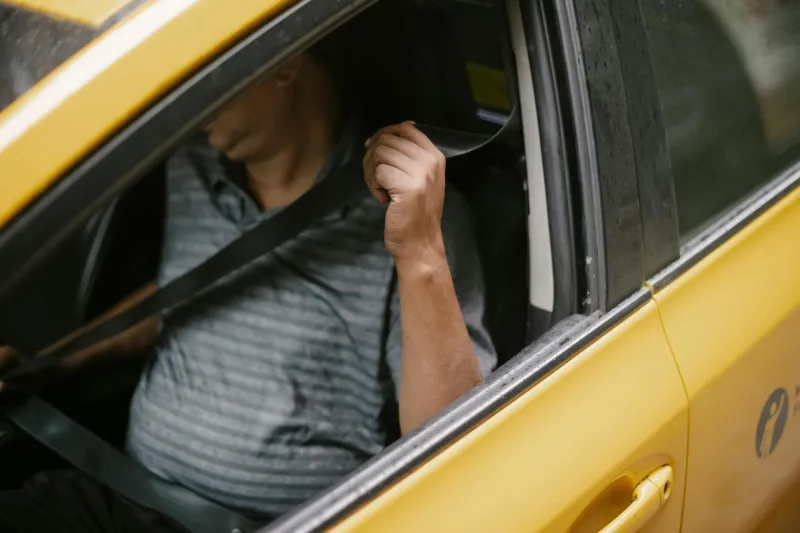
By the early 1980s, seatbelts had been standard equipment in American cars for nearly two decades. The federal government mandated their installation in 1968, but actually wearing them? That was entirely optional. Most Americans viewed seatbelts as uncomfortable nuisances that wrinkled their clothes and implied they were bad drivers.
The numbers were staggering. Despite overwhelming evidence that seatbelts reduced traffic fatalities by 40-50%, usage rates hovered around 10% nationally. Car manufacturers had tried everything from buzzing alarms to ignition interlocks that prevented starting the car until belts were fastened. Americans hated these features so much that Congress actually banned the interlock systems in 1974 after a massive public backlash.
The Unlikely Lobbyist
Dr. Sanders wasn't a politician or a professional advocate. He was a grieving father who happened to have medical credentials and an unshakeable belief that the government had a role in preventing needless deaths. Starting in 1974, he began showing up at New York State Assembly hearings with boxes of medical records, crash test footage, and increasingly detailed presentations about traffic fatality statistics.
Most legislators politely listened and did nothing. The auto insurance industry was skeptical. Even safety advocates weren't sure mandatory seatbelt laws were politically viable. "People kept telling me it was impossible," Sanders recalled years later. "Americans would never accept the government telling them what to do in their own cars."
The opposition wasn't just philosophical — it was organized. The American Civil Liberties Union argued that mandatory seatbelt laws violated personal freedom. Some religious groups claimed that interfering with "God's will" through safety measures was morally wrong. Car dealers worried that emphasizing crash safety would hurt sales.
The Breakthrough That Almost Wasn't
By 1983, Sanders had been pushing his cause for nearly a decade with little to show for it. Then two things happened that changed everything. First, the federal government threatened to mandate automatic seatbelts or airbags in all new cars unless states passed their own seatbelt laws. Second, a young assemblyman named Seymour Posner agreed to sponsor Sanders' bill — but only if it included a sunset clause that would automatically repeal the law after two years unless legislators voted to keep it.
Even with these compromises, the bill barely passed. The final vote in the New York State Assembly was 78-67 — just six votes more than needed. Governor Mario Cuomo signed it into law on July 12, 1984, making New York the first state to require adult seatbelt use.
The Law Nobody Followed
The victory was hollow at first. When the law took effect on December 1, 1984, compliance was abysmal. Police were reluctant to enforce it, judges dismissed most tickets, and usage rates barely budged from pre-law levels. Critics declared the whole experiment a failure and predicted other states would avoid following New York's lead.
But Sanders and other advocates had learned something important: changing behavior required more than just passing laws. They launched public education campaigns, worked with police departments on enforcement strategies, and gradually shifted the cultural conversation around seatbelt use from personal choice to social responsibility.
The Ripple Effect
By 1986, seatbelt usage in New York had doubled. Other states began passing similar laws, and the sunset clause that nearly killed the original bill was quietly allowed to expire. The federal government dropped its threat of mandatory automatic restraints, satisfied that states were handling the issue themselves.
Today, all 50 states have some form of seatbelt law, and national usage rates exceed 90%. The National Highway Traffic Safety Administration estimates that seatbelt laws save over 15,000 lives annually — a number that would have seemed impossibly optimistic to the doctor who started it all with a simple belief that preventable deaths should be prevented.
The Personal Becomes Political
Dr. Sanders never got his daughter back, but his decade of persistence created a framework that other advocates would use to pass everything from motorcycle helmet laws to child safety seat requirements. His story reveals how America's most important safety regulations often begin not with government bureaucrats or industry lobbying, but with ordinary people who refuse to accept that tragedy is inevitable.
The drunk driver who killed his daughter served six months in jail. The law that resulted from her death has saved hundreds of thousands of lives since 1984 — proving that sometimes the most powerful force for change isn't data or expertise, but a parent who simply won't give up.