The Car You Never Owned: How a Sales Trick Became an American Entitlement
The Salesman's Desperate Gamble
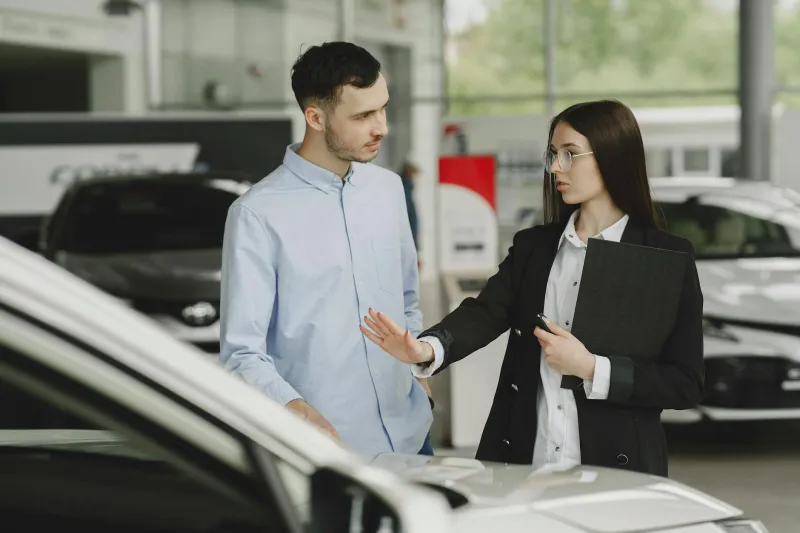
In 1953, Harold Kozinski was watching his customers disappear. His Chicago Buick dealership was losing repeat business to a simple problem: when wealthy buyers brought their cars in for service, they had no transportation while waiting for repairs. Many were discovering they could simply buy a new car elsewhere rather than deal with the inconvenience.
Kozinski's solution was born from desperation, not genius. He bought six used cars and began offering them as free temporary transportation to customers awaiting service. It was a pure customer retention play — keep the wealthy buyers happy, and they'll keep buying Buicks.
What he couldn't have predicted was that this simple sales tactic would eventually become one of the most expensive operational burdens in the automotive industry.
The Luxury That Spread
Kozinski's loaner program was an immediate success. His service customers loved the convenience, and more importantly, they kept coming back. Word spread through Chicago's affluent neighborhoods: Kozinski Buick would give you a free car while they fixed yours.
Other Chicago dealers took notice. Within two years, most luxury dealerships in the city were offering some version of loaner service. The practice began spreading to other major metropolitan areas, always starting with high-end brands serving wealthy customers.
For the first decade, loaner cars remained what Kozinski had intended: a premium service for premium customers. If you bought Cadillacs or Lincolns, you might get a free temporary car. If you drove a Chevrolet or Ford, you walked home or called a cab.
The Insurance Revolution
Everything changed in the 1960s when insurance companies discovered loaner cars. What had started as a dealership perk became entangled in the complex world of auto insurance regulations and consumer protection laws.
Insurance adjusters realized that providing temporary transportation during repairs could actually save money by reducing claim settlements. A customer with access to a loaner car was less likely to demand compensation for "loss of use" or to pursue legal action over transportation inconvenience.
By the early 1970s, many insurance policies began including provisions for rental car coverage during repairs. This created a new dynamic: customers weren't just hoping for dealer generosity — they had insurance money to pay for temporary transportation.
The Accessibility Fight
The 1990s brought an unexpected player into the loaner car story: disability rights advocates. As the Americans with Disabilities Act took effect, advocacy groups began arguing that equal access to transportation during vehicle repairs was a civil rights issue.
The logic was compelling: if a disabled person's specially equipped vehicle needed repairs, they couldn't simply rent any replacement car. Standard rental vehicles often lacked the hand controls, wheelchair lifts, or other modifications that disabled drivers required for independent transportation.
Dealerships found themselves facing a complex new reality. Providing equal access to loaner cars meant maintaining fleets of specially equipped vehicles or partnering with specialty rental companies. The costs were significant, but the legal and ethical arguments were hard to ignore.
The Expectation Economy
Somewhere along the way, the loaner car stopped being a nice surprise and became an expected entitlement. Modern car buyers — regardless of income level — often assume that any significant repair will come with temporary transportation.
This shift in expectations has created enormous operational challenges for dealerships. A typical modern dealership might maintain 20-50 loaner vehicles, representing hundreds of thousands of dollars in inventory that generates no direct revenue. These cars require insurance, maintenance, registration, and constant management.
The costs don't stop there. Loaner fleets need dedicated staff to manage scheduling, vehicle preparation, and customer coordination. They require additional parking space and service capacity. They create liability issues and administrative overhead that would have been unimaginable to Harold Kozinski in 1953.
The Modern Burden
Today's automotive service managers will tell you that loaner car programs are among their most expensive and least profitable operations. Industry studies suggest that maintaining a loaner fleet costs dealerships an average of $1,500-2,000 per vehicle per month when all expenses are included.
Yet eliminating loaner programs is nearly impossible. Customers have come to view temporary transportation as a basic right rather than a courtesy. Dealerships that don't offer loaners risk losing service business to competitors who do.
The original sales advantage that Kozinski sought has become an industry-wide arms race. Every dealer offers loaners because every dealer has to offer loaners. What started as competitive differentiation has become a cost of doing business.
The Unintended Entitlement
The evolution of the loaner car from sales gimmick to consumer expectation illustrates how quickly business practices can become social norms in America. What begins as one entrepreneur's creative solution can rapidly transform into an industry standard, then a consumer expectation, and finally something approaching a legal right.
Harold Kozinski just wanted to keep his Buick customers happy. He probably never imagined that his six used cars would eventually spawn an industry-wide practice costing dealers millions of dollars annually.
The next time you drop your car off for service and casually expect to drive away in a loaner vehicle, remember that you're participating in a tradition that began with one Chicago dealer's desperate attempt to solve a customer retention problem. That temporary solution became permanent, that sales tactic became an entitlement, and that simple idea became one of the automotive industry's most expensive operational realities.
It's a reminder that in America, today's luxury often becomes tomorrow's expectation — and yesterday's sales gimmick can become today's civil right.