Grease Monkey: The Surprisingly Dark Origin of America's Favorite Garage Nickname
Photo: Wolfmann, CC BY-SA 4.0, via Wikimedia Commons
Grease Monkey: The Surprisingly Dark Origin of America's Favorite Garage Nickname
Call a mechanic a grease monkey today and there's a decent chance they'll take it as a compliment. It's been claimed by automotive shops as a brand name, worn on T-shirts, printed on business cards. It has the comfortable feel of a nickname that's always been around.
But the phrase has a history that doesn't start in a garage, and it doesn't start with affection. Follow it back far enough and you find child laborers, industrial machinery, and a class-based contempt that the auto industry eventually absorbed and, over time, turned inside out.
That transformation — from slur to badge — is a genuinely American story about work, machines, and the complicated pride people take in jobs that get their hands dirty.
Before Cars, There Were Machines
The term "grease monkey" predates the automobile by several decades. Its earliest documented uses in American English appear in the context of industrial machinery — specifically, the large steam-powered equipment that ran textile mills, ironworks, and railroad operations throughout the nineteenth century.
These machines required constant lubrication. Bearings, gears, and drive shafts had to be greased regularly to prevent overheating and mechanical failure. In the early industrial era, this job was often assigned to the smallest workers available — children, typically boys, who could fit into the narrow spaces between moving machine components that adult workers couldn't reach.
The work was dangerous, dirty, and low-status. A child whose job was to crawl through machinery applying grease was called, with a contempt that reflected both his age and his social position, a grease monkey. The "monkey" part of the phrase was doing real work — it evoked something small, agile, and not quite fully human in the eyes of the people using the term. Industrial-era class language was not subtle.
Railroads used the term in a similar context. Early locomotives required extensive manual lubrication, and the workers who maintained the running gear — often the youngest and least-paid members of a maintenance crew — picked up the same nickname. By the time the phrase appeared in print with any regularity in the 1880s and 1890s, it was already established as a way of describing the person at the bottom of the mechanical labor hierarchy.
The Automobile Arrives and Needs Greasing
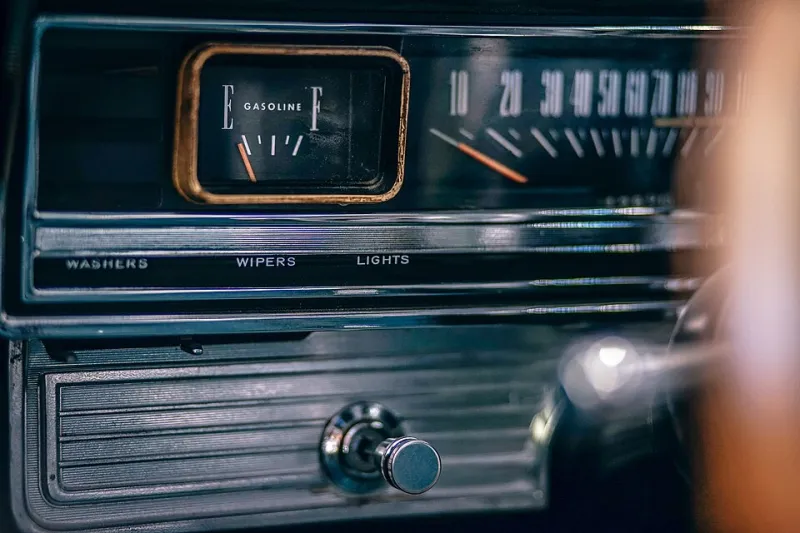
When automobiles began appearing on American roads in significant numbers after 1900, they brought with them an enormous appetite for lubrication. Early cars required far more frequent and hands-on maintenance than modern vehicles — chassis lubrication points, wheel bearings, and engine components all needed regular attention from someone who didn't mind getting covered in grease.
The early automotive service industry borrowed its language, its practices, and much of its workforce from the railroad and industrial maintenance worlds. Mechanics who had worked on steam equipment or railroad rolling stock moved into early garages and brought their vocabulary with them. "Grease monkey" followed naturally, attaching itself to the lowest-status workers in the automotive service hierarchy — often young apprentices or unskilled laborers whose primary job was exactly what the name described.
By the 1910s and 1920s, as car ownership expanded dramatically and service stations multiplied across the country, the term had settled comfortably into automotive slang. It still carried a sting — calling someone a grease monkey was a way of marking them as working-class, manual, and subordinate. But the sting was softening, partly because the people it described were starting to push back.
When the Insult Started Wearing a Different Face
The shift in how "grease monkey" was received tracks closely with the broader cultural elevation of mechanical skill in twentieth-century America. As cars became central to American life, the people who understood and could repair them gained a social standing that purely manual laborers didn't always enjoy. A good mechanic was someone you needed. Someone whose knowledge was specialized and genuinely hard to replace.
This created an interesting dynamic with the language. Terms that had been used to demean began to be reclaimed — not through any organized effort, but through the gradual accumulation of pride in a craft. Mechanics started using "grease monkey" to describe themselves, stripping the contempt out of it through ownership. If you called yourself that, nobody else could use it against you.
The process wasn't instant and it wasn't uniform. Through the 1930s and 1940s, the term still appeared in contexts where it was clearly meant as a put-down — in newspaper stories about labor disputes, in fiction that depicted working-class characters unsympathetically, in the casual dismissiveness of white-collar characters toward the people who fixed their cars.
But the cultural ground was shifting. World War II accelerated it. The war created enormous demand for mechanical skill — in aircraft maintenance, vehicle repair, and weapons systems — and elevated the status of people who could work with their hands and their minds simultaneously. The returning veteran who became a mechanic wasn't just a grease monkey in the old sense. He was someone who had kept bombers flying and tanks running. That was a different kind of identity.
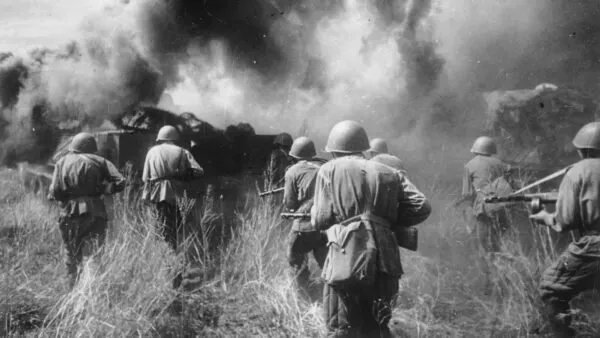 Photo: World War II, via thecconnects.com
The Badge It Became
By the postwar decades, "grease monkey" had largely completed its transformation. It was still slang, still informal, still associated with getting dirty. But the contempt had drained out of it. What remained was a kind of affectionate shorthand for a specific type of competence — the ability to understand machines, diagnose problems, and fix things with your hands.
The automotive industry, always alert to the cultural power of identity, eventually caught on. "Grease Monkey" became a registered business name for an automotive service chain. It appeared in the names of shops, on merchandise, in the self-descriptions of mechanics who wore it as straightforwardly as a job title.
None of that history is visible in the phrase today. When someone calls their mechanic a grease monkey, or when a mechanic calls themselves one, the child laborers crawling through nineteenth-century machinery aren't part of the picture. Language works that way — it carries its history silently, long after the original context has dissolved.
What the Language Tells Us
The story of "grease monkey" is a small window into something larger: the way America's relationship with industrial and mechanical labor shaped its vocabulary. The same cultural arc — contempt that becomes pride — appears in plenty of other working-class terms that started as insults and ended up as identities.
What makes the automotive version interesting is how completely the reversal succeeded. There's no trace of the original sting left. The phrase belongs entirely to the people it describes now, which is probably exactly how it should be.