From Steam Caps to Status Symbols: How Hood Ornaments Became America's Most Endangered Automotive Art
The Practical Beginning Nobody Remembers
In 1901, if you owned a car, you probably spent more time fixing it than driving it. Steam-powered automobiles dominated American roads, and their radiator caps weren't decorative—they were essential safety valves that prevented your engine from exploding.
These early caps needed to be easily removable for maintenance, so manufacturers began designing them with decorative tops that doubled as handles. The Boyce MotoMeter company started adding small figurines to their temperature gauges, creating the first "hood ornaments" purely by accident. Nobody called them that yet—they were just functional parts that happened to look nice.
When Function Became Fashion
By the 1920s, internal combustion engines had largely replaced steam power, but something interesting happened: the decorative caps stayed. Luxury automakers discovered that these small sculptures could communicate prestige in ways that paint and chrome couldn't match.
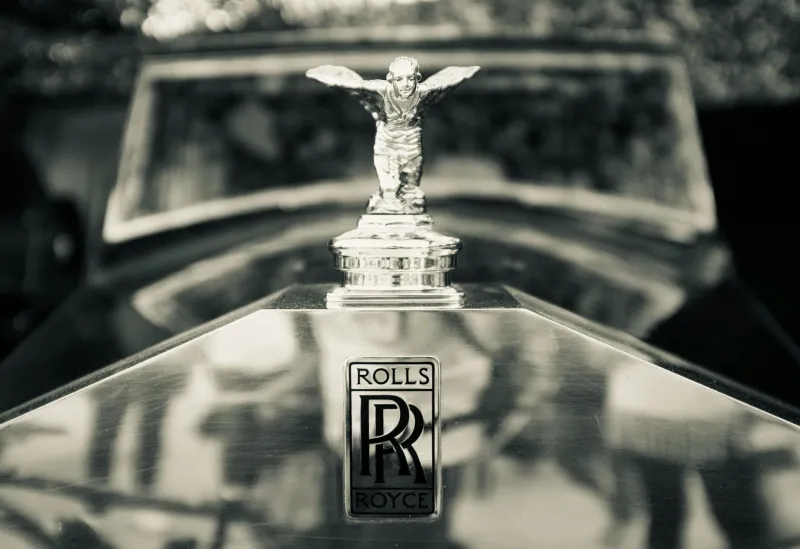
Rolls-Royce commissioned sculptor Charles Robinson Sykes to create the "Spirit of Ecstasy" in 1911—a flowing female figure that became synonymous with British luxury. Cadillac responded with their own goddess figure, while Packard chose a pelican and Lincoln opted for a greyhound. Each ornament told a story about the car's personality before the driver even turned the key.
These weren't mass-produced trinkets. Early hood ornaments were often hand-cast in bronze or silver, with some Rolls-Royce models featuring ornaments that cost more than many Americans' annual salaries. Wealthy car owners began commissioning custom pieces, turning their vehicles into rolling art galleries.
The Golden Age of Automotive Jewelry
The 1930s through 1950s represented the peak of hood ornament culture. Nearly every American car manufacturer had a signature piece, and dealerships marketed them almost as aggressively as they promoted horsepower and fuel economy.
Jaguar's leaping cat became an instant classic, while Pontiac's Native American chief head sparked both admiration and controversy that continues today. Mercury's Roman god figure suggested speed and divine power, while Buick's "Eight" commemorated their eight-cylinder engines.
These ornaments weren't just marketing—they were deeply personal. Owners polished them religiously, and car thieves specifically targeted vehicles with valuable ornaments. Insurance companies began offering separate coverage for hood ornaments, treating them like jewelry rather than car parts.
The Safety Crusade That Changed Everything
By the late 1960s, consumer safety advocates had noticed something troubling about hood ornaments: they were perfectly positioned to impale pedestrians during accidents. Ralph Nader's "Unsafe at Any Speed" didn't specifically target ornaments, but it created a regulatory environment where every automotive design element faced scrutiny.
 Photo: Ralph Nader, via www.spektr-tambov.ru
The National Highway Traffic Safety Administration began requiring "pedestrian impact" testing in the early 1970s. Suddenly, those beautiful metal sculptures weren't just decorative—they were liability risks. Manufacturers faced a choice: redesign their ornaments to collapse on impact, or eliminate them entirely.
Most chose elimination. By 1975, the majority of American cars rolled off assembly lines with bare hoods for the first time in decades. The ornaments that remained were spring-loaded, designed to fold flat when struck. The romance was gone.
The Surprising Survivors
What's remarkable isn't that hood ornaments nearly disappeared—it's that some refused to die. Rolls-Royce spent millions redesigning the Spirit of Ecstasy to meet safety requirements, creating a version that retracts into the hood when the car senses impact. Mercedes-Benz similarly re-engineered their three-pointed star to bend rather than break pedestrians.
Jaguar took a different approach, making their leaping cat an optional extra that owners could choose to install, essentially shifting liability to the buyer. Bentley continued offering their "Flying B" ornament well into the 2000s, though it now disappears into the hood at the touch of a button.
Why They Still Matter
In an era of increasingly similar car designs, hood ornaments represented something that modern automotive styling has largely lost: individual personality. They were the automotive equivalent of jewelry—unnecessary but deeply meaningful expressions of identity and aspiration.
Today, vintage hood ornaments sell for thousands of dollars at auction, and restoration shops report that clients often spend disproportionate amounts ensuring their ornaments are period-correct. Classic car shows feature entire categories dedicated to ornament judging, treating these small sculptures with the reverence once reserved for fine art.
The irony is perfect: a functional radiator cap that accidentally became decorative survived for decades as pure ornamentation, only to be killed by safety regulations designed to protect the very people who once admired them. In trying to make cars safer, we made them a little less human.
Some manufacturers are quietly bringing ornaments back, but they're different now—LED-lit, retractable, or holographic projections that can't hurt anyone. They're safer, smarter, and completely soulless. The hood ornament's true golden age died with the regulations that were supposed to save it.