The Color That Changed Everything: How One Professor's Meeting Room Decision Made Every School Bus in America Yellow
The Professor Who Changed American Mornings
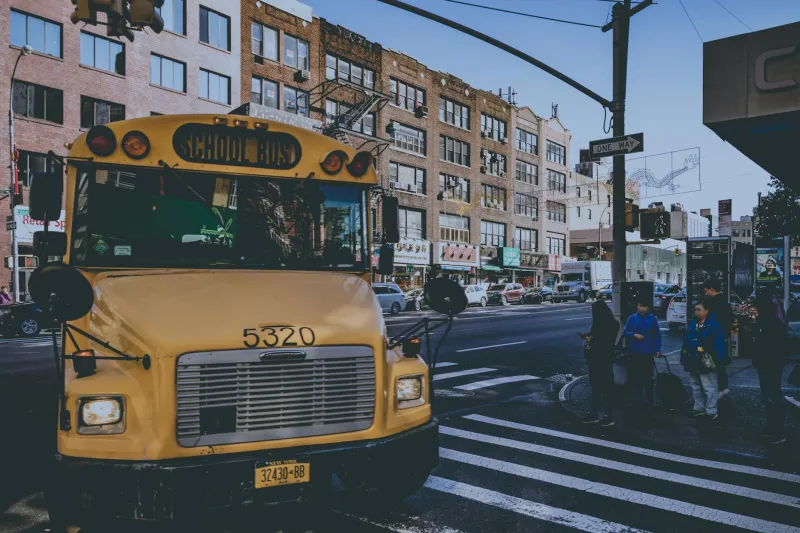
Every weekday morning across America, 26 million children climb aboard vehicles painted in exactly the same shade of yellow. It's so universal that we simply call it "school bus yellow," as if no other possibility ever existed. But this wasn't some natural evolution or obvious safety choice—it was the result of a single meeting in 1939 where one Columbia University professor essentially picked a color out of thin air.
Dr. Frank Cyr had a problem. As the nation's leading expert on rural education, he'd spent years traveling through American farm country and witnessing a transportation disaster. School buses came in every color imaginable: red, blue, white, even camouflage green. Some districts painted them to match their school colors. Others went with whatever paint was cheapest that week.
The Wild West of School Transportation
Before 1939, riding the school bus was like stepping into a rainbow of chaos. In Nebraska, buses were bright red to match the Cornhuskers. Vermont districts favored forest green to blend with their rural landscapes. Texas went big with white buses that reflected the desert heat. California experimented with blue, claiming it was more "calming" for children.
This wasn't just an aesthetic problem—it was a safety nightmare. Drivers couldn't instantly recognize a school bus from a distance. The lack of standardization meant that emergency responders, crossing guards, and other motorists had no reliable visual cue that children were nearby.
Cyr watched kids getting hurt in accidents that might have been prevented if their buses had been more visible. He decided to do something about it.
Seven Days That Changed Everything
In April 1939, Cyr invited 35 transportation officials, paint manufacturers, and education experts to Teachers College at Columbia University. His mission was ambitious: create national standards for school bus construction, including everything from seat spacing to emergency exits. But the decision that would outlast all others happened almost by accident.
When the group tackled bus color on day three, the debate was surprisingly brief. They quickly eliminated pure white (too easily confused with other vehicles), bright red (associated with fire trucks and emergency vehicles), and various blues and greens (poor visibility in different weather conditions).
Someone suggested yellow. Not just any yellow—a specific shade that paint manufacturer DuPont had been developing. It was bright enough to catch attention but not so garish as to cause complaints from parents. More importantly, it was a color that the human eye processes faster than almost any other hue.
The Science Behind the Choice
What Cyr's committee didn't fully understand in 1939, but what research would later confirm, was that they'd stumbled onto a neurological goldmine. The human eye sees yellow faster than any other color—about 1.24 times faster than red. This means drivers spot a yellow school bus almost a full second sooner than they would a red or blue one.
At highway speeds, that extra second translates to roughly 90 feet of additional reaction time. It's the difference between a close call and a tragedy.
The specific shade they chose—officially designated as National School Bus Chrome Yellow—also has perfect contrast properties. It remains highly visible in fog, rain, snow, and the golden hour lighting when most buses are on the road.
The Resistance Movement
Not everyone embraced the yellow revolution. State transportation departments fought the federal recommendation for years. Texas held out until 1973, insisting their white buses were perfectly fine. Some California districts painted their buses in school colors well into the 1980s.
The breakthrough came when insurance companies started offering lower rates for districts that used standard yellow buses. Suddenly, the color choice became an economic decision, not just a safety one.
A Legacy Written in Yellow
Today, Dr. Cyr's seven-day conference has created one of the most successful safety standards in American history. School bus transportation is statistically the safest way for children to get to school—safer than walking, biking, or riding in a family car.
The yellow school bus has become so iconic that it's instantly recognizable worldwide as a symbol of American education. Hollywood uses it as shorthand for American childhood. Foreign countries have adopted the color for their own school transportation systems.
All because a Columbia professor gathered three dozen people in a room and made a decision that seemed almost arbitrary at the time. Sometimes the most important innovations happen not through grand design, but through simple, practical choices that turn out to be accidentally brilliant.
Every morning, as millions of American children board their bright yellow rides to school, they're participating in a safety system that began with one professor's hunch about the right shade of paint.