The Chemical Accident That America Learned to Love
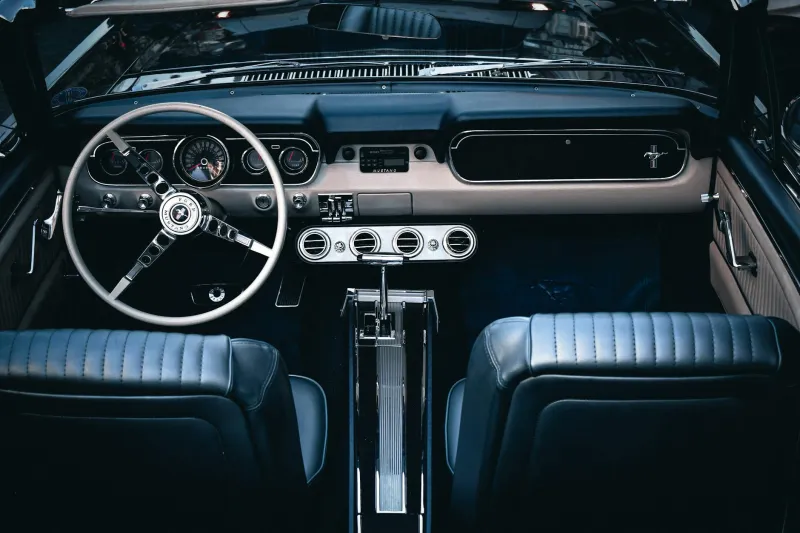
Walk into any American car dealership and take a deep breath. That distinctive "new car smell" — sharp, slightly sweet, undeniably artificial — triggers something primal in potential buyers. It's the scent of possibility, of fresh starts, of financial decisions that will define the next five years of your life. But this beloved aroma that helps sell millions of cars annually started as a manufacturing defect that automakers spent decades trying to eliminate.
The Smell Nobody Wanted
In the early 1950s, as American automakers embraced synthetic materials for car interiors, they discovered an unexpected problem: their cars stank. The new vinyl seats, plastic dashboards, and chemical adhesives were off-gassing volatile organic compounds (VOCs) at alarming rates. Cars fresh off the assembly line smelled like chemical factories.
Customers complained immediately. The smell was overwhelming, sometimes causing headaches and nausea during test drives. Worse, it lingered for months, making new cars feel contaminated rather than pristine. Automakers faced a crisis: their modern materials were creating an anti-luxury experience in what should have been their most premium product.
General Motors assembled a team of chemists specifically to solve what they called "the odor problem." Their mission was simple: make new cars smell like nothing at all.
The Science of Synthetic Stink
The culprit was progress itself. Pre-war cars had used natural materials — leather seats, wool carpets, cotton headliners — that produced minimal odors. But post-war prosperity demanded more: colorful interiors, easy-to-clean surfaces, and materials that could withstand American families' increasingly mobile lifestyles.
Vinyl was perfect for this new world. It was durable, waterproof, available in dozens of colors, and far cheaper than leather. But vinyl's manufacturing process required plasticizers — chemicals that kept the material flexible — and these compounds slowly evaporated, creating that distinctive sharp smell.
Plastic dashboards added their own chemical signatures. Foam seat cushions contributed another layer of synthetic odors. Adhesives, carpeting, and even the rubber weather stripping around doors and windows were all off-gassing their own unique compounds.
The result was a complex cocktail of chemicals that varied slightly between manufacturers but shared that unmistakable "new" quality that Americans were learning to associate with automotive purchases.
The Failed War Against Chemistry
Throughout the 1950s and early 1960s, Detroit's best engineers attacked the odor problem from every angle. They experimented with different plasticizer formulations, tested alternative adhesives, and even tried "baking out" cars in special ovens before delivery to customers.
Nothing worked completely. The chemicals that created the smell were integral to the materials themselves. Eliminating the odor meant either returning to expensive natural materials or accepting inferior synthetic alternatives that would crack, fade, and wear out quickly.
Meanwhile, something unexpected was happening in showrooms across America: customers were getting used to the smell. More than that, they were beginning to associate it with newness, quality, and value.
The Accidental Marketing Tool
By the mid-1960s, automakers realized they had stumbled onto something powerful. Market research revealed that customers who complained about new car smell in surveys still preferred cars that had it over identical vehicles that didn't. The smell had become a subconscious quality indicator.
The breakthrough came from an unlikely source: customer complaints about used cars that had been "de-odorized" by dealers. Buyers reported that these cars didn't feel genuinely new, even when they had extremely low mileage. The absence of the smell made customers suspicious that something was wrong.
Ford was the first manufacturer to embrace what their marketing department began calling "that new car aroma." Instead of trying to eliminate it, they began studying how to optimize it. Which chemical combinations were most appealing? How long should the smell last? Could they make it more consistent across different models?
Engineering Desire
By the 1970s, what had started as quality control had become sensory marketing. Automakers hired fragrance experts — the same specialists who created perfumes and cologne — to analyze and refine their cars' chemical signatures. They discovered that slight variations in the smell could trigger different emotional responses in buyers.
Chrysler developed a proprietary blend of vinyl treatments that created what focus groups described as a "premium" version of new car smell. General Motors found that certain plasticizer combinations tested better with younger buyers, while others appealed more to older customers.
The most sophisticated research came from Japanese manufacturers entering the American market. Honda and Toyota conducted extensive studies of American preferences, discovering that the new car smell Americans loved was actually quite different from what Japanese buyers preferred. They began formulating different interior treatments for different markets.
The Bottled Revolution
The ultimate validation of new car smell's cultural importance came in the 1990s, when aftermarket companies began selling it in spray bottles. "New Car Scent" air fresheners became a massive category, allowing used car dealers and individual owners to recreate the experience artificially.
These products revealed just how complex the original smell had become. Early spray versions smelled obviously fake because they only captured one or two of the dozens of chemical compounds that create authentic new car smell. It took years of development to create convincing artificial versions.
Today, some luxury automakers actually spray synthetic new car smell into vehicles before delivery, ensuring a consistent sensory experience regardless of how long the car sat on the lot or what materials were used in its construction.
The Modern Paradox
The story of new car smell reveals one of the strangest chapters in American consumer psychology. A generation of buyers learned to love the scent of industrial chemicals so completely that manufacturers now spend millions of dollars preserving and perfecting it.
Modern cars use far fewer off-gassing materials than their predecessors, thanks to improved manufacturing and environmental regulations. The "new car smell" in today's vehicles is increasingly artificial — a carefully engineered recreation of what was once an accidental byproduct of synthetic materials.
Yet the smell remains as powerful as ever in triggering purchase decisions. Dealerships report that customers spend significantly more time in vehicles that have strong new car smell, and are more likely to complete purchases on the spot.
In the end, new car smell represents something uniquely American: the transformation of an industrial accident into a beloved cultural touchstone, preserved and perfected long after the original problem was solved. It's the scent of synthetic materials and chemical progress, bottled and sold back to us as the essence of automotive desire.