The Little Wheel That America Learned to Lie About: How Odometer Fraud Became a National Obsession
The Roman Road to American Driveways
Every time you glance at your car's odometer, you're looking at technology that traces back to ancient Rome. Roman engineers needed to measure road distances for taxation and military planning, so they developed crude wheel-counting devices that tracked rotations as carts rolled along stone highways. The concept was brilliant in its simplicity: count the turns, calculate the distance.
But those Roman engineers never imagined their invention would become the centerpiece of a uniquely American crime wave that would eventually require federal intervention to stop.
When Cars Got Counters
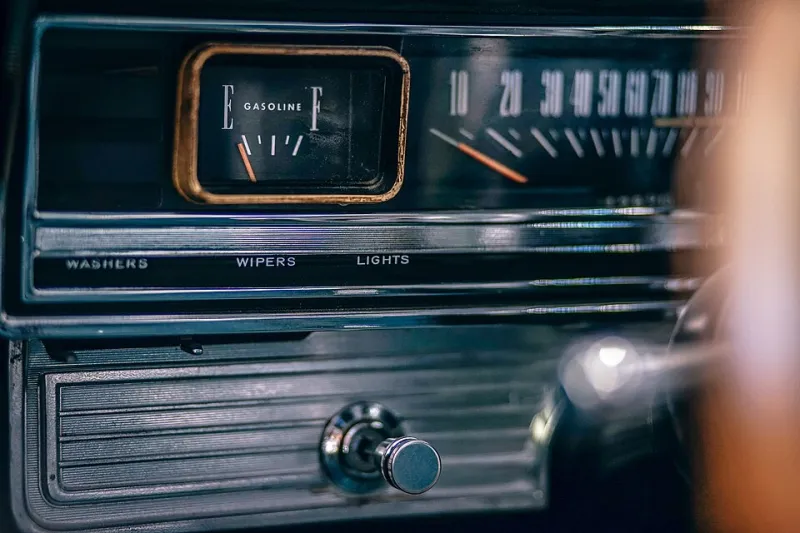
The first automotive odometers appeared in the early 1900s as purely mechanical marvels. Gears connected to the transmission would turn small numbered wheels behind a glass window, clicking forward with mathematical precision. For decades, these devices were considered nearly sacred — after all, machines don't lie, right?
This faith in mechanical honesty created the foundation for America's used car market. Unlike subjective assessments of paint quality or engine sound, the odometer provided hard data. A car with 30,000 miles was obviously better than one with 80,000 miles. The number became shorthand for a vehicle's entire life story.
The Great Rollback Epidemic
By the 1950s, enterprising mechanics had discovered something troubling: those supposedly tamper-proof odometers were surprisingly easy to manipulate. A few simple tools could disconnect the cable, run the numbers backward, or even replace the entire mechanism with a lower-reading unit.
What started as isolated incidents of "clocking" quickly evolved into an industry standard. Used car dealers discovered they could add thousands of dollars to a vehicle's value by subtracting thousands of miles from its odometer. The practice became so widespread that by the 1960s, consumer advocates estimated that one in three used cars had a rolled-back odometer.
The Federal Crackdown
The situation became so egregious that Congress finally stepped in with the Motor Vehicle Information and Cost Savings Act of 1972. For the first time in American history, tampering with an odometer became a federal crime, punishable by fines and imprisonment.
The law required written disclosure of mileage at every vehicle transfer and established penalties that could reach $50,000 per violation. Suddenly, the humble odometer was protected by the full force of federal law — making it one of the most legally safeguarded instruments in any American car.
Digital Trust and Modern Skepticism
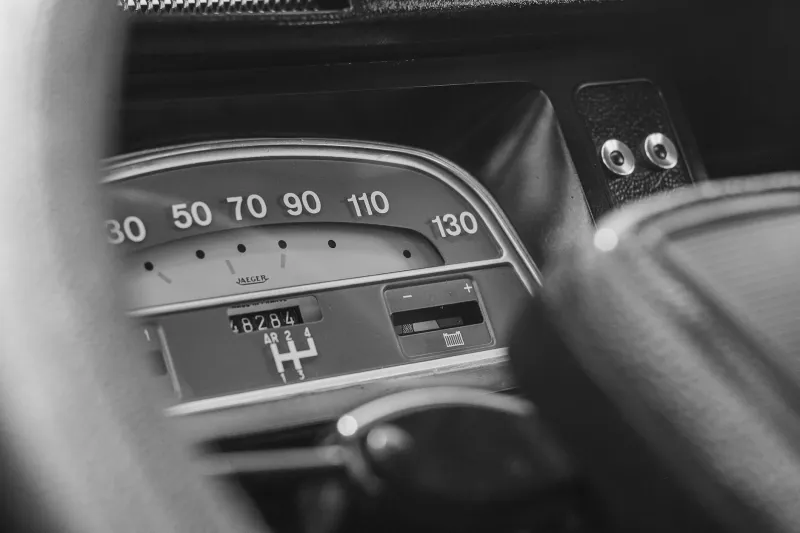
The transition to digital odometers in the 1980s promised to end fraud forever. Computer-controlled displays seemed impossible to manipulate, and manufacturers boasted about tamper-proof systems that would restore trust to the used car market.
They were wrong. Digital systems simply required different tools and skills. Modern odometer fraud involves laptop computers, specialized software, and electronic control modules — but the fundamental crime remains the same. The National Highway Traffic Safety Administration estimates that odometer fraud still costs American consumers over $1 billion annually.
 Photo: National Highway Traffic Safety Administration, via i.ytimg.com
The Psychology of the Number
What makes odometer fraud so persistent isn't just the money involved — it's our psychological relationship with mechanical precision. Americans have been conditioned to trust numbers that come from machines, especially numbers that appear to be automatically generated and impossible to fake.
This trust extends far beyond cars. We believe our smartphones when they tell us how many steps we've taken, trust our GPS when it calculates arrival times, and rarely question the digital readouts that govern everything from gas pumps to grocery store scales.
The Carfax Revolution
The rise of vehicle history reports in the 1990s fundamentally changed the odometer's role in car buying. Services like Carfax began tracking mileage at registration renewals, service visits, and inspections, creating a paper trail that made rollbacks much easier to detect.
Suddenly, buyers had access to a vehicle's entire mileage history, not just the current reading. A car showing 50,000 miles on the odometer but 75,000 miles at last year's inspection became an obvious fraud case.
The Instrument That Shaped Trust
The odometer's evolution reveals something profound about American consumer culture. We've built entire industries around the assumption that machines provide objective truth, yet we've also developed elaborate systems to verify that truth because we know humans will always find ways to manipulate it.
Today's odometers are more accurate and secure than ever, protected by federal law, verified by multiple databases, and monitored by sophisticated tracking systems. Yet the basic promise remains the same as it was for those Roman engineers: this simple mechanical counter will tell you exactly how far you've traveled.
The difference is that now we know to double-check the answer.