From Hay Bales to Halftime Shows: The Farm Gate That Accidentally Invented America's Greatest Parking Lot Party
The Humble Beginning of a Cultural Revolution
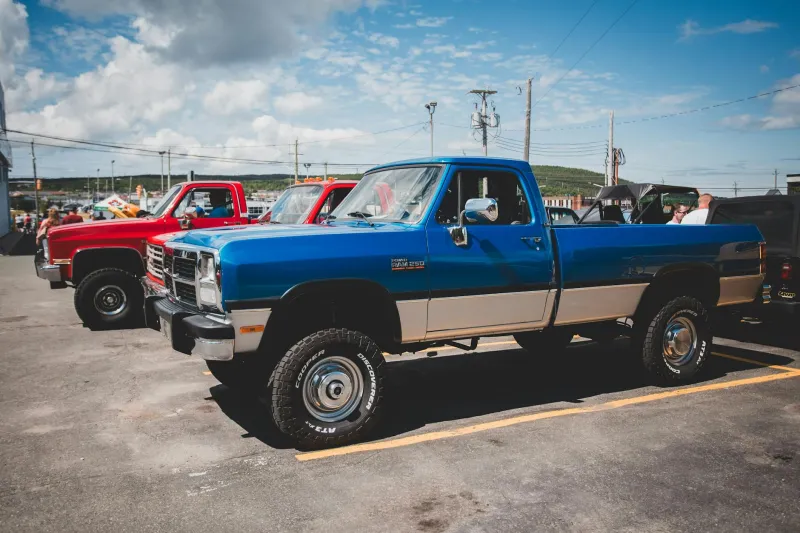
Walk through any NFL stadium parking lot on game day, and you'll witness one of America's most beloved rituals: thousands of people gathered around the open backs of pickup trucks, grilling burgers, tossing footballs, and turning vehicle storage areas into temporary living rooms. But this multibillion-dollar cultural phenomenon started with something far less glamorous — a farmer's frustration with loading hay bales.
The tailgate wasn't designed for parties. It was designed for work.
When Trucks Needed Better Backs
In the early 1930s, pickup trucks were purely utilitarian vehicles. Farmers, ranchers, and small business owners needed a way to transport cargo that was too large for cars but didn't require a full-sized commercial truck. The challenge was loading and unloading heavy, bulky items from a raised truck bed.
The solution seemed obvious: create a hinged panel at the rear of the truck that could drop down to create a loading ramp. Early tailgates were simple affairs — wooden planks held in place by chains, designed to support the weight of feed sacks, tools, and farm equipment.
These weren't social spaces. They were loading docks on wheels.
The Postwar Pickup Revolution
World War II changed everything about American vehicle ownership. Returning veterans had learned to appreciate utility vehicles during their service, and the booming postwar economy meant more families could afford multiple vehicles. The pickup truck evolved from a purely commercial tool to something approaching a lifestyle choice.
 Photo: World War II, via image.shutterstock.com
Manufacturers began marketing trucks to suburban families, emphasizing their versatility for weekend projects, camping trips, and recreational activities. The tailgate, meanwhile, grew more sophisticated. Steel replaced wood, hydraulic assists made dropping the gate effortless, and improved latching mechanisms ensured security during transport.
But nobody was thinking about parties yet.
College Football's Accidental Discovery
The transformation of the tailgate from loading platform to social hub happened gradually throughout the 1950s and 1960s, driven largely by college football culture. Students and alumni arriving at stadium parking lots hours before kickoff needed somewhere to gather, eat, and prepare for the game.
The open tailgate provided the perfect solution: an instant table, buffet surface, and gathering point all in one. Groups began bringing folding chairs, portable grills, and coolers, essentially creating temporary outdoor dining rooms in parking lots across America.
What made this particularly American was the democratic nature of the setup. Unlike exclusive club boxes or expensive restaurant reservations, tailgating required nothing more than a truck and some food. It was accessible entertainment that anyone could afford.
The Equipment Arms Race
By the 1970s, tailgating had evolved from simple sandwich sharing to elaborate outdoor cooking competitions. Dedicated tailgaters began investing in specialized equipment: portable generators, satellite dishes for television viewing, elaborate grilling setups, and custom-built truck bed accessories.
The automotive industry took notice. Manufacturers started designing trucks with tailgating specifically in mind, adding features like built-in coolers, power outlets, and even integrated sound systems. The tailgate itself became more than just a loading ramp — it was now a carefully engineered entertainment platform.
Corporate America Joins the Party
The 1980s marked the moment when corporate America realized that tailgating represented a massive untapped market. Beer companies began sponsoring tailgate competitions, food manufacturers developed portable cooking products, and sporting goods companies created entire product lines dedicated to parking lot entertainment.
Television coverage of college and professional football games began featuring tailgate scenes, further cementing the practice as an essential part of the American sports experience. What had started as an accidental use of truck design was now being actively promoted and commercialized.
The Modern Tailgate Economy
Today's tailgating industry generates billions of dollars annually. The American Tailgaters Association estimates that serious tailgaters spend an average of $500 per season on equipment and supplies. Stadium parking fees, once nominal, now command premium prices specifically because of tailgating demand.
Modern tailgate setups can rival professional catering operations, featuring multiple grills, full bar setups, large-screen televisions, and elaborate tent systems. Some dedicated tailgaters own specialized vehicles designed specifically for parking lot entertainment, complete with built-in kitchens and sleeping quarters.
Beyond the Stadium
The tailgate concept has expanded far beyond sports venues. Corporate events, outdoor concerts, camping trips, and even backyard parties now feature "tailgate-style" setups. The basic formula — open vehicle, portable equipment, informal gathering — has proven adaptable to almost any outdoor social situation.
Food trucks, in many ways, represent the commercial evolution of tailgate culture. They use the same basic concept of vehicle-based food service, but turned it into a mobile business model that has revolutionized urban dining.
The Social Engineering of a Truck Feature
The tailgate's evolution reveals something fascinating about American ingenuity. We took a purely functional automotive feature and transformed it into a social institution that now influences vehicle design, sports marketing, food culture, and entertainment planning.
This wasn't planned by automotive engineers or marketing executives. It emerged organically from the intersection of American car culture, sports fandom, and our national tendency to turn any available space into a gathering place.
The Platform That Built Community
In an era of increasing digital isolation and suburban sprawl, tailgating represents something uniquely valuable: a ritual that brings people together in physical space around shared activities. The open tailgate creates an instant community center, complete with food, entertainment, and social interaction.
That simple hinged panel, originally designed to make loading hay bales easier, accidentally became one of America's most successful social platforms. Not bad for a piece of farm equipment.