The Teenage Entrepreneur Who Had to Fight Congress to Put Radios in Cars
The Invention That Nearly Got Banned
Paul Galvin was just 19 years old when he had an idea that would revolutionize American driving — and almost land him in jail. In 1929, the young entrepreneur was tinkering in a cramped Chicago workshop, trying to figure out how to make car radios affordable for ordinary Americans. What he didn't anticipate was that his invention would spark a moral panic, legislative battles, and a decade-long fight for the right to listen to music while driving.
The controversy started almost immediately. Within months of Galvin's first car radios hitting the market, newspapers were filled with dire warnings about the dangers of in-car entertainment. Editorial writers declared that radios would cause mass accidents, corrupt young drivers, and destroy the peaceful sanctity of American roads.
When Music Was the Enemy
The opposition to car radios wasn't just about safety — it was about morality. Religious leaders worried that young people would use car radios to listen to jazz music and other "corrupting influences" while parked in secluded areas. Police chiefs complained that criminals would use radios to monitor police frequencies. Even some doctors claimed that radio waves inside metal cars would cause brain damage.
By 1934, the anti-radio movement had gained serious political momentum. Massachusetts, Connecticut, and several other states introduced legislation to ban car radios entirely. The proposed laws weren't subtle — they would have made it illegal to operate any radio equipment in a moving vehicle, with fines up to $500 (about $10,000 in today's money) and possible jail time for repeat offenders.
"The automobile radio is a menace to safe driving," declared Massachusetts State Senator William Flanagan during heated legislative debates. "No driver can safely operate a vehicle while his attention is divided between the road and some crooner on the radio."
The Scrappy Startup vs. Detroit
Paul Galvin's company, Motorola (a name he coined by combining "motor" and "Victrola"), was fighting battles on multiple fronts. State legislators wanted to ban his product entirely. The major auto manufacturers refused to install radios as factory equipment, viewing them as dangerous novelties that would increase liability and distract from their core business of building cars.
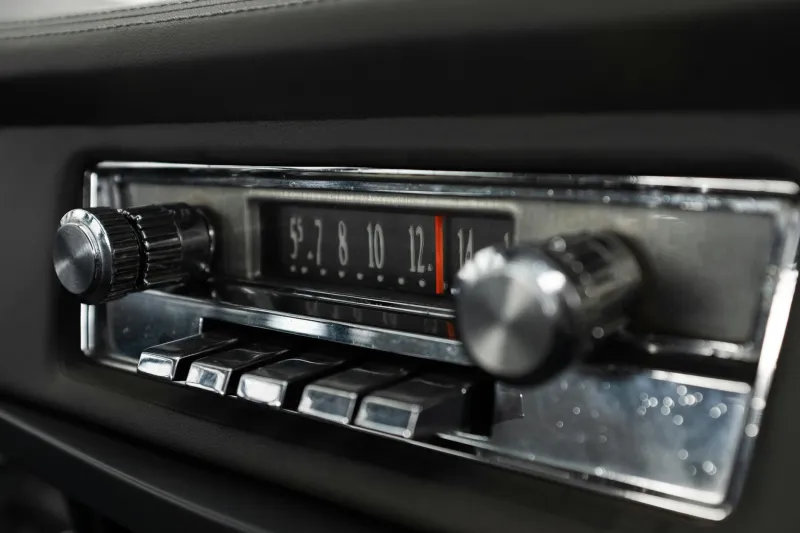
Most challenging of all, early car radios were genuinely problematic. They were expensive (often costing more than the car itself), required massive antennas that made vehicles look ridiculous, and had terrible reception that faded in and out constantly. Installation required cutting holes in dashboards and running wires throughout the car, voiding most warranties.
"We were asking people to spend a fortune to butcher their new cars so they could listen to static," Galvin later admitted. "In retrospect, I'm amazed anyone bought the early models."
The Breakthrough That Changed Everything
The turning point came in 1935 when Galvin made a crucial decision that would save his company and the entire car radio industry. Instead of continuing to fight the safety arguments with statistics and studies, he decided to prove his point through demonstration.
Galvin organized a cross-country publicity tour featuring professional drivers who would operate cars equipped with radios while performing various driving tests. The drivers navigated obstacle courses, performed emergency stops, and completed complex maneuvers — all while listening to radio programs and even carrying on conversations about what they were hearing.
The demonstrations were covered extensively by newspapers and newsreels, showing millions of Americans that skilled drivers could safely operate radios while maintaining full control of their vehicles. More importantly, the tour revealed that opposition to car radios was often based on fear and speculation rather than actual evidence.
The Congressional Showdown
By 1936, the car radio controversy had reached Washington. Congressman William Lemke of North Dakota introduced federal legislation that would have banned radio equipment in all interstate commercial vehicles and given states the authority to regulate private car radios as they saw fit.
The congressional hearings were a spectacle. Safety advocates presented gruesome photographs of car accidents they claimed were caused by radio distraction (though they had no actual evidence linking the crashes to radio use). Religious leaders testified about the moral dangers of allowing young people unsupervised access to radio entertainment.
Galvin and other industry representatives fought back with their own evidence: testimonials from police departments that had successfully used car radios for law enforcement, statistics showing that radio-equipped vehicles were actually involved in fewer accidents than those without radios, and endorsements from driving instructors who argued that calm music actually helped nervous drivers stay focused.
The Unexpected Allies
The car radio industry found support from an unlikely coalition. Rural farmers argued that car radios were essential for receiving weather reports and market prices during long trips to town. Traveling salesmen insisted that radios helped them stay alert during long drives. Even some police departments had begun using car radios for communication and wanted to preserve the technology for law enforcement use.
Most surprisingly, the nascent trucking industry became a powerful advocate for car radios. Long-haul truck drivers reported that radio entertainment helped them stay awake during overnight drives, potentially preventing accidents caused by driver fatigue.
Victory Through Persistence
The federal ban never materialized, and state-level restrictions gradually disappeared as car radios became more reliable and affordable. By 1940, about half of all new cars sold in America came with radios as either standard or optional equipment. The auto manufacturers who had once refused to install radios were now marketing them as luxury features that distinguished their vehicles from competitors.
World War II accelerated car radio adoption in an unexpected way. Military contracts for portable radio equipment allowed companies like Motorola to refine their technology and reduce manufacturing costs. When the war ended, car radios were smaller, more reliable, and cheap enough for middle-class families.
The Foundation for Everything
Paul Galvin's fight to legitimize car radios established the legal and cultural precedent for all future in-car entertainment technology. His victory made it possible for later innovations like 8-track players, cassette decks, CD players, and eventually smartphone integration. Without his decade-long battle against prohibition-minded legislators, Americans might never have accepted the idea that cars could be entertainment spaces as well as transportation devices.
Today, the average American spends over an hour daily listening to audio entertainment while driving — whether it's music, podcasts, or streaming services. The technology has evolved dramatically since Galvin's crude 1929 radio, but the fundamental principle he fought to establish remains unchanged: Americans have the right to choose their own soundtrack for the journey.