From Bureaucratic Nightmare to Billion-Dollar Self-Expression: How States Accidentally Discovered License Plate Gold
When the Alphabet Ran Out
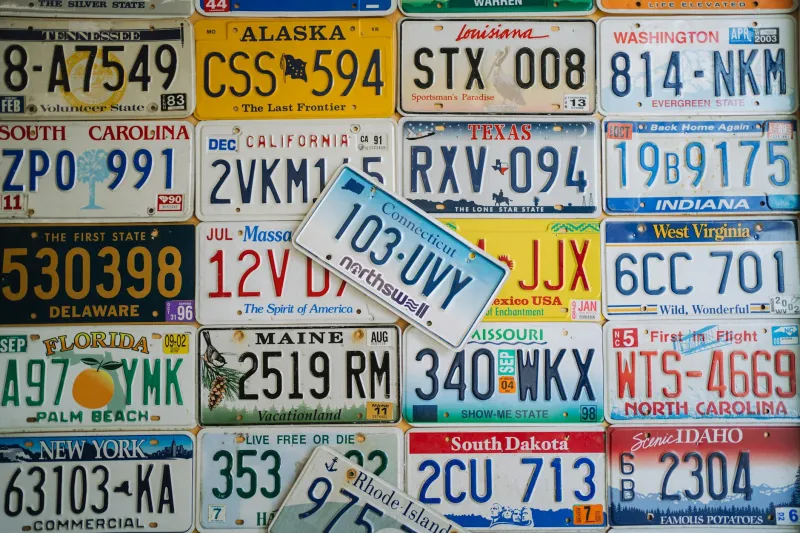
In 1965, Connecticut had a problem that sounds almost quaint today: they were running out of license plate combinations. The state's growing car population had exhausted their standard format of letters and numbers, and transportation officials faced a choice between creating longer, unwieldy plates or finding a creative solution.
What happened next was pure bureaucratic accident. Instead of simply adding more characters, Connecticut offered drivers the option to choose their own letter combinations—for an extra fee, of course. The state figured maybe a few hundred drivers might pay for the novelty.
They were off by several million.
The Accidental Revenue Stream
Connecticut's vanity plate experiment was supposed to be a minor administrative convenience. Instead, it accidentally tapped into something much deeper in the American psyche: the desire to transform even the most mundane government requirement into a form of personal expression.
Within months, other states were watching Connecticut's unexpected revenue windfall with intense interest. What had started as a solution to a numbering problem had revealed something nobody anticipated—Americans would voluntarily pay extra taxes if it meant turning their mandatory vehicle registration into a rolling billboard for their personality.
The early vanity plates were simple affairs, mostly initials and basic words. But as the concept spread, the requests became increasingly creative. State motor vehicle departments found themselves in the unexpected position of being censorship boards, deciding which combinations were appropriate for public display and which crossed the line.
The Psychology of Paying More for Less
On paper, vanity plates make no economic sense. Drivers pay significantly more money to receive essentially the same product—a legal requirement that identifies their vehicle to authorities. But the psychology runs much deeper than simple consumerism.
For many Americans, their car represents the most expensive personal item they own and the most visible expression of their identity. Standard license plates were random government assignments, like being forced to wear a number instead of choosing your own name. Vanity plates offered something unprecedented: the ability to personalize a legal mandate.
The phenomenon revealed how deeply Americans resented bureaucratic anonymity. Even something as mundane as vehicle registration could become a form of resistance against being reduced to a random alphanumeric sequence in a government database.
The Censorship Dilemma
As vanity plates proliferated, state governments found themselves wrestling with an unexpected constitutional issue: how do you regulate speech on government-issued property?
The rejected plate applications became legendary. Drivers tested the boundaries with increasingly creative attempts to sneak profanity, political statements, and double entendres past state censors. Motor vehicle departments developed elaborate approval processes, complete with review boards and appeal procedures for disputed applications.
Some states embraced the chaos, developing reputations for liberal approval policies. Others cracked down hard, creating extensive banned word lists and strict interpretation guidelines. The result was a patchwork of regional attitudes toward automotive free speech that persists today.
The Specialty Plate Explosion
By the 1980s, states realized they had stumbled onto something bigger than simple personalization. If drivers would pay extra for custom text, maybe they'd pay even more for custom designs.
Specialty plates exploded into a massive revenue generator. States began offering plates supporting universities, sports teams, environmental causes, military branches, and dozens of other affiliations. The license plate had evolved from a simple identification tool into a complex marketplace of identity options.
The specialty plate phenomenon revealed another layer of American consumer psychology: the willingness to pay premium prices for products that signal group membership or personal values. A simple government-issued identification tag had become a sophisticated form of tribal signaling.
The Digital Age Complications
The internet era brought new challenges to vanity plate administration. Social media made controversial plates go viral instantly, putting pressure on state officials to maintain consistent approval standards across millions of applications.
More importantly, the rise of digital communication created new layers of meaning for letter and number combinations. Abbreviations, internet slang, and text message shorthand expanded the potential for hidden meanings exponentially. State censors found themselves trying to keep up with rapidly evolving online language while maintaining community standards.
The challenge became even more complex as states moved toward digital application systems. What had once been a manual review process handled by a few state employees became a high-volume operation requiring sophisticated filtering algorithms and expanded review teams.
The Billion-Dollar Accident
Today, vanity and specialty plates generate over $1 billion annually for state governments—money that flows directly into transportation budgets without requiring tax increases or bond measures. What started as Connecticut's desperate solution to a numbering crisis had evolved into one of the most successful voluntary revenue programs in government history.
The success revealed something profound about American political psychology. Citizens who routinely complain about taxes and government overreach will cheerfully pay premium prices for the privilege of customizing their government-mandated paperwork. The key insight was offering choice and personalization rather than simply demanding compliance.
The Identity Economy
The vanity plate phenomenon presaged much of today's digital identity economy. Long before social media profiles and custom usernames, Americans were paying extra to control how they appeared in public spaces. The license plate became an early form of personal branding, a way to communicate identity to strangers in traffic.
This desire for controlled self-presentation would later drive everything from custom ringtones to social media handles to personalized URLs. The vanity plate industry had accidentally discovered that people would pay significant premiums for the right to curate their public identity, even in the most mundane contexts.
The Enduring Appeal
Decades after their accidental invention, vanity plates remain surprisingly popular despite GPS navigation making license plate identification less critical for daily driving. The appeal has outlasted its practical purpose because it was never really about practical purpose at all.
In an era of increasing digital anonymity and corporate homogenization, the vanity license plate offers something increasingly rare: a government-sanctioned way to assert individuality in public space. It's a small rebellion against bureaucratic conformity, wrapped in the comfortable respectability of following official procedures and paying extra fees.
The vanity plate's enduring success proves that Americans will embrace even the most mundane government programs—as long as they offer the illusion of choice and the opportunity for self-expression. Sometimes the best public policy innovations happen completely by accident, when bureaucratic necessity meets unexpected human psychology.