The California Rebel Who Accidentally Created the Self-Service Economy
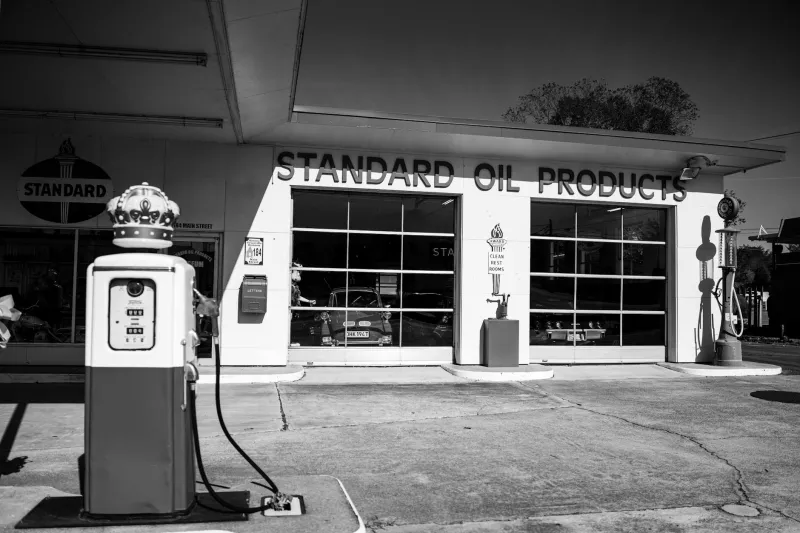
The Desperate Station Owner's Gamble
Frank Urich was running out of options in 1947. His Urich's Gas-A-Teria in Los Angeles was struggling to compete with the big oil company stations that surrounded him. Standard Oil, Shell, and Texaco could afford to sell gas at razor-thin margins, subsidizing losses with profits from their massive refining operations.
 Photo: Frank Urich, via alchetron.com
Urich, operating as an independent dealer, needed a different strategy. So he tried something that seemed crazy: he fired his attendants and let customers pump their own gasoline.
The major oil companies were horrified. Self-service gas was dangerous, they argued. Undignified. Probably illegal. They launched a campaign to have Urich shut down, convinced that his reckless experiment would damage the entire industry.
They were right about the damage — but wrong about who would suffer from it.
When Gas Stations Were Full-Service Theaters
In 1947, buying gasoline was a formal affair. Uniformed attendants rushed to greet customers, filled their tanks, checked oil levels, cleaned windshields, and inspected tire pressure. The ritual was part customer service, part automotive maintenance, and part social interaction.
"Service with a smile" wasn't just a slogan; it was the entire business model. Gas stations competed on the quality of their attendants, the cleanliness of their uniforms, and the thoroughness of their automotive inspections.
Customers expected this treatment and were willing to pay for it. Gasoline was a commodity, but service was what differentiated one station from another. The idea of customers handling their own fuel seemed not just dangerous but fundamentally un-American — like asking restaurant patrons to cook their own meals.
"Self-service was considered beneath the dignity of American consumers," explains retail historian Susan Strasser. "It suggested that either the business owner was too cheap to hire proper help, or customers were too poor to afford real service."
The Oil Industry Fights Back
When Urich's self-service experiment began attracting customers with prices 3-4 cents per gallon below competitors, the major oil companies panicked. They couldn't match his prices while maintaining full-service operations, so they decided to eliminate the competition instead.
Lobbyists descended on state capitals, pushing legislation to ban self-service gas stations as public safety hazards. Fire marshals were convinced to declare self-service pumping dangerous. Trade associations published studies proving that untrained customers would cause explosions, spill gasoline, and create environmental disasters.
Several states passed laws prohibiting self-service gas stations. New Jersey and Oregon banned the practice entirely — laws that remain in effect today. Industry executives confidently predicted that self-service would disappear once customers realized how much they missed professional attendants.
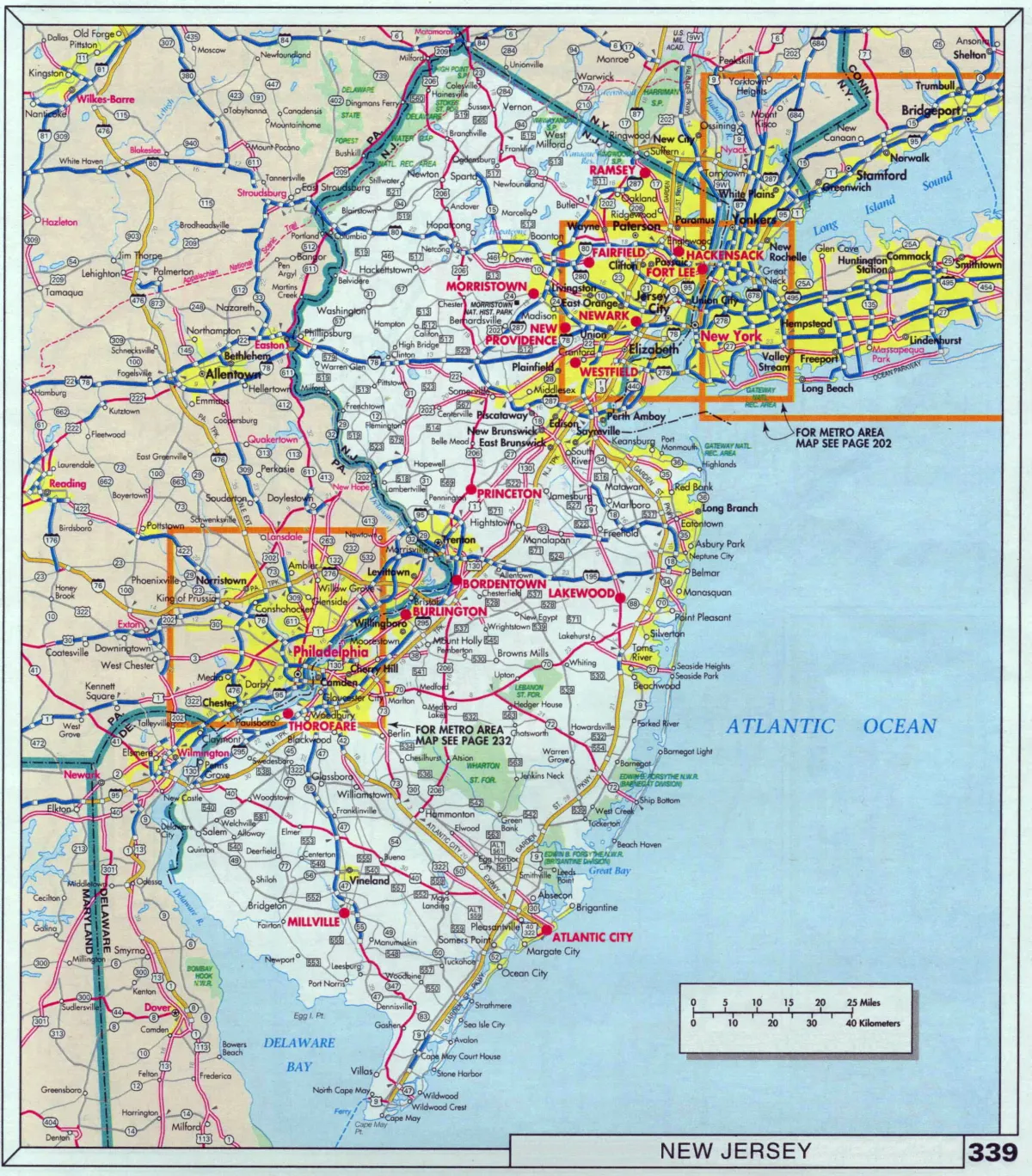 Photo: New Jersey, via www.vidiani.com
But Urich had discovered something the oil companies didn't understand: American consumers cared more about saving money than preserving dignity.
The Economics of Do-It-Yourself
Urich's pricing advantage wasn't just about eliminating labor costs. Self-service stations could operate with smaller staffs, simpler facilities, and faster customer turnover. While full-service stations employed 4-6 attendants per shift, Urich needed only one cashier.
More importantly, self-service eliminated the bottleneck that limited traditional stations. Instead of waiting for available attendants, customers could serve themselves as quickly as they wanted. This meant higher volume and faster inventory turnover.
"Frank Urich accidentally discovered the fundamental principle of modern retail," notes business historian Richard Tedlow. "If you let customers do the work themselves, you can offer dramatically lower prices — and many customers will gladly accept that trade-off."
The model was so successful that other independent dealers began copying Urich's approach. By the early 1950s, self-service stations were spreading across California despite industry opposition and legal challenges.
The Crisis That Changed Everything
The 1973 oil crisis finally broke the oil industry's resistance to self-service. When gasoline prices doubled almost overnight, consumers became intensely price-conscious. The 3-4 cent savings that self-service offered suddenly represented significant money.
Full-service stations found themselves competing against self-service dealers who could undercut them by 10-15%. Customer loyalty evaporated as drivers searched for the cheapest gas regardless of service quality.
Major oil companies faced a choice: embrace self-service or watch independent dealers capture their market share. One by one, they began converting stations to self-service operations.
"The oil crisis didn't create the self-service model," explains energy economist Daniel Yergin. "But it made that model economically irresistible for both consumers and retailers."
By 1980, more than half of American gas stations offered self-service options. By 1990, full-service stations had virtually disappeared outside of New Jersey and Oregon.
The Idea That Conquered Retail
Urich's self-service innovation didn't stay confined to gas stations. The same logic — let customers do the work to reduce prices — began appearing throughout American retail.
Supermarkets had already experimented with self-service grocery shopping, but the success of self-service gas stations proved the concept could work for any standardized product. Home improvement stores like Home Depot built entire business models around customers selecting and transporting their own merchandise.
Discount retailers embraced self-service as a way to offer lower prices than traditional department stores. Warehouse clubs like Costco took the concept even further, requiring customers to bag their own purchases and transport them in bulk quantities.
The internet age brought self-service to its logical conclusion: customers now research products, place orders, track shipments, and often handle returns without any human interaction.
The Hidden Costs of Convenience
Self-service retail created obvious benefits: lower prices, faster transactions, and more consumer control. But it also imposed hidden costs that Americans are still discovering.
Jobs disappeared as retailers shifted labor from employees to customers. The social interaction that once accompanied routine transactions vanished. Customer service became a premium feature rather than a standard expectation.
"We traded human connection for efficiency," observes sociologist George Ritzer. "Frank Urich's gas station started a process that eventually eliminated thousands of small social interactions that once made commerce more personal."
Some economists argue that self-service retail contributed to rising inequality by eliminating entry-level service jobs while concentrating benefits among consumers wealthy enough to own cars and homes.
The Unintended Revolution
Frank Urich never intended to revolutionize American retail. He just wanted to save his struggling gas station by cutting costs and offering lower prices. But his desperate gamble unleashed forces that reshaped how Americans buy everything from groceries to airline tickets.
Today, self-service is so universal that full-service retail seems quaint and expensive. Customers pump their own gas, scan their own groceries, book their own travel, and assemble their own furniture. We've become a nation of part-time retail workers, performing unpaid labor in exchange for lower prices.
The major oil companies that tried to destroy Urich's self-service experiment eventually adopted it themselves. They discovered that customers didn't really want white-glove service — they wanted convenience and value.
That insight, born from one man's struggle to compete against corporate giants, became the organizing principle of modern American commerce. Every time you scan a barcode, use an ATM, or check yourself into a flight, you're participating in the revolution that Frank Urich started with a simple decision to let customers pump their own gas.
Sometimes the most profound changes begin with someone who has nothing left to lose and everything to gain from trying something different.