The Concrete Salesman Who Convinced America Every Home Needed a Perfect Path
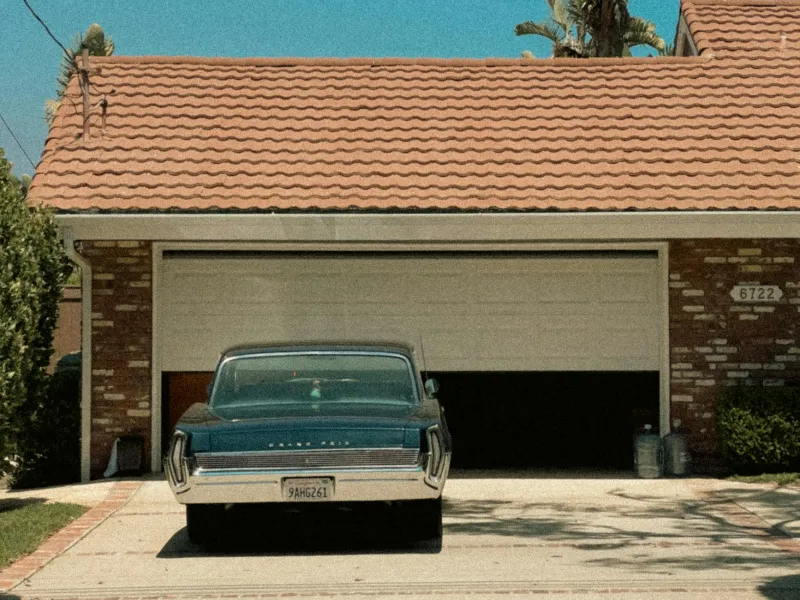
Drive through any American suburb today, and you'll see the same feature in front of nearly every house: a smooth, straight driveway leading from the street to the garage. It's so universal that we barely notice it, but this wasn't always the case. Until the 1920s, most American homeowners parked their automobiles in whatever dirt path or grassy area happened to be convenient.
The story of how concrete driveways became as essential as front doors involves a struggling industry, ambitious salesmen, and a nation suddenly obsessed with automotive respectability.
When Cars Lived in the Mud
In the early days of automobile ownership, parking was an afterthought. Most homes built before 1920 had no designated car storage—the automobile was still new enough that many houses predated widespread car ownership entirely. Wealthy families might have converted a carriage house, but average Americans simply drove their Model T as close to the house as possible and hoped for the best.
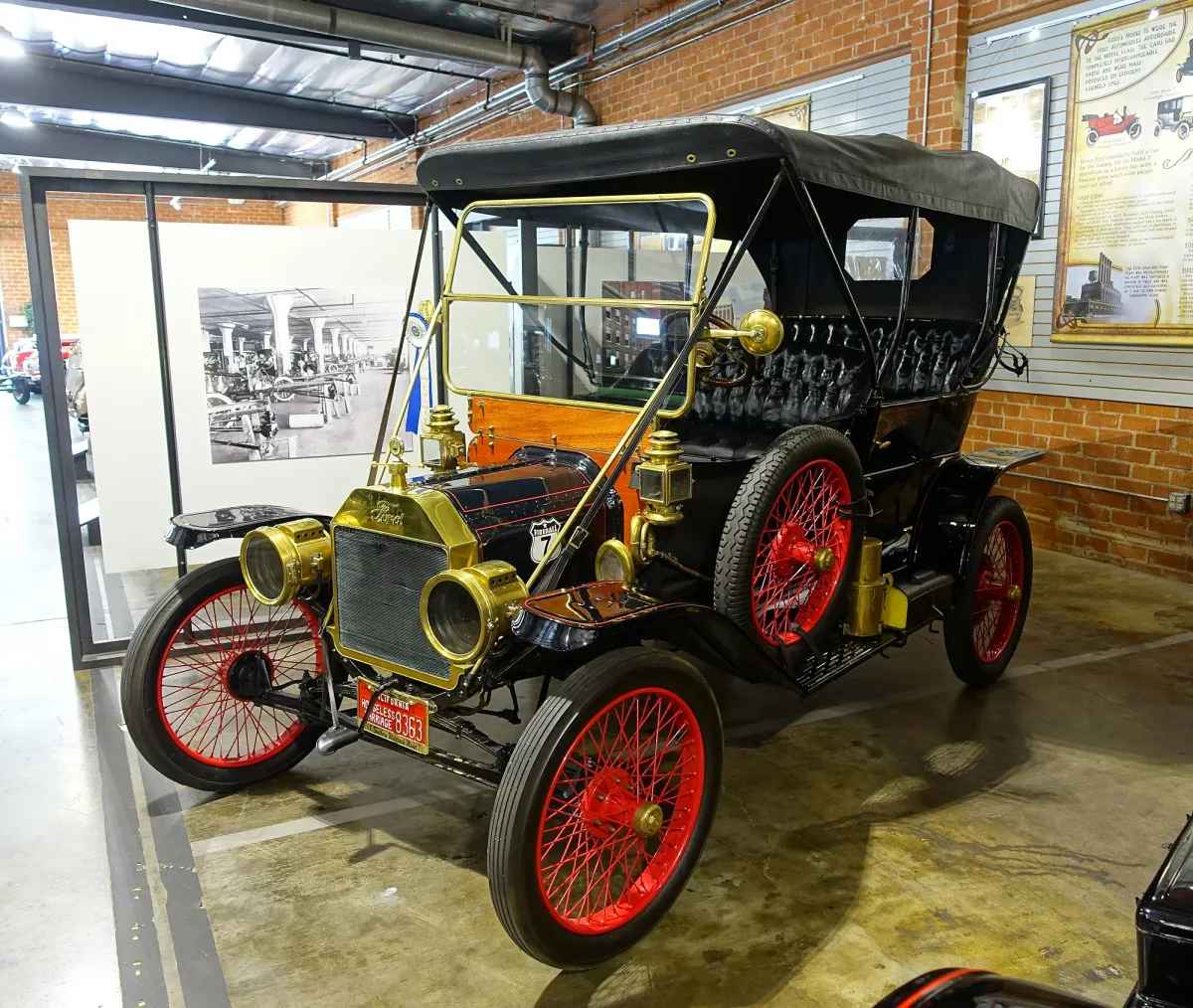 Photo: Model T, via global.discourse-cdn.com
This meant most cars spent their nights sitting in dirt, grass, or gravel. During spring thaws and summer rains, retrieving your automobile often meant trudging through mud and hoping the wheels wouldn't get stuck. Car owners frequently laid down wooden planks or scattered gravel to create a semi-solid surface, but these makeshift solutions were far from permanent.
The situation was particularly problematic in new suburban developments, where freshly graded lots often turned into swampy messes after any significant rainfall.
The Industry Looking for a Market
By the early 1920s, America's concrete industry had a problem. The massive infrastructure boom of the 1910s was winding down, and companies that had grown fat on government contracts for roads and public buildings were suddenly competing for a shrinking pool of large-scale projects.
Portland Cement Association executives realized they needed to create demand rather than wait for it. They'd already begun pushing concrete sidewalks and basement floors, but the real opportunity was sitting right outside America's front doors: all those muddy car paths.
 Photo: Portland Cement Association, via img.roadsbridges.com
The association launched what would become one of the most successful product placement campaigns in American history. They hired architects to design "model driveways" and began distributing free plans to builders and homeowners. More importantly, they started training an army of local concrete contractors to sell driveways door-to-door.
The Suburban Sales Pitch
The timing couldn't have been better. The 1920s suburban boom was creating thousands of new neighborhoods filled with aspirational middle-class families who wanted to display their success. A concrete driveway became the perfect symbol—visible from the street, obviously expensive, and clearly superior to the dirt paths of less prosperous neighbors.
Concrete salesmen didn't just sell driveways; they sold status. Their pitch emphasized cleanliness, modernity, and property values. A paved driveway meant you'd never track mud into your house. It meant your car—itself a significant investment—would stay cleaner and last longer. Most importantly, it meant you were the kind of person who cared about appearances.
The industry even created financing plans, allowing homeowners to pay for their driveways in monthly installments. This was revolutionary—most home improvements required cash upfront, but concrete companies were willing to extend credit because they knew the installations were permanent and added genuine value to properties.
The Real Estate Connection
What truly cemented the driveway's place in American culture was the real estate industry's embrace of the feature. By the mid-1920s, new suburban developments began including paved driveways as standard amenities, the same way they might include indoor plumbing or electric wiring.
Developers discovered that neighborhoods with uniform concrete driveways sold faster and for higher prices. The visual consistency created an impression of quality and permanence that appealed to buyers. Within a few years, omitting driveways from new construction became unthinkable in middle-class neighborhoods.
This standardization had a profound effect on American suburban design. The driveway became a organizing principle for house placement, garage positioning, and even landscaping. Architects began designing homes specifically around automotive access, with the driveway serving as both functional necessity and aesthetic element.
Beyond Function to Identity
By the 1930s, the concrete driveway had evolved beyond mere practicality into something approaching civic duty. Homeowners' associations began requiring paved driveways. Municipal codes started mandating them for new construction. What had begun as a luxury feature became an expected standard.
The Great Depression temporarily slowed driveway construction, but the post-World War II suburban explosion completed the transformation. Veterans returning from the war used GI Bill benefits to buy homes in new developments where concrete driveways were as automatic as front yards.
The Lasting Legacy
Today's American suburbs are essentially monuments to that 1920s concrete industry marketing campaign. The standard residential driveway—typically 10-12 feet wide, stretching from street to garage—remains virtually unchanged from those early promotional designs.
What started as one industry's solution to a business problem became a defining feature of American residential architecture. Every time you pull into your driveway, you're participating in a ritual of suburban life that was essentially invented by concrete salesmen nearly a century ago.
The next time you're driving through a neighborhood and notice how uniform all those driveways look, remember: this wasn't inevitable. It was the result of a brilliant campaign that convinced an entire nation that the path to their front door needed to be perfect.