From Carriage Lanterns to Chaos: The Night Driving Revolution That Nearly Killed Everyone
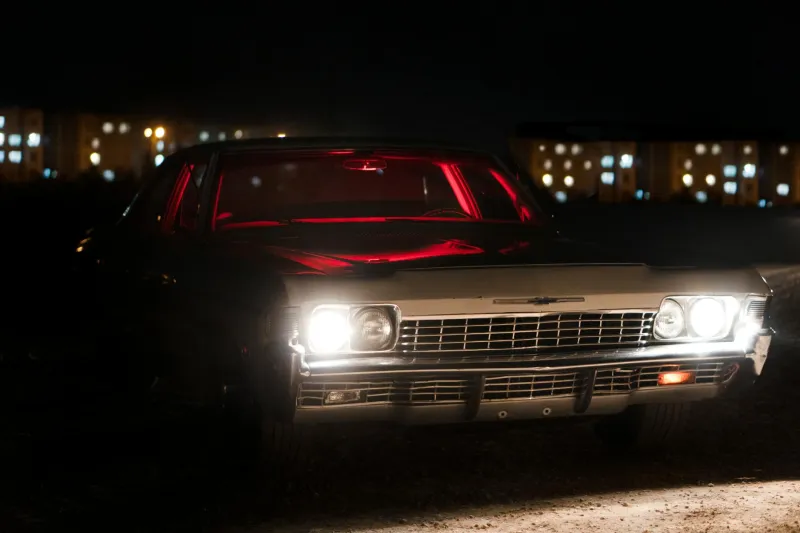
When Night Driving Was a Death Wish
In 1908, if you wanted to drive your Model T after sunset, you had three choices: strap a kerosene lamp to your front bumper, mount an acetylene torch that could explode at any moment, or simply stay home. Night driving wasn't just difficult—it was considered borderline suicidal.
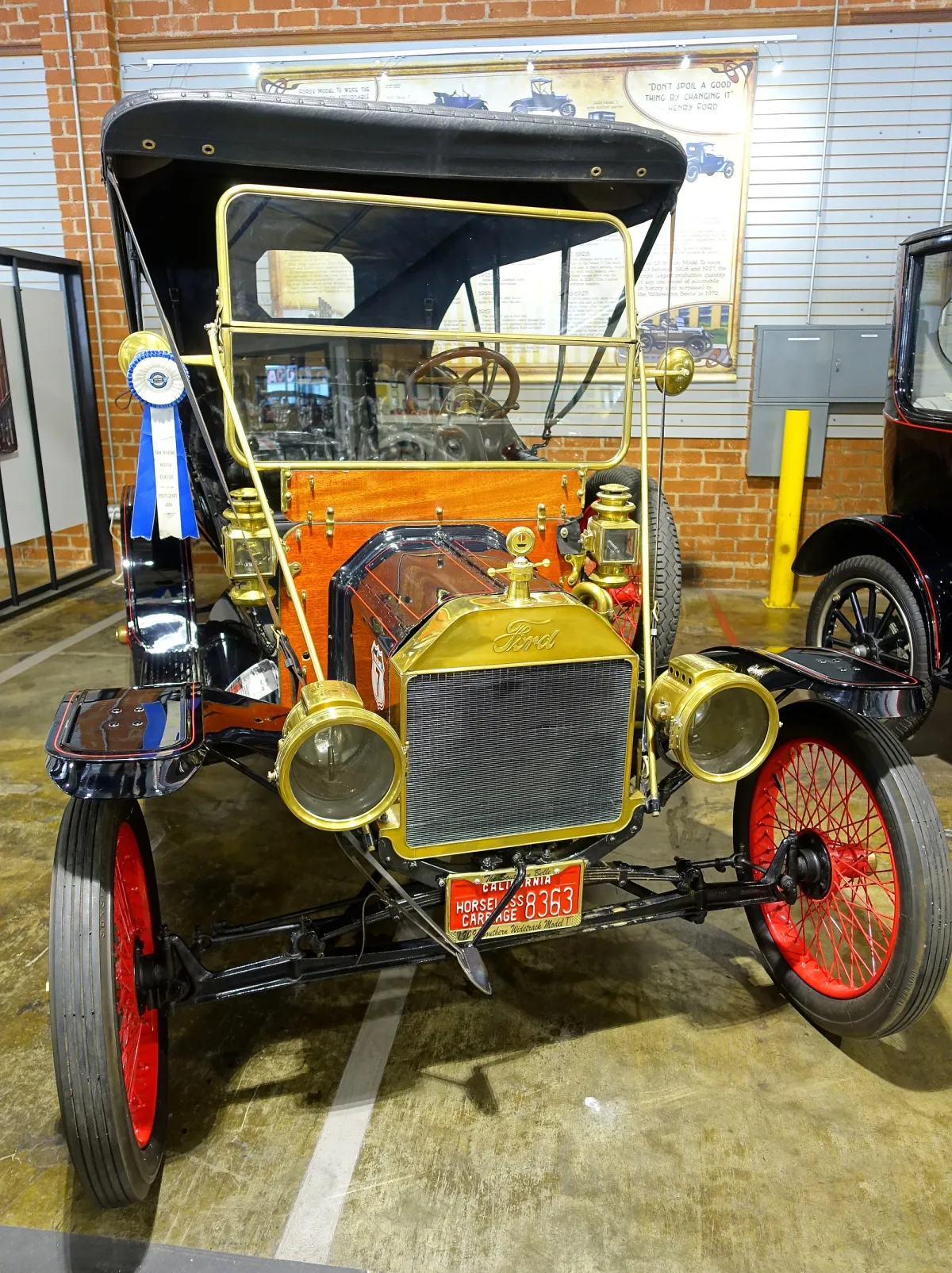 Photo: Model T, via global.discourse-cdn.com
The first automobiles inherited their lighting from horse-drawn carriages, which meant oil-burning side lamps that barely illuminated the road ahead. These flickering flames were so inadequate that most drivers treated darkness like bad weather: something to wait out rather than drive through.
The Acetylene Gamble
By 1910, adventurous drivers were experimenting with acetylene gas lamps, which burned brighter than oil but came with a terrifying catch. The calcium carbide fuel could explode if it got wet, and the open flame sat inches from the driver's face. Popular Mechanics warned readers that acetylene headlights were "brilliant but dangerous," which pretty much summed up early automotive lighting.
Desperate inventors tried everything. Some mounted multiple oil lamps in elaborate arrays. Others experimented with mirrors and reflectors to amplify the weak light. A few brave souls even tried electric arc lamps powered by the car's magneto, though these usually died after a few miles when the primitive electrical systems couldn't keep up.
The Electric Revolution Nobody Wanted
Electric headlights existed by 1912, but automakers resisted them for a simple reason: cost. Adding a proper electrical system meant installing a generator, battery, wiring harness, and switches—easily doubling the price of lighting equipment. Henry Ford famously declared electric lights "an unnecessary luxury" and kept oil lamps on the Model T until 1915.
Meanwhile, Cadillac was quietly perfecting the first integrated electrical system, complete with electric starter, lights, and ignition. When they unveiled it in 1912, it was such a revelation that other manufacturers had no choice but to follow suit. Suddenly, night driving went from dangerous adventure to routine possibility.
The Brightness Wars Begin
Once electric headlights became standard, a new problem emerged: there were no rules about how bright they could be. By the 1920s, American roads had become a chaotic battlefield of competing light technologies. Some drivers installed aircraft landing lights. Others mounted searchlights borrowed from naval vessels. The brightest setups could illuminate a quarter-mile ahead—and blind oncoming traffic for twice that distance.
State governments tried to regulate the chaos, but every jurisdiction had different rules. New York limited headlight candlepower to 32. California allowed 50. Texas said anything goes. Driving across state lines meant potentially breaking headlight laws you'd never heard of.
One Engineer's Stubborn Solution
In 1936, a General Electric engineer named Guide Lamp Division decided enough was enough. His team developed the "sealed beam" headlight—a completely integrated unit where the bulb, reflector, and lens were fused into a single, standardized package. The design was brilliant in its simplicity: every headlight would be exactly the same size, shape, and brightness.
 Photo: General Electric, via thumbs.dreamstime.com
The engineer lobbied state governments relentlessly, arguing that standardization would make roads safer and replacement parts cheaper. By 1940, he'd convinced enough regulators that sealed beam headlights became mandatory across the United States. For the first time in automotive history, every car sold in America had identical lighting.
The Forty-Year Freeze
What seemed like progress became a problem. The sealed beam standard was so rigidly enforced that it accidentally froze American headlight innovation for four decades. While European manufacturers experimented with halogen bulbs, aerodynamic shapes, and advanced reflector designs, US automakers were stuck with the same round or rectangular sealed beams from 1940.
This created one of the strangest periods in automotive history: American cars became more powerful, faster, and more sophisticated, but their headlights remained essentially unchanged from the Roosevelt administration through the Reagan era.
The Halogen Revolution
By the 1970s, the gap between American and European lighting technology had become embarrassing. European cars could see twice as far with half the power consumption, using halogen bulbs that could be replaced without changing the entire headlight assembly.
It took until 1983 for the Department of Transportation to finally allow replaceable halogen bulbs in the US market. Almost overnight, American headlight design exploded with innovation that had been bottled up for decades. Manufacturers introduced aerodynamic shapes, composite materials, and advanced reflector patterns that made the old sealed beams look primitive.
Why It Still Matters
Today's LED headlights, adaptive beam patterns, and automatic high-beam systems all trace back to that stubborn engineer's 1936 decision to standardize American automotive lighting. His sealed beam mandate saved countless lives by ending the brightness wars, but it also shows how government standards can both solve problems and accidentally create new ones.
Every time you flip on your headlights, you're benefiting from—and driving past—one of the longest-running regulatory experiments in automotive history.