The Chatty Pump Jockey Who Taught America How to Talk to Strangers
The Choreographed Dance at Every Corner
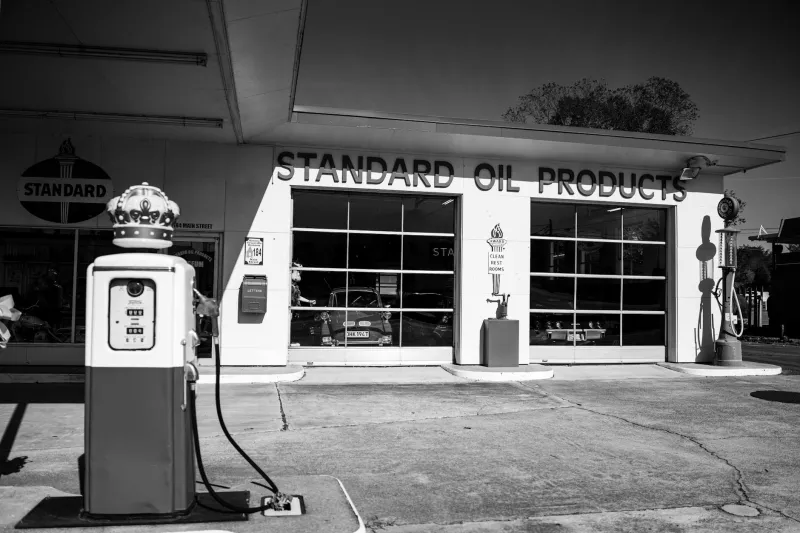
Every weekday morning in 1965, millions of Americans pulled into gas stations across the country and participated in the same ritual. A uniformed attendant would jog over, flash a smile, and launch into a predictable script: "Fill 'er up? Check your oil? How about those windows?" What followed was three minutes of perfectly calibrated conversation — friendly but not intrusive, personal but not too personal, cheerful but efficient.
Nobody realized it at the time, but these forgotten pump jockeys were accidentally programming an entire generation of Americans in the delicate art of talking to strangers.
The Accidental Social Engineers
The full-service gas station attendant wasn't trying to reshape American social interaction. He was just trying to keep his job. In the 1940s and 50s, as car ownership exploded and gas stations multiplied on every corner, station owners discovered that friendly service sold more gas than gruff efficiency.
Attendants were coached on the perfect balance: engage the customer without being pushy, seem interested without being nosy, and always leave them feeling good about the interaction. The result was a standardized template for brief, pleasant exchanges between strangers — something Americans had never really needed before.
"The gas station created America's first mass training program in casual conversation," explains social historian Dr. Margaret Chen, who studied mid-century service culture. "Suddenly you had millions of people practicing the same social script multiple times per week."
 Photo: Dr. Margaret Chen, via doximity-res.cloudinary.com
The Unspoken Rules Take Shape
The attendant's routine became surprisingly sophisticated. Weather was always a safe opener. Local sports teams were good middle ground. Politics and personal problems were strictly off-limits. The conversation had to feel genuine while staying completely surface-level.
Drivers learned to respond in kind. They'd comment on the weather, ask about business, maybe mention they were headed somewhere interesting. Both parties understood the boundaries instinctively. It was social interaction with training wheels — low stakes, low commitment, but surprisingly satisfying.
This wasn't just Midwest politeness or Southern charm. From Boston to Los Angeles, the gas station small talk script was remarkably consistent. The attendants were unknowingly teaching Americans a standardized way to be friendly with people they'd probably never see again.
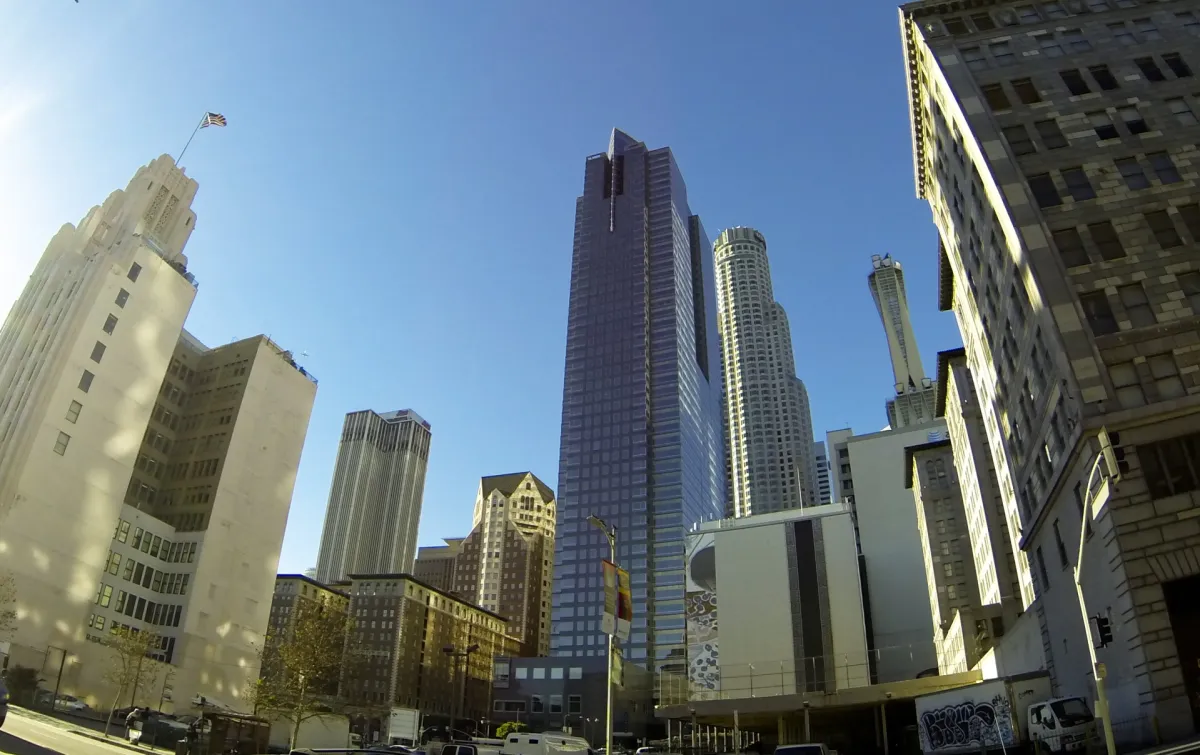 Photo: Los Angeles, via www.streetline.com
Beyond the Pump
The skills Americans learned at gas stations started showing up everywhere else. The same light, friendly tone appeared in grocery store checkout lines, elevator conversations, and interactions with delivery drivers. The gas station had accidentally created a template for American casualness.
"That particular style of American friendliness — warm but not invasive, personal but not intimate — that's pure gas station attendant," notes communication researcher Dr. James Walsh. "It became the default setting for how Americans talk to service workers, neighbors, and casual acquaintances."
 Photo: Dr. James Walsh, via ophthalmology.wustl.edu
The End of an Era
In the 1970s, oil crises and cost-cutting measures pushed most stations toward self-service. The attendant disappeared, and with him went America's daily small talk practice session. The skills remained, but the training ground was gone.
Younger generations had to learn casual conversation through trial and error, without the safety net of a scripted, low-pressure interaction. Some sociologists argue this partly explains why Americans today often struggle more with brief social exchanges — we lost our practice space.
The Legacy Lives On
Walk into any coffee shop, barbershop, or taxi today, and you'll still hear echoes of the gas station attendant's script. That particular brand of American friendliness — interested but not intrusive, warm but efficient — traces directly back to those uniformed figures who used to clean your windshield while chatting about the weather.
The pump jockey is long gone, but his conversational DNA is embedded in American culture. Every time you exchange pleasantries with a cashier or make small talk with a rideshare driver, you're using social skills that were accidentally invented by a forgotten service worker just trying to sell more gasoline.
In a country that often feels increasingly divided and isolated, maybe it's worth remembering the gas station attendant — the chatty stranger who taught America how to be briefly, genuinely friendly with people we barely know.